CMA proposes cheaper iPhone contactless access for UK rivals
The CMA wants Apple to open iPhone contactless to rival wallets on fair, cheaper terms, and says no competing iPhone contactless wallet has launched using the existing UK arrangements. It is a proposal: the consultation closes on 17 November 2026.
- Published
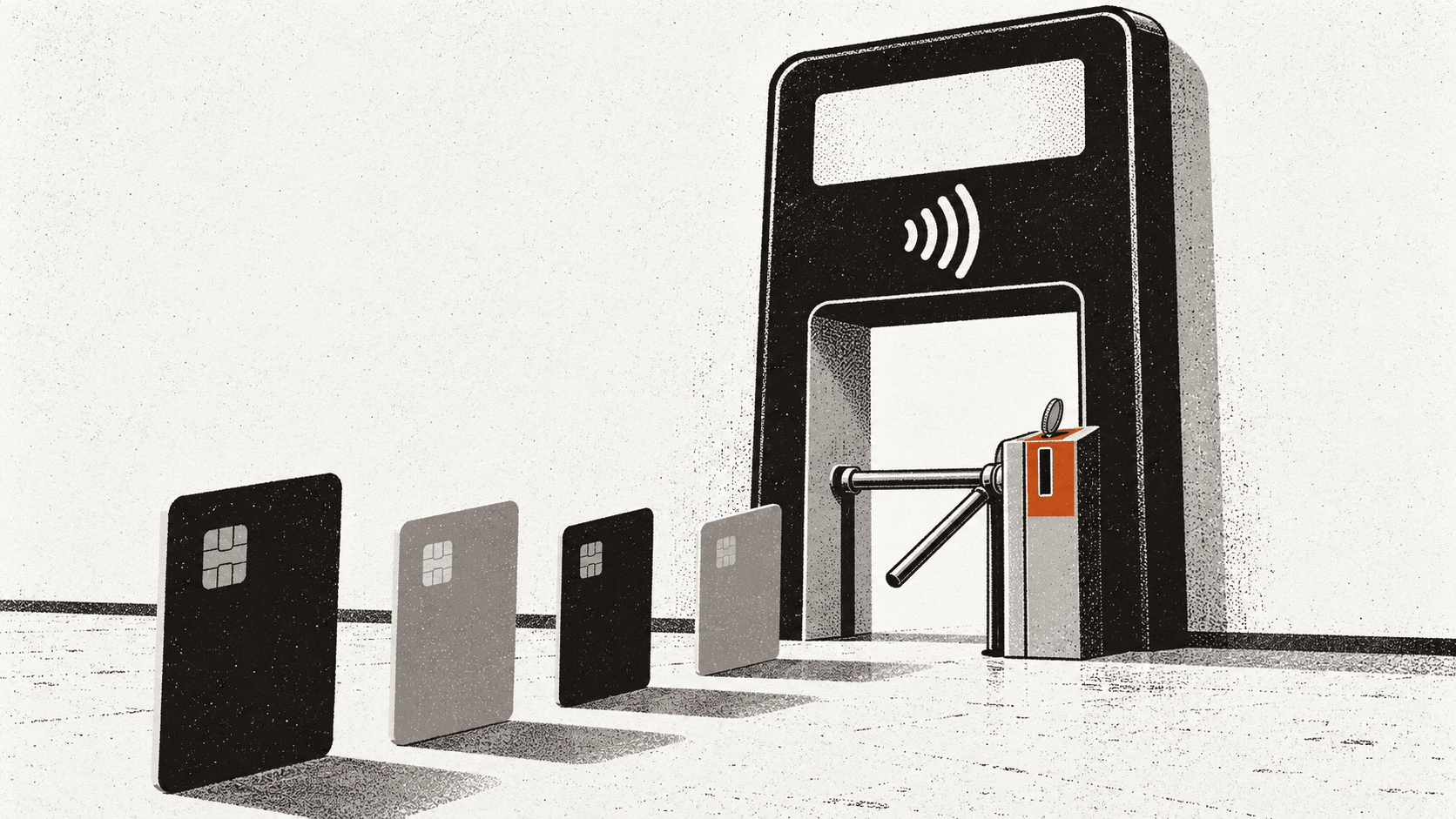
The Competition and Markets Authority (CMA) has proposed forcing Apple to open the contactless chip in the iPhone to competing payment apps on cheaper and fairer terms. The proposal was published on 20 October 2026 and is out for consultation until 5pm on 17 November 2026. Nothing has changed for anyone yet: this is a proposed conduct requirement, not an access right already in force, and the CMA says a final decision follows its assessment of responses. The consultation document does not specify a time zone for the deadline.
The technology at issue is near field communication (NFC), the short-range radio link that lets a phone or card talk to a shop terminal when it is tapped. On iPhone, the terms on which other developers can reach that link determine whether a rival wallet can exist at all. The proposal therefore matters most to UK fintechs and wallet developers, to banks and open banking providers, which use open banking to initiate a payment directly from a customer's bank account and would like account-to-account "Pay by Bank" to work at the till, to merchants who pay to accept payments, and to iPhone users who currently have Apple Pay as the practical default for tapping to pay.
The timing reflects scale. Contactless payments in the UK came to 19.2 billion transactions in 2025, up 2% and representing 39% of all payments, on UK Finance estimates cited by the CMA on 20 October 2026. That count covers physical cards as well as mobile devices, so it is not a measure of Apple Pay's share. The legal route is the Digital Markets, Competition and Consumers Act 2024 regime, which lets the CMA impose targeted conduct requirements on firms it has designated with strategic market status. The CMA designated Apple's mobile platform on 22 October 2025, and published an earlier call for evidence on NFC on 30 June 2026. Designation and the proposed NFC requirement are separate steps.
What the CMA is proposing
The core of the proposal is that developers should be able to access iPhone NFC on fair, reasonable, transparent and non-discriminatory terms, covering pricing and other conditions rather than price alone.
On cost, the CMA says it expects access charges to be substantially lower, but it proposes pricing principles rather than a fixed tariff, and Apple could still be paid for providing access. This is not a proposal for free access, and no percentage or sterling reduction has been put on it.
On the technical route, the proposal would require Apple to provide both host-based card emulation (HCE) and secure element (SE) access, so developers can choose. The two differ in where the sensitive credentials sit: HCE keeps them off the device and supplies limited one-use tokens, while SE uses a dedicated security chip inside the phone.
There is a live disagreement here, and it is recorded in the CMA's own document. The consultation records Apple favouring an SE-only approach, while the CMA proposes both SE and HCE. That is a dispute about the right remedy, not evidence that third-party access is technically absent today.
The proposal also covers supporting functionality: an interface through which an app can be set as the default for contactless, complaint mechanisms, and functionality enabling alternatives to certain other Apple wallet features. These are proposed capabilities for developers. None of them would move an existing user off Apple Pay automatically.
Why paid access has not produced UK rivals
Apple already offers its NFC & SE Platform in the UK. Using it requires an agreement incorporating commercial terms and applicable fees, plus authorisation as a developer. So the honest description of the current position is not that iPhone NFC is closed in the UK, but that it is available on Apple's terms.
The CMA's point is that those terms have not produced products. According to the regulator, no competing wallet-type product has launched using the UK arrangements despite SE access existing. That claim concerns rival iPhone contactless products specifically, not every wallet app available to UK consumers. The distinction between technical availability and commercially viable terms is the whole argument of the consultation.
Where Pay by Bank fits
Pay by Bank means an account-to-account payment, moving money directly between bank accounts, and open banking can provide the mechanism for initiating it. NFC is only the way two devices communicate when a phone is tapped. It is not the system that moves the money.
That distinction cuts both ways. A competing iPhone wallet could remain entirely card-based: Apple Pay itself is what the Financial Conduct Authority (FCA) and Payment Systems Regulator (PSR) call a pass-through wallet, facilitating card payments without holding the user's funds. A new wallet app does not automatically mean a new payment system.
The opportunity the regulators have identified is that lower barriers to wallet entry could allow greater competition between payment systems, not just between apps. In their February 2025 feedback statement on big tech and digital wallets, the FCA and PSR pointed to lower wallet-entry barriers as a possible route to that outcome, and the CMA's announcement carries a statement from the PSR's David Geale on open banking. That is a potential route, not a confirmed rollout. Nothing in the consultation commits any provider to launching contactless Pay by Bank, and no final implementation date, rival launch or merchant saving has been established.
Acceptance at the till is a separate question from access on the phone. Whether a merchant could take a new payment service through the card terminals it already has, and what terminal changes any new service would need, would depend on the eventual product and the payment system behind it. Access to iPhone NFC does not by itself establish that a merchant can accept the resulting payment, and the consultation does not resolve it.
Protections depend on the payment, not the wallet
The wallet proposal does not itself establish equivalent consumer protection for every payment method. The FCA and PSR have separately identified consumer protection and operational resilience concerns relating to digital wallets.
For a reader, the practical consequence is that refunds, disputed purchases and fraud reimbursement would depend on the eventual product and the underlying payment system, not on how the phone communicated with the terminal. Card-style purchase protection, Financial Services Compensation Scheme cover and Financial Ombudsman Service access do not follow automatically from a payment being made by tapping an iPhone. Anyone weighing the risk of a new payment method needs the current rules and the product's own terms, not a general description of wallets.
The UK position is not the EEA position
Apple's HCE arrangements in the European Economic Area give eligible third-party payment wallets free access under commitments made to the European Commission, including default-app functionality. Those arrangements are the reason EEA developers and UK developers are not in the same position, and they do not create any right in the UK. Whatever the UK ends up with will come from the CMA's own process under the 2024 Act.
What to watch next
| Date | What it is |
|---|---|
| 22 October 2025 | CMA designated Apple's mobile platform with strategic market status |
| 30 June 2026 | CMA call for evidence on NFC published |
| 20 October 2026 | Proposed NFC access conduct requirement published for consultation |
| 17 November 2026, 5pm | Deadline for consultation responses |
No commencement date has been set. The next milestones are the close of the consultation, the CMA's assessment of responses and a final decision. Developers, banks, merchant groups and consumer bodies with a view on pricing principles, on the SE-versus-HCE question or on default-app status have until 17 November to put it in writing.
The official detail sits with the CMA: the consultation page for the proposed NFC access conduct requirement (opens in a new tab), the full consultation document (opens in a new tab), and the case page for Apple's mobile platform (opens in a new tab).
Sources
- Proposed NFC access conduct requirement for Apple’s mobile platform (opens in a new tab)
Competition and Markets Authority · · Accessed
- Consultation: NFC access conduct requirement — Apple’s mobile platform (opens in a new tab)
Competition and Markets Authority · · Accessed
- CMA outlines proposals to unlock contactless technology on Apple iPhone (opens in a new tab)
Competition and Markets Authority · · Accessed
- Apple’s mobile platform (opens in a new tab)
Competition and Markets Authority · · Accessed
- FS25/1: Big tech and digital wallets (opens in a new tab)
Financial Conduct Authority and Payment Systems Regulator · Accessed
- Ways of paying (opens in a new tab)
Payment Systems Regulator · Accessed