Beyond the Billion-Dollar Myth: What a 500-Year-Old Painting Teaches Modern Investors
In the fast-paced world of finance and technology, the term “unicorn” is ubiquitous. It’s the coveted label for a privately held startup company with a value of over $1 billion. For founders, it’s a badge of honor; for investors, it’s the ultimate prize. The word conjures images of disruptive technology, exponential growth, and a new economy forged in Silicon Valley. But as a recent letter to the Financial Times by art historian Candida Clark reminds us, this symbol of rare and magical success has a history that stretches back centuries before the first line of code was ever written.
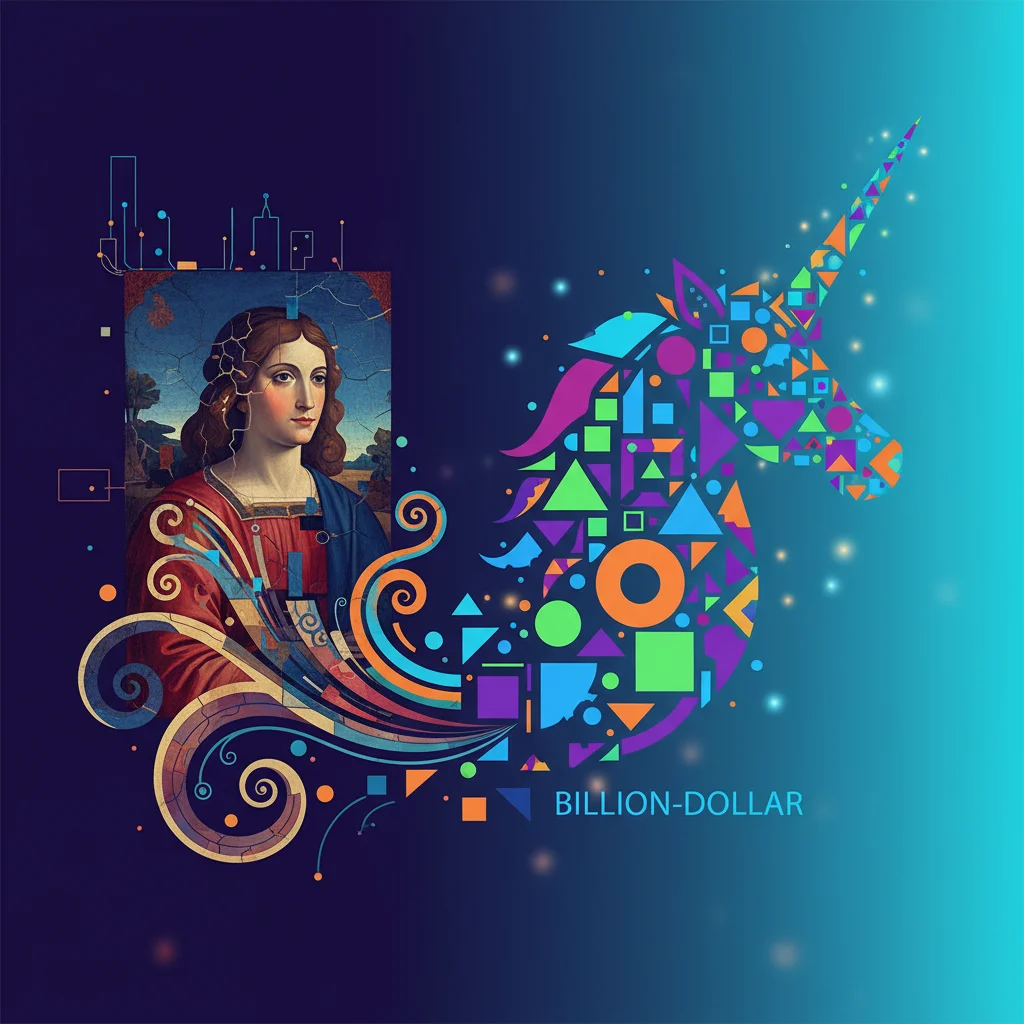
Clark points to Raphael’s masterpiece, “Portrait of a Lady with a Unicorn,” painted around 1505. Here, the mythical beast isn’t a metaphor for a high-growth business model but a powerful symbol of purity and virtue. This striking juxtaposition raises a crucial question for today’s business leaders, finance professionals, and investors: What can the original, 500-year-old unicorn teach us about the modern, billion-dollar version? By exploring the chasm between these two meanings, we can uncover profound insights into our current investment culture, the psychology of the stock market, and the timeless search for true value in an economy often mesmerized by myth.
The Original Unicorn: A Renaissance Symbol of Virtue
Long before it became a staple of venture capital pitch decks, the unicorn was a creature of legend. Described since antiquity, it was a wild, powerful beast that could only be tamed by a figure of absolute purity. Its horn was said to possess the power to neutralize poison and heal any disease, making it one of the most sought-after treasures in the mythical world.
When the High Renaissance master Raphael painted his “Portrait of a Lady with a Unicorn,” he was tapping into this rich symbolic tradition. The painting, housed in the Borghese Gallery in Rome, depicts a young, blonde woman holding a small unicorn in her lap. Art historians widely interpret the unicorn as an emblem of the sitter’s chastity and marital fidelity. According to the Galleria Borghese, the creature represents the purity that a bride was expected to bring to a marriage. In this context, the unicorn is not about financial valuation but about intrinsic human value. It represents an ideal, an incorruptible essence that is both precious and untamable.
This historical understanding is crucial. The original unicorn was defined by its character, not its market price. Its power was restorative and its nature, while wild, was fundamentally good. It was, in essence, a symbol of authentic, unassailable worth.
The Gen Z Investor: Misunderstood Gambler or Disciplined Strategist?
The Modern Myth: Coining a Financial Phenomenon
Fast forward five centuries. In November 2013, venture capitalist Aileen Lee, founder of Cowboy Ventures, published a landmark article in TechCrunch titled “Welcome To The Unicorn Club: Learning From Billion-Dollar Startups.” In this piece, she analyzed software startups founded in the 2000s and was struck by how few—just 0.07%—ever reached a $1 billion valuation. To describe these statistical rarities, she coined the term “unicorn.”
The name was perfect. It was catchy, evocative, and perfectly captured the seemingly magical and improbable nature of building a billion-dollar company from scratch. The term exploded in popularity, becoming the definitive descriptor for the titans of the new digital economy. Companies like Uber, Airbnb, SpaceX, and Stripe became the poster children of this new club. The label signified more than just a number; it represented a paradigm shift in financial technology, market disruption, and the very fabric of our global economy.
Unlike Raphael’s beast, this new unicorn was defined not by purity, but by three key metrics:
- Disruption: A business model that fundamentally changes an existing industry.
- Growth: An obsessive focus on rapid user acquisition and revenue scaling, often at the expense of short-term profitability.
- Valuation: A private market valuation of $1 billion or more, determined by successive rounds of venture capital investing.
The hunt for these new unicorns came to define an era of investing, fueling a massive flow of capital into private markets and reshaping the strategies of banking and finance worldwide.
A Tale of Two Unicorns: A Comparative Analysis
The symbolic distance between Raphael’s unicorn and Aileen Lee’s is vast. Placing them side-by-side reveals how our definition of “value” has evolved and highlights the unique pressures of modern economics. This comparison offers a lens through which we can critically examine the goals and narratives driving today’s financial markets.
Below is a table comparing the core attributes of the mythical and financial unicorns:
| Attribute | The Mythical Unicorn (c. 1505) | The Financial Unicorn (c. 2013) |
|---|---|---|
| Core Essence | Purity, virtue, innocence | Disruption, scalability, market share |
| Source of Value | Inherent, symbolic character | External, market-driven valuation |
| Defining Trait | Untamable nature, except by the pure | Hyper-growth, “blitzscaling” |
| Primary Goal | To represent an ideal | To achieve a liquidity event (IPO or acquisition) |
| Measure of Rarity | Mythological impossibility | Statistical improbability (less than 0.1% of startups) |
The Dangers of Chasing Financial Myths
The allure of the unicorn is a powerful force in the world of investing. It taps into fundamental aspects of human psychology, particularly the narrative fallacy—our tendency to be swayed by a compelling story over raw data. The story of a visionary founder in a hoodie disrupting a legacy industry is far more exciting than a balance sheet. This narrative power can create dangerous market dynamics.
The hunt for the next unicorn often fuels investment bubbles. Investors, driven by a Fear Of Missing Out (FOMO), may pour money into unproven fintech or blockchain concepts based on hype rather than fundamentals. This herd mentality can inflate valuations to unsustainable levels, creating a disconnect between a company’s private market valuation and its actual intrinsic value. When these companies eventually face the rigorous scrutiny of the public stock market via an IPO, the myth can shatter, leading to significant losses for later-stage investors and employees.
According to CB Insights, there are over 1,200 unicorn companies globally as of late 2023. While this number is impressive, it also suggests that the “rarity” aspect of the label has been diluted. The pressure to join this club can force founders to make short-sighted decisions, prioritizing growth metrics for their next funding round over building a sustainable, long-term business. In financial technology, this can lead to cutting corners on compliance or risk management, creating systemic risks for the broader banking and economic ecosystem.
Beyond Borders: How Tata's Defence Ambitions are Reshaping India's Role on the World Stage
Lessons for the Modern Investor from a Renaissance Master
What, then, can we learn by looking back at Raphael’s lady and her mythical companion? The painting, and the rich history it represents, offers timeless wisdom for navigating the often-irrational world of modern finance and trading.
1. Distinguish Valuation from Value.
Raphael’s painting is priceless today, but its enduring worth comes from its artistic genius, historical significance, and symbolic depth—not just its auction price. Similarly, a savvy investor must learn to look past the headline-grabbing valuation of a company. A $10 billion valuation means nothing if the underlying business has no path to profitability, a weak competitive moat, or a flawed business model. The most successful investing strategies focus on identifying intrinsic value, not just chasing momentum.
2. Understand the Power of Narrative.
The term “unicorn” succeeded because it created a powerful and aspirational story. This is a crucial lesson in economics: markets are not just driven by numbers; they are driven by stories. Whether it’s the promise of blockchain revolutionizing finance or a fintech app changing how we bank, the narrative can be a powerful catalyst for capital flows. Understanding these narratives—and knowing when they have detached from reality—is a critical skill for any investor.
3. Respect True Rarity.
Aileen Lee was right: building a world-changing company is incredibly rare. The venture capital model is built on this reality—it assumes most investments will fail, but a few massive successes will deliver outsized returns for the entire portfolio. For the average investor, this is a stark reminder of the importance of diversification. Betting everything on finding the next unicorn is not an investment strategy; it’s a lottery ticket. Acknowledging the high risk and low probability of success is the first step toward making rational decisions in high-growth sectors.
The Nobel Prize and the Stock Market: Why a Leader's Ego is a New Economic Indicator
Conclusion: Seeing Beyond the Horn
From the serene halls of a Roman gallery to the frenetic trading floors of the stock market, the unicorn has traveled a remarkable journey. It began as a symbol of inner virtue and has become the ultimate emblem of external valuation. The original letter from Candida Clark serves as a brilliant reminder that the symbols we use in finance and economics are not created in a vacuum; they are deeply rooted in our collective culture and history.
The modern unicorn—a creature of disruption, data, and immense capital—will continue to shape our economy. But as we pursue these rare beasts, we would do well to remember the lessons from its quieter, more contemplative ancestor. The ultimate goal should not be to capture a mythical creature defined by a fleeting, arbitrary number. Instead, it should be to cultivate and invest in businesses with the enduring qualities that Raphael sought to capture on his canvas: integrity, resilience, and true, incorruptible value.

Related Posts
Solving the Financial Puzzle: A Strategic Guide to Today’s Economy and Investment Landscape
Beyond the Stock Market: Why a Florence Tower Apartment Symbolizes the Future of Investing