Hollywood’s Hunger Games: Why the Netflix vs. Warner Battle is Really About AI, Code, and Cloud Dominance
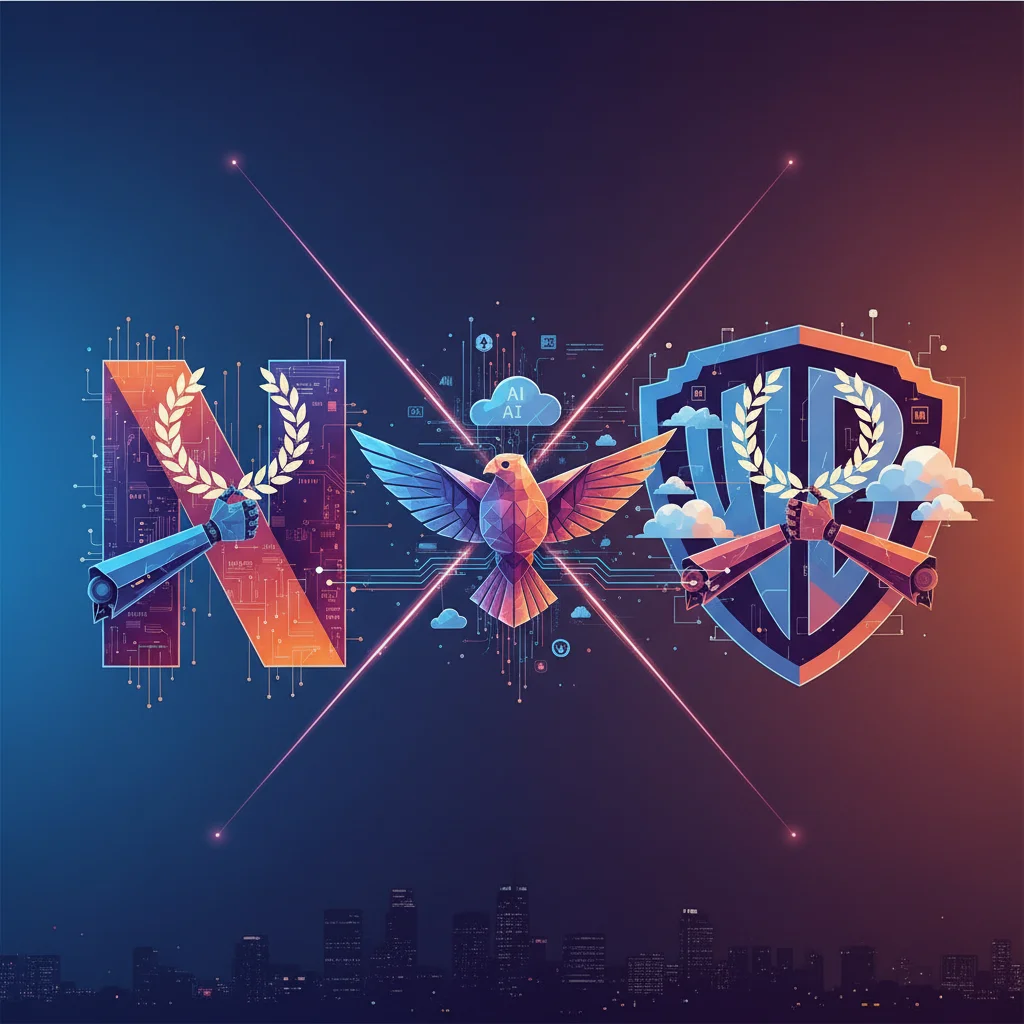
In the grand theater of Hollywood, a new blockbuster is unfolding—not on screen, but in the boardroom. The plot is a classic tale of ambition, rivalry, and a high-stakes takeover. Netflix, the tech-titan-turned-studio, is locking horns with legacy giant Warner Bros. Discovery over a potential merger, while a competing bid for Paramount from another suitor is dismissed by Netflix’s co-chief Greg Peters as a deal that “doesn’t pass the sniff test.”
On the surface, this looks like another chapter in the age-old story of media consolidation. But for those of us in the tech world—developers, entrepreneurs, and innovators—this isn’t just about who owns the rights to Friends or Mission: Impossible. This is a battle for the future of content, and the winner won’t be the company with the biggest backlot, but the one with the smartest code, the most powerful AI, and the most resilient cloud infrastructure.
This corporate drama is a proxy war, revealing the deep, tectonic shift from traditional media to a technology-first entertainment ecosystem. Let’s pull back the curtain and analyze the code behind the conflict, exploring why this M&A frenzy matters more to the world of software, startups, and artificial intelligence than you might think.
The Contenders: A Tale of Two Business Models
To understand the stakes, you have to see the players for what they truly are: representatives of two different eras clashing in the digital arena.
Team Tech: Netflix, The Data-Driven Behemoth
Netflix isn’t a media company that uses technology; it’s a technology company that produces media. Its entire operation is built on a foundation of sophisticated software, a global cloud network, and a relentless focus on data. From its inception, Netflix’s core innovation wasn’t its content library, but its recommendation algorithm—a pioneering use of machine learning to predict user preferences with uncanny accuracy.
Today, its tech stack is a marvel of modern engineering:
- Cloud Infrastructure: Built almost entirely on AWS, Netflix’s architecture is a case study in scalability and resilience, capable of delivering petabytes of data to over 270 million subscribers worldwide.
- Data Analytics: Every click, pause, and binge is a data point fed into complex models that inform everything from content acquisition budgets to thumbnail A/B testing.
- Automation: From video encoding pipelines to automated quality control, automation is key to managing its colossal library and global release schedule efficiently.
For Netflix, acquiring a legacy studio like Warner Bros. or Paramount isn’t just about buying movies. It’s about acquiring a massive, under-leveraged asset—decades of intellectual property—and plugging it into its hyper-efficient, data-driven SaaS-like distribution machine.
Team Legacy: Warner Bros. & Paramount, The Content Kings
Warner Bros. Discovery and Paramount Global are titans of a bygone era. They own some of the most iconic IP in history, from Harry Potter and Batman to Star Trek and Top Gun. Their expertise lies in traditional filmmaking, broadcast television, and theatrical distribution. They are masters of the art of storytelling.
However, their transition to the direct-to-consumer streaming model has been a bumpy ride. They are grappling with enormous challenges:
- Tech Debt: They are often burdened by legacy systems and a fragmented approach to technology, trying to stitch together disparate platforms for streaming, broadcast, and theatrical.
- Data Culture Shift: While they are collecting data, they lack the deeply ingrained, data-first culture of a company like Netflix. Decisions are still often driven by gut instinct and historical precedent rather than predictive analytics.
- Monetization Models: They are caught between protecting lucrative legacy revenue streams (like cable licensing and box office sales) and going all-in on a streaming future that is still finding its financial footing.
A merger between these legacy giants is a defensive move—a consolidation of power to achieve the scale necessary to compete. But scale in content alone is no longer enough.
Your Smoke Detector is Getting a Brain: The AI Revolution in Fire Safety
The Tech Disparity: A Side-by-Side Comparison
The fundamental difference in approach becomes crystal clear when you compare these companies not on their box office numbers, but on their technological prowess. While exact internal numbers are proprietary, we can build a comparative model based on public information and industry analysis.
| Metric | Netflix (The Tech Disruptor) | Legacy Studio (e.g., Warner/Paramount) |
|---|---|---|
| Core Business Model | Global, direct-to-consumer SaaS subscription | Diversified (Theatrical, Cable, Licensing, Streaming) |
| Primary Infrastructure | Natively built on the cloud (AWS) | Hybrid of on-premise data centers and cloud migration |
| Use of AI/ML | Core to product (recommendations, content valuation, marketing) | Emerging; used in specific departments but not fully integrated |
| Development Culture | Agile, DevOps, continuous deployment of software | More traditional, project-based IT development cycles |
| Key Talent Focus | Data scientists, machine learning engineers, cloud architects | Producers, directors, marketing executives |
| Approach to Innovation | Data-driven experimentation and A/B testing at scale | Big bets on tentpole films and proven franchises |
The Real Prize: AI, Automation, and the Future of Content Creation
The long-term strategic value of this consolidation isn’t just about dominating the streaming market of today. It’s about owning the foundational assets for the entertainment industry of tomorrow, which will be defined by artificial intelligence.
A combined library of a Netflix and a Warner Bros. would be the largest, most culturally significant dataset of human storytelling ever assembled. What can a tech-savvy company do with such an asset?
1. Training Generative AI Models
Imagine feeding every frame of DC comics films, every line of dialogue from Casablanca, and every episode of The Sopranos into a large language model (LLM) and a video generation model. The acquiring company could build proprietary foundation models specifically for entertainment, leading to revolutionary innovation:
- Script Analysis & Generation: AI tools that can analyze a script for pacing, predict its box office potential, or even co-write dialogue in the style of a specific author.
- Automated Pre-visualization: AI that can take a script and generate a rough, animated storyboard in minutes, drastically cutting down pre-production costs.
- Hyper-Personalized Marketing: Using AI to generate thousands of unique trailers, each tailored to the viewing history of a specific user segment.
2. Revolutionizing Production with Automation
The programming and software behind film production are ripe for disruption. A tech-led media giant could pour resources into automating tedious and expensive processes:
- AI-Powered Dubbing: Instantly dubbing films into hundreds of languages with realistic lip-syncing and voice cloning.
- Automated VFX: Using machine learning for tasks like rotoscoping, color grading, and object removal, freeing up human artists for more creative work.
- Enhanced Cybersecurity: As production workflows become more digital and distributed, robust cybersecurity becomes paramount. Protecting terabytes of pre-release footage from leaks requires cutting-edge security protocols, something a tech company is inherently better equipped to handle.
The AI Gold Rush is Real, and TSMC is Selling All the Shovels
The Ripple Effect: A New Ecosystem for Startups and Developers
Massive consolidation at the top of the food chain always creates opportunities in the spaces left behind. This Hollywood M&A battle will be a catalyst for a new wave of media-tech startups and create immense demand for tech talent.
Opportunities for Entrepreneurs
As the giants focus on mass-market, four-quadrant blockbusters, gaps will emerge for niche content and specialized audiences. This creates opportunities for startups to build platforms for independent creators or to serve specific communities. Furthermore, the new media behemoth will need a vast ecosystem of third-party tools. This is a gold rush for B2B SaaS startups building solutions for:
- AI-driven analytics for audience engagement.
- Cloud-based collaboration tools for remote film production.
- Cybersecurity solutions tailored to the media and entertainment industry.
- Specialized AI plugins for industry-standard software like Adobe Premiere and DaVinci Resolve.
Demand for Tech Professionals
The war for talent will be fierce. The new Hollywood will be hiring more machine learning engineers than movie stars. Developers with expertise in cloud architecture, data engineering, full-stack development, and cybersecurity will be in high demand as the winning company scrambles to integrate its new assets and build the entertainment platform of the future. This isn’t just about building a better streaming app; it’s about architecting the entire pipeline of content, from creation to consumption.
Apple's AI Gambit: Why Playing Kingmaker is Smarter Than Waging War
Conclusion: The Script is Still Being Written
The drama playing out between Netflix, Warner Bros., and Paramount is far more than just a business story. It’s a clear signal that the future of Hollywood will be written in code. The dismissive “sniff test” comment from Netflix’s leadership highlights their confidence not just in their content strategy, but in their underlying technological superiority.
For the tech community, this is our story. It’s a story about how data is becoming more valuable than movie stars, how cloud infrastructure is more critical than a soundstage, and how the most powerful creative tool of the next century might just be a well-trained AI model. Whether you’re a developer, a startup founder, or simply a tech enthusiast, keep your eyes on this battle. The winner won’t just own Hollywood; they will be handed the keys to define the next era of technology-driven culture.