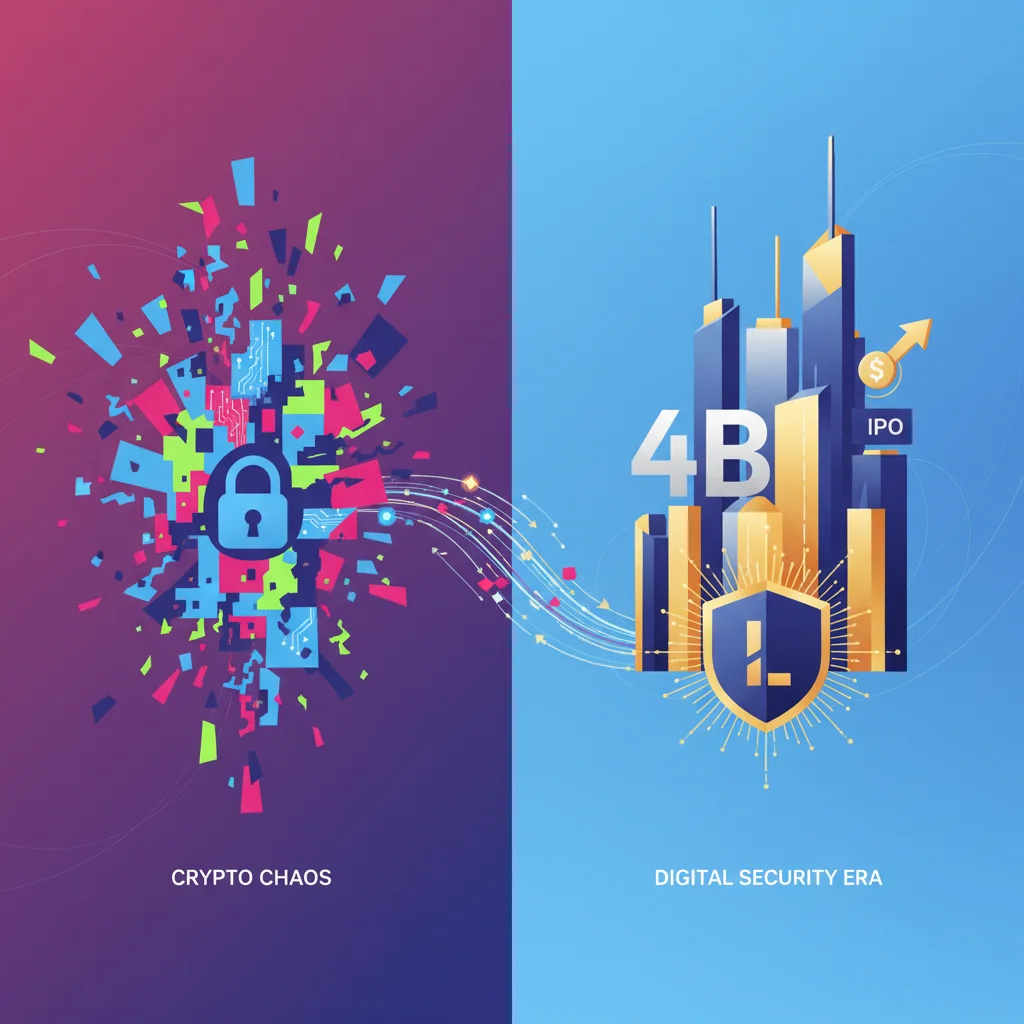
From Crypto Chaos to a $4B IPO: Why Ledger’s Wall Street Move Signals a New Era for Digital Security
Remember the collective gasp that echoed through the tech and finance worlds when FTX, once a titan of the crypto industry, imploded in a spectacular fireball of mismanagement and fraud? Investors saw billions vanish overnight, and a crucial lesson was seared into the minds of millions: in the digital Wild West, the person holding your keys is the one holding the power. In the smoldering ashes of that crisis, one company didn’t just survive; it thrived. That company is Ledger, and its journey from a niche French startup to a potential $4 billion New York-listed entity is one of the most compelling stories in tech today.
This isn’t just another tech IPO. It’s a powerful statement about the future of digital ownership, the maturation of the cryptocurrency market, and the escalating arms race in cybersecurity. For developers, entrepreneurs, and tech professionals, Ledger’s rise offers a masterclass in turning market chaos into a billion-dollar opportunity by solving one fundamental problem: trust.
The Great “Flight to Safety” and the Rise of Self-Custody
For years, the mantra “not your keys, not your coins” was a well-known but often-ignored refrain among crypto purists. The convenience of leaving digital assets on exchanges like Binance, Coinbase, or the ill-fated FTX was too tempting for most. It was easy. It was fast. It was also, as we discovered, incredibly risky.
When you leave your assets on an exchange, you’re essentially handing them over to a third-party custodian. You’re trusting their security, their ethics, and their solvency. The FTX collapse was a brutal reminder that this trust can be misplaced. This event triggered what the industry now calls the “flight to safety”—a massive migration of assets away from centralized platforms and into self-custody solutions. This is where Ledger, and the concept of a hardware wallet, takes center stage.
What Exactly is a Hardware Wallet?
Think of a hardware wallet, or “cold storage,” as a digital vault for your crypto keys. Unlike a “hot wallet,” which is a piece of software connected to the internet (and therefore vulnerable to hacking), a hardware wallet keeps your private keys completely offline. It’s a small, specialized USB-like device that signs transactions internally without ever exposing your critical information to your computer or the internet.
The process is an elegant piece of security-focused engineering:
- You initiate a transaction on your computer or phone using an application like Ledger Live.
- The transaction details are sent to your Ledger device for verification.
- You physically press buttons on the device to confirm the transaction is correct.
- The device signs the transaction with your private key, which never leaves the device, and sends the signature back to the software.
- The signed transaction is broadcast to the blockchain.
This physical separation is the cornerstone of its security. It makes it virtually impossible for a remote hacker to steal your funds, even if your computer is riddled with malware. This focus on secure programming and purpose-built hardware is what drove record demand. In fact, Ledger’s chief executive, Pascal Gauthier, noted that the weeks following the FTX failure were the company’s “biggest days of sales ever” (source).
Your Smoke Detector is Getting a Brain: The AI Revolution in Fire Safety
Ledger’s Explosive Growth: A Snapshot
The numbers behind Ledger’s success story are staggering and paint a clear picture of a company capitalizing on market demand for security and innovation. What was once a niche product for crypto die-hards has become an essential tool for any serious investor.
Here’s a look at the key metrics that are catching the eye of Wall Street investors:
| Metric | Figure |
|---|---|
| Hardware Wallets Sold | Over 6 million devices |
| Assets Secured | Estimated 20% of the world’s crypto assets |
| Global Reach | Customers in 200 countries |
| Enterprise Clients | Serves 100 enterprise-level customers |
| Recent Valuation | €1.3 billion in its last funding round (source) |
This growth isn’t just from selling hardware. Ledger has cleverly built a surrounding ecosystem with its Ledger Live software, a platform that allows users to manage their assets, stake coins, and access DeFi applications. This blend of a one-time hardware sale with recurring software-based services is a powerful business model, bordering on a Hardware-as-a-Service approach that provides ongoing value and strengthens customer loyalty.
However, the path forward isn’t without its challenges. Going public means intense scrutiny. Every security flaw, every firmware update, every customer service complaint will be magnified under the Wall Street lens. Furthermore, their biggest selling point—the chaos in the market—is also their biggest risk. What happens in a prolonged, stable bull market where investors become complacent again? Ledger’s challenge will be to continue its innovation and prove that security isn’t just a panic-buy; it’s a non-negotiable part of any digital asset strategy.
The Unseen Battle: AI, Automation, and the Future of Cybersecurity
While Ledger’s core product is a piece of offline hardware, the ecosystem it operates in is a hyper-connected, constantly evolving digital battlefield. The threats facing digital asset holders are becoming more sophisticated, driven by advances in technology that cut both ways.
This is where concepts like artificial intelligence and machine learning become critically important. Modern cybersecurity isn’t just about building strong walls; it’s about predictive defense. Here’s how these technologies are shaping the landscape:
- AI-Powered Threat Detection: Sophisticated AI algorithms can analyze millions of data points across the blockchain and connected networks to identify unusual patterns that might indicate an impending attack, a phishing scam, or a compromised smart contract. While your Ledger device is offline, the software and platforms you interact with rely on this AI-driven security.
- Automation in Security Protocols: For enterprise clients and even within the Ledger Live ecosystem, automation is key. Automated alerts, fraud detection systems, and incident response protocols can react to threats in milliseconds, far faster than any human team could.
- Securing the Cloud: The irony of the crypto world is that even decentralized systems often rely on centralized cloud infrastructure (like AWS or Azure) to run nodes and host applications. Securing these cloud environments against attack is a monumental task where AI and automation are indispensable.
For startups in the space, the lesson is clear: security can no longer be an afterthought. It must be woven into the fabric of your product from day one, leveraging the most advanced tools available, from secure programming practices to AI-driven threat intelligence.
The AI Gold Rush is Real, and TSMC is Selling All the Shovels
Why a New York Listing Matters
Ledger’s decision to eye a US listing, likely on the Nasdaq, over its home turf in Europe is a strategic one. A US IPO offers access to the deepest pool of capital in the world, provides a stamp of legitimacy, and increases the company’s visibility on a global stage. For a company that is fundamentally selling trust, the stringent reporting and governance standards of a major US exchange can be a powerful marketing tool.
This move would place Ledger among the ranks of other publicly-traded crypto-adjacent companies like Coinbase. However, its business model is fundamentally different. While Coinbase’s fortunes are directly tied to volatile trading volumes, Ledger’s revenue is driven by the underlying, more stable need for security. This could make it a more attractive, less volatile investment for those looking to gain exposure to the digital asset industry without betting on the price of Bitcoin.
The capital raised from an IPO would likely be poured back into research and development, helping Ledger stay ahead in the technological arms race against hackers and competitors. It’s a classic startup growth story: identify a critical market need, build a best-in-class product, achieve scale, and then tap public markets to fund the next chapter of global expansion and innovation.
More Clicks Than Bricks: Why the UK is the Uncrowned King of E-commerce (And What It Means for Tech)
Conclusion: The Bedrock of a New Digital Economy
Ledger’s potential $4 billion IPO is a testament to a simple truth: as our world becomes more digital, the need to securely manage and control our digital property becomes paramount. The failures of companies like FTX weren’t a condemnation of crypto itself, but of the fragile, centralized structures built around it.
The future of digital asset security will be a hybrid one, combining the physical security of hardware, the user-friendly interface of intelligent software, and the predictive power of AI and machine learning. Ledger has positioned itself at the very center of this new paradigm. Its journey to Wall Street is more than just a financial milestone for a successful startup; it’s a sign that the digital asset industry is finally starting to build its future on a foundation of stone, not sand.

Related Posts

The Air Fryer Economy: What a Simple Kitchen Appliance Reveals About Market Trends, Fintech, and the Future of Investing