The AI Native Advantage: Are Young Founders Changing the Startup Game Forever?
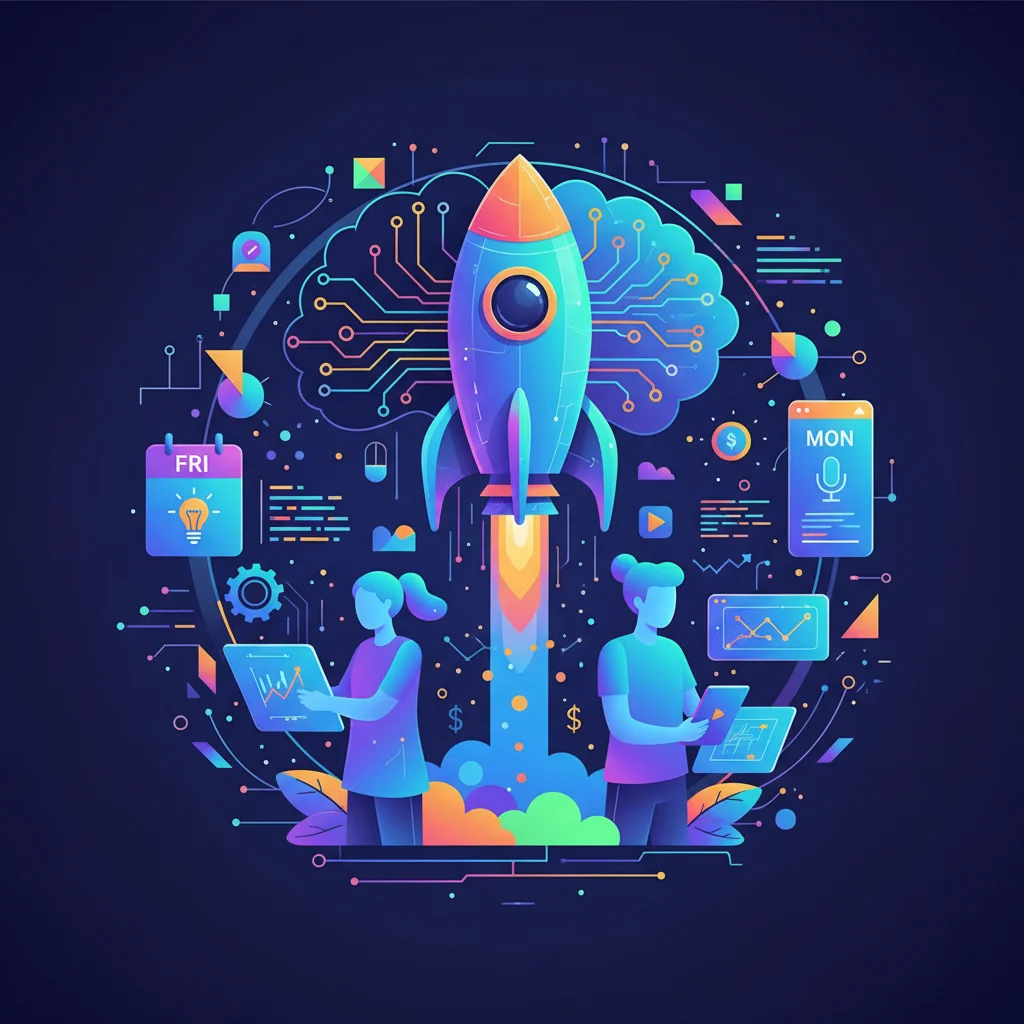
Imagine this: It’s Friday night. A 26-year-old entrepreneur has an idea for a new piece of software. By Monday morning, they have a functional prototype, a complete marketing plan, a pitch deck for investors, and a week’s worth of social media content. Science fiction? Not anymore. Welcome to the era of the AI Native entrepreneur.
A new generation of founders, who have grown up with the internet and adopted artificial intelligence as a second language, are building businesses at a speed that was unimaginable just a few years ago. They are leveraging AI as a co-founder, a developer, a marketer, and an analyst, all rolled into one. As 26-year-old AI entrepreneur Jamie Rawsthorne notes, the ability to use these tools gives him and his peers a significant head-start. But does this technological prowess automatically guarantee success? Or does it simply create a new set of challenges on a familiar battlefield?
This deep dive explores the profound advantages of being an AI-native founder, the hidden pitfalls of a lowered barrier to entry, and the timeless business truths that no amount of automation can replace.
The New Founder’s Toolkit: Life with an AI Co-Pilot
For today’s young entrepreneurs, artificial intelligence isn’t just a tool; it’s the entire toolbox. They are not just using AI; they are thinking with it. This symbiotic relationship is revolutionizing every stage of the startup lifecycle.
Rapid Prototyping and Development
Gone are the days of needing a massive seed round to hire a team of developers before writing a single line of code. With AI-powered programming assistants like GitHub Copilot and direct access to powerful language models, a single founder can now perform the work of a small team. They can:
- Generate boilerplate code for web applications and mobile apps in minutes.
- Debug complex programming issues by simply describing the problem in natural language.
- Design database schemas and write efficient queries without deep expertise.
- Integrate complex machine learning features through simple API calls, democratizing access to powerful capabilities.
This acceleration means the feedback loop—from idea to Minimum Viable Product (MVP) to user feedback—is compressed from months to days. This isn’t just an incremental improvement; it’s a paradigm shift in software development and innovation.
The Lean Marketing Machine
Marketing and sales have traditionally been expensive, time-consuming endeavors. AI is flipping the script. An AI-native founder can now launch a sophisticated, multi-channel marketing campaign from their laptop with a near-zero budget. They use AI for:
- Content Creation: Generating blog posts, social media updates, and email newsletters.
- Branding: Creating logos, brand guidelines, and website designs using generative image models.
- Ad Campaigns: Writing compelling ad copy and identifying target audiences for platforms like Google and Meta.
- Market Research: Analyzing competitor strategies and identifying market gaps by feeding data into AI analysis tools.
This level of automation allows a solo founder to establish a brand presence that once required a dedicated marketing department, preserving precious capital for other critical areas of the business.
The AI Gold Rush is Real, and TSMC is Selling All the Shovels
The Barrier to Entry is Gone. Now What?
While the benefits are undeniable, this new reality comes with a formidable catch. When everyone has a superpower, no one does. Investor and entrepreneur Simon Squibb warns that while AI lowers the barrier to creating a product, it dramatically increases the level of competition. The market is now flooded with AI-generated “me-too” products and SaaS “wrappers”—thin applications that simply put a user interface on top of an existing AI model like GPT-4.
The new challenge isn’t “Can you build it?” but “Why should anyone care?” With technology becoming a commodity, the focus must shift back to the fundamentals of innovation:
- A Unique Idea: Is your solution genuinely novel, or is it just a slightly different version of 100 other AI-powered tools?
- A Deep Understanding of the Customer: Do you solve a real, painful problem for a specific audience?
- A Defensible Moat: What makes your business difficult to copy? Is it proprietary data, a unique workflow, a strong community, or an exceptional brand?
In this new landscape, the core value proposition is more important than ever. Simply having an “AI-powered” product is no longer a differentiator; it’s the table stakes.
The Unchanging Laws of Business Physics
Priya Lakhani, who founded the AI education company Century Tech back in 2013, offers a crucial perspective. Her journey involved building machine learning models from the ground up, a stark contrast to today’s API-driven development. She emphasizes that despite the technological leaps, the core challenges of building a sustainable business remain stubbornly unchanged.
AI can write a sales email, but it can’t build a relationship with a key client. It can generate a pitch deck, but it can’t convey passion and vision to a room of skeptical investors. The following table illustrates the key differences and surprising similarities between the pre-Generative AI startup and the modern AI-Native startup.
| Business Function | Pre-GenAI Startup (c. 2015) | AI-Native Startup (c. 2024) |
|---|---|---|
| Tech Development | Required large, specialized engineering team. Building ML models from scratch was capital-intensive. | A single founder can build an MVP using AI code assistants and APIs. Focus shifts to integration and UX. |
| Marketing & Content | Needed copywriters and marketers. High cost for content creation and ad management. | AI generates copy, images, and social media plans. Focus shifts to strategy and brand voice. |
| Initial Funding Ask | Higher, to cover engineering salaries and long development cycles. | Lower, to cover cloud hosting, API costs, and founder’s runway. Leaner operations are possible. |
| Key Differentiator | Proprietary technology and algorithms. | Unique value proposition, proprietary data, and deep customer understanding. |
| Timeless Challenge | Finding product-market fit. Selling the product. Building a team. Securing funding. | Finding product-market fit. Selling the product. Building a team. Securing funding. |
As the table shows, while the “how” has been transformed by technology, the “what” and “why” of entrepreneurship endure. Critical areas like sales, strategic partnerships, fundraising, and company culture are still profoundly human endeavors. Furthermore, the increased reliance on interconnected cloud services and software introduces complex cybersecurity risks that require vigilant oversight.
The 25% AI Chip Tax: Unpacking the White House's New Gambit in the Tech War with China
Actionable Takeaways for the Modern Entrepreneur
So, how can you navigate this exciting but treacherous new world? The strategy depends on your role in the ecosystem.
For Entrepreneurs & Startup Founders:
Embrace AI as a force multiplier for execution, but do not let it become a substitute for strategy. Use automation to stay lean, test ideas faster, and punch above your weight. However, invest the time you save not in building more features, but in talking to customers. The most successful founders will be those who combine AI’s speed with timeless business acumen and an obsessive focus on solving a real-world problem.
For Developers & Tech Professionals:
Your value is shifting up the stack. The ability to simply write code is becoming less of a differentiator. The new premium skills are in AI integration, prompt engineering, cloud architecture, and MLOps. Focus on becoming a “systems thinker” who can architect robust, secure, and scalable solutions that intelligently weave AI into a SaaS platform. Understanding the nuances of cybersecurity in an AI-driven world is no longer optional; it’s essential.
Apple's AI Gambit: Why Playing Kingmaker is Smarter Than Waging War
Conclusion: The Engine and the Map
The latest generation of entrepreneurs has been handed a powerful gift. Artificial intelligence is the most powerful engine for innovation the world has ever seen, allowing small, agile teams to achieve what once required corporate-level resources. The AI-native founder can outpace, out-produce, and out-maneuver incumbents with breathtaking speed.
But an engine, no matter how powerful, is useless without a map and a destination. The timeless challenges—finding a problem worth solving, understanding the customer deeply, and building a business on a solid foundation—remain the true north of entrepreneurship. The founders who will truly define the next decade will be those who master both: the futuristic power of AI and the enduring principles of building something people truly need.