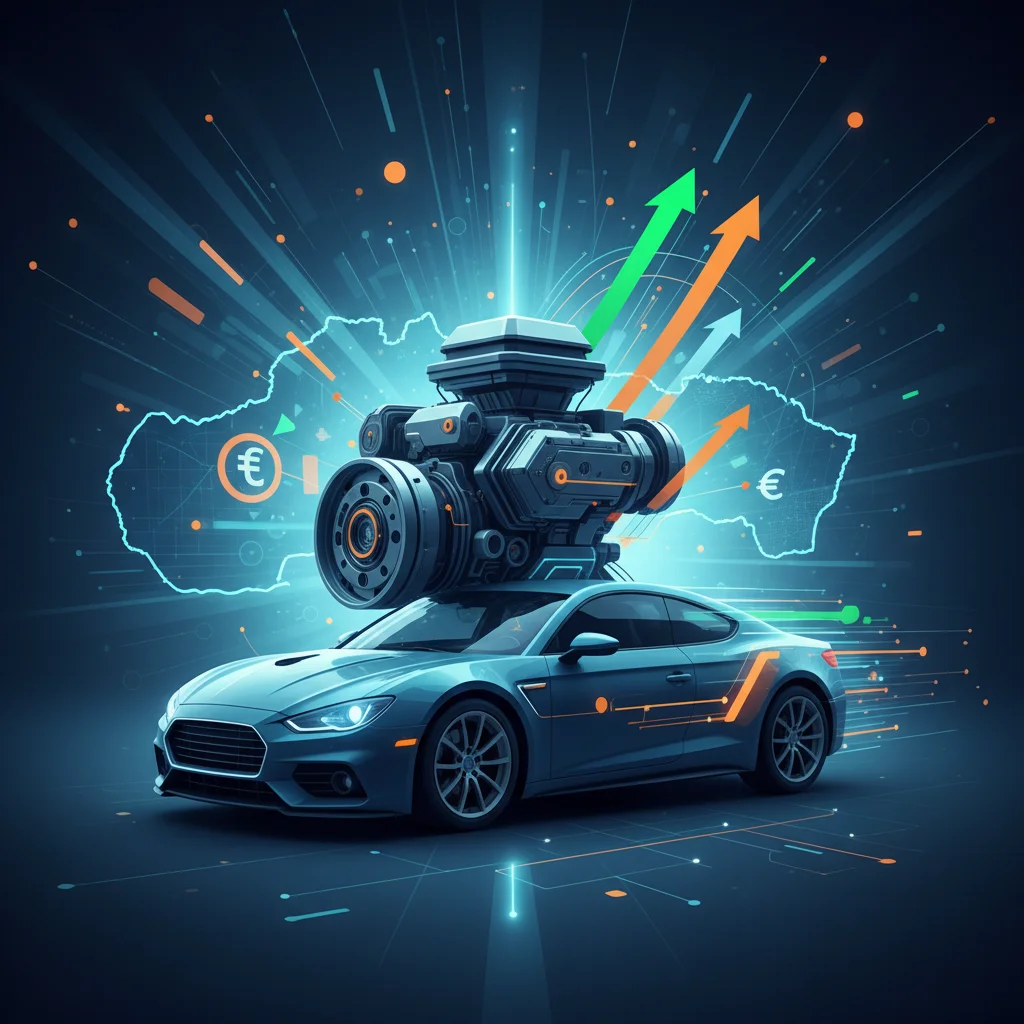
Slovakia’s Auto Supremacy: The Economic Engine That Redefined a Nation
The Unlikely Champion of the Global Auto Industry
In the world of global manufacturing, giants like Germany, Japan, and the United States often dominate the conversation. Yet, a small, landlocked nation in Central Europe has quietly claimed a remarkable title: the world’s number one carmaker on a per-capita basis. Slovakia, with a population of just 5.4 million, produces over one million vehicles annually. This staggering output translates to approximately 184 cars for every 1,000 inhabitants—a density of production unmatched anywhere else on the planet.
This isn’t just a curious piece of trivia; it’s a profound story of economic transformation, strategic investment, and industrial prowess. For investors, finance professionals, and business leaders, Slovakia’s journey offers a compelling case study in how a nation can leverage its strengths to build a world-class economic engine. Understanding this story is crucial for anyone interested in global economics, supply chain dynamics, and the future of manufacturing in an era of technological disruption.
How did this small country become the Detroit of Europe? The answer lies in a calculated blend of strategic location, favorable government policies, a skilled workforce, and the pivotal decision to embrace the global economy.
From Post-Soviet Bloc to Production Powerhouse: A Blueprint for Success
Slovakia’s ascent was not accidental. It was the result of a deliberate, multi-decade strategy that began after the peaceful dissolution of Czechoslovakia in 1993. The newly independent nation inherited a strong industrial tradition but faced the monumental task of transitioning from a centrally planned system to a market-driven economy. The automotive industry became the cornerstone of this new economic architecture.
Several key factors converged to create the perfect environment for automotive investment:
- Strategic Geography: Situated at the crossroads of Europe, Slovakia offers unparalleled logistical access to major Western European markets, particularly Germany’s automotive heartland, as well as emerging markets to the east.
- EU and Eurozone Membership: Joining the European Union in 2004 and adopting the Euro in 2009 were game-changers. These moves eliminated trade barriers, streamlined cross-border commerce, and, crucially, removed currency risk for foreign investors, providing a stable framework for long-term financial planning.
- Favorable Investment Climate: Successive governments rolled out the red carpet for foreign direct investment (FDI) through tax incentives, investment grants, and a commitment to developing infrastructure. This created a predictable and profitable environment for multinational corporations.
- Skilled and Cost-Effective Labor: The country offered a well-educated and technically skilled workforce at labor costs that were, and to some extent still are, more competitive than those in Western Europe. This combination of quality and value was a powerful magnet for manufacturers looking to optimize their production economics.
This potent combination attracted the world’s leading automotive brands, who established massive, state-of-the-art facilities across the country, fundamentally reshaping Slovakia’s economic landscape. The automotive sector now accounts for roughly 13% of the country’s GDP and over 46% of its total industrial production, making it the indispensable pillar of the Slovak economy.
The Titans of the Slovakian Auto Industry
Slovakia’s production might is concentrated in a handful of enormous plants operated by global automotive titans. Each facility is a city unto itself, employing thousands and anchoring a vast ecosystem of local suppliers.
| Manufacturer | Location | Significance & Key Models |
|---|---|---|
| Volkswagen | Bratislava | The first major investor, arriving in 1991. It is one of the most complex plants in the VW Group, uniquely producing vehicles for five different brands, including the Porsche Cayenne, Audi Q7/Q8, and VW Touareg. |
| Stellantis (formerly PSA Peugeot Citroën) | Trnava | Opened in 2006, this highly efficient plant focuses on smaller segment cars like the Peugeot 208 and Citroën C3, playing a key role in the company’s European market strategy. |
| Kia Motors | Žilina | Kia’s only European production facility, opened in 2006. It manufactures the popular Ceed family of models and the Sportage SUV, a significant portion of which are exported globally. |
| Jaguar Land Rover | Nitra | The newest plant, opened in 2018. This £1 billion investment produces the Land Rover Defender and Discovery, showcasing Slovakia’s ability to attract premium brands and sophisticated manufacturing processes. |
The presence of these four giants has created a powerful multiplier effect, fostering a robust domestic supply chain. Hundreds of smaller Tier 1 and Tier 2 suppliers have set up shop to serve the assembly plants, creating a deep and resilient industrial ecosystem that supports over 260,000 jobs directly and indirectly.
Financial and Economic Implications for Investors
The transformation of Slovakia into an automotive powerhouse has profound implications for the world of finance, trading, and investment. While you can’t directly invest in “Slovakia’s Auto Sector” on the stock market, its performance is a critical bellwether for several key areas:
- Stock Market Analysis: For anyone trading stocks of Volkswagen AG, Stellantis N.V., or Tata Motors (owner of JLR), the operational efficiency, labor relations, and output levels of their Slovakian plants are vital data points. A disruption in Nitra or Bratislava can have a material impact on quarterly earnings and stock performance.
- Foreign Exchange and Economy: As a member of the Eurozone, Slovakia’s robust export-driven economy contributes to the overall stability and strength of the Euro. The consistent flow of high-value exports helps bolster the country’s trade balance and fortifies its national finances, making it a stable component of the European economic project.
- Supply Chain Investing: The success of the OEMs has created a ripple effect, turning Central Europe into a hub for a complex automotive supply chain. This presents investment opportunities in logistics, component manufacturing, and industrial real estate. Furthermore, the immense complexity of this system is driving innovation in financial technology. Fintech solutions for supply chain finance, cross-border payment automation, and risk management are becoming essential. There is even growing exploration of blockchain technology to enhance transparency and traceability of parts from supplier to showroom floor.
- Banking and Financial Services: The massive FDI inflows and the ongoing operational financing needs of these industrial giants have fueled a sophisticated banking and financial services sector in Slovakia. This stable industrial base provides a reliable foundation for corporate banking activities and national economic planning.
Beyond the Bar Tab: Why the UK Hospitality Crisis is a Red Flag for the Entire Economy
The Road Ahead: Navigating the Electric Revolution
Slovakia has successfully engineered an economic miracle, transforming itself into the world’s per-capita car production champion. Its journey provides invaluable lessons in economic policy, the power of foreign investment, and the benefits of European integration.
However, the road ahead is fraught with new challenges. The global automotive industry is undergoing its most significant transformation in a century, driven by electrification, autonomous driving, and digitalization. The very factors that fueled Slovakia’s rise—a focus on efficient assembly of traditional vehicles—must now evolve.
The nation’s future prosperity depends on its ability to attract investment in next-generation technologies, particularly battery production and EV assembly. It must also continue to invest in its workforce, upskilling them for the software-defined, high-voltage world of modern automotive manufacturing. Slovakia’s past success was built on steel, combustion, and precision engineering. Its future will be defined by batteries, software, and adaptability. For the global financial community, the “Slovakian miracle” is a story that is far from over; the next chapter is just beginning to be written.
A Dangerous Déjà Vu? Bank of England's Plan to Loosen Capital Rules Sparks Fierce Debate

Related Posts
Collision Course: Why Europe’s Carmakers Are Divided on a “Made in Europe” Future

The Great Rupture: Mark Carney’s Blueprint for Navigating a Fractured Global Economy
