Greenland’s Price Tag: Decoding Trump’s “Forever Deal” and Its Impact on the Global Economy
In the world of high-stakes international relations and global finance, headlines can often seem stranger than fiction. The recent revival of former President Donald Trump’s interest in Greenland is a prime example. Speaking at the World Economic Forum in Davos, Trump mentioned discussions around a “framework of a future deal” for the massive, ice-covered island, framing it as a potential “forever” arrangement. While the initial idea of the U.S. purchasing Greenland was met with bemusement in 2019, dismissing it as a mere real estate fantasy would be a mistake for any serious investor, business leader, or finance professional. This is not just about land; it’s a strategic play involving immense natural resources, shifting global trade routes, and the very future of the global economy.
This renewed focus on Greenland, coupled with a simultaneous backing off from tariff threats against the EU, offers a fascinating case study in geopolitical negotiation and its profound economic implications. For those navigating the complexities of the modern stock market, understanding the undercurrents of such moves is no longer optional—it’s essential for sound investing and strategic planning.
The Strategic Value Proposition: Why Greenland Matters to the Global Economy
To understand the financial and economic calculus behind this audacious idea, one must look beyond the ice. Greenland’s value lies in a powerful trifecta of strategic location, untapped resources, and the transformative effects of climate change.
1. A Geopolitical Nexus in a Warming World
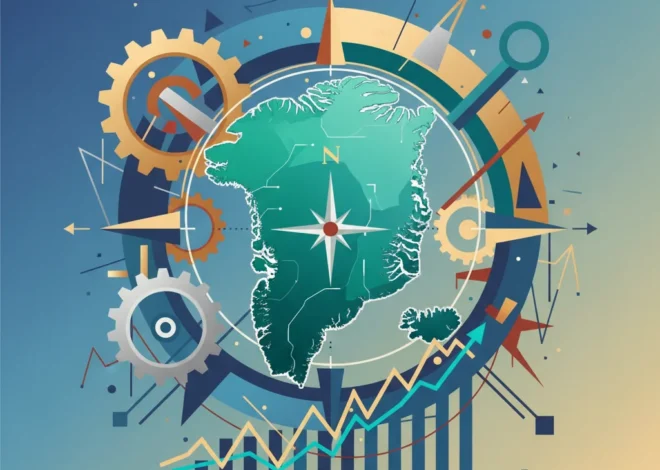
Greenland is the world’s largest island, and its location is becoming more critical by the year. As Arctic ice melts, new, faster shipping lanes like the Northwest Passage and the Northern Sea Route are opening up. Control over or a strong alliance with Greenland provides a significant strategic foothold over these emerging arteries of global trade. For an economy reliant on logistics and supply chains, this is an invaluable long-term asset. Furthermore, the island is home to the Thule Air Base, the U.S. military’s northernmost installation, a critical component of its missile warning and space surveillance network. In an era of renewed great-power competition, its military importance cannot be overstated.
2. A Treasure Trove of Rare Earth Minerals
Perhaps the most compelling driver from an investing and technology perspective is Greenland’s vast, untapped mineral wealth. The island is believed to hold one of the world’s largest deposits of rare earth elements (REEs). These 17 critical minerals are the lifeblood of the modern digital economy, essential for everything from smartphones and electric vehicles to advanced defense systems and renewable energy technology. According to the U.S. Geological Survey, China currently controls over 70% of global rare earth mining and over 85% of processing. This dominance gives Beijing immense leverage over global supply chains. Gaining access to Greenland’s resources would represent a monumental shift in this dynamic, reducing Western dependence on China and creating a seismic event in the commodities market. This has direct implications for the future of financial technology (fintech), sustainable energy investing, and the entire tech sector.
Whitehall's Data-Driven Dream: A 'Yes, Minister' Reality for the UK Economy?
3. The Economics of Climate Change
Ironically, the climate crisis is unlocking Greenland’s economic potential. As the ice sheet recedes, it not only reveals mineral deposits but also opens up land for potential development. While the environmental consequences are dire, the cold, hard economics point to new opportunities in resource extraction, infrastructure, and logistics that were previously unthinkable. This presents a complex scenario for ESG (Environmental, Social, and Governance) investing, pitting strategic resource independence against environmental preservation.
Deconstructing the “Forever Deal” and Tariff Tactics
The language used by Trump—a “forever deal” and the concurrent easing of tariff threats—is a classic negotiation tactic. It combines a grand, long-term vision with a short-term coercive tool, creating a complex landscape for international finance and trade.
What Could a “Forever Deal” Look Like?
While an outright purchase is unlikely given Denmark’s firm refusal, a “deal” could take many forms with significant implications for banking and investing. Possibilities include:
- A Long-Term Strategic Lease: Similar to a 99-year lease in real estate, the U.S. could negotiate exclusive rights to develop resources or expand its military presence in exchange for a substantial annual payment or massive investment package.
- Joint Venture for Resource Extraction: U.S. firms, backed by government financing, could partner with Greenlandic and Danish entities to develop the mining sector. This would involve complex cross-border financing, a prime area for innovation in financial technology to streamline payments and ensure transparency.
- Creation of a Special Economic Zone (SEZ): The U.S. could invest billions in infrastructure to create an SEZ with preferential trade status, attracting international firms and integrating Greenland more closely with the North American economy.
Any of these scenarios would require immense capital, intricate international banking arrangements, and would undoubtedly create unique investment opportunities in mining, logistics, and infrastructure sectors.
Tariffs as the Ultimate Bargaining Chip
Trump’s backing away from a tariff threat against the EU while floating the Greenland idea is a textbook example of linkage politics—connecting two seemingly unrelated issues to gain leverage. This strategy, while potentially effective in the short term, introduces significant volatility into the market.
Below is a simplified look at the economic theory behind using tariffs as a negotiation tool versus their real-world impact on the economy and trading.
| Negotiation Tactic & Stated Goal | Observed Economic & Market Impact |
|---|---|
| Threaten Tariffs to Gain Concessions: The stated goal is to force a trading partner to change policy (e.g., lower their own tariffs, agree to a deal). | Increased Market Volatility: The stock market reacts negatively to uncertainty. Even the threat of tariffs can cause sell-offs as investors price in the risk of a trade war, disrupting stable trading patterns. |
| Impose Tariffs to Protect Domestic Industry: The goal is to make foreign goods more expensive, encouraging consumers and businesses to buy domestic products. | Supply Chain Disruption & Inflation: Businesses scramble to find new suppliers, often at higher costs. These costs are frequently passed on to consumers, contributing to inflation and hurting the broader economy. |
| Use Tariff Revenue for Government Spending: The idea that tariffs paid by foreign countries can fund domestic programs. | Economic Drag: Most economists agree that tariffs are a tax paid by domestic importers and, ultimately, consumers. This reduces consumer purchasing power and can lead to retaliatory tariffs, hurting exporters and slowing overall economic growth. (source) |
For finance professionals, this approach turns international trade from a relatively predictable domain of economics into a volatile game of political maneuvering. It forces businesses to divert capital from productive investment to risk mitigation and supply chain restructuring.
Sleep Arbitrage: The Untapped Alpha in a 24/7 Financial World
Implications for the Modern Investor and Business Leader
So, what are the actionable takeaways from this geopolitical drama for those in the world of finance and business?
- Geopolitical Risk is a Core Portfolio Consideration: The era of assuming stable, rules-based global trade is over. Investors must now actively model for geopolitical shocks. This means diversifying not just across asset classes, but across geographies, and understanding the political risk inherent in every investment, especially those with international supply chains.
- The Scramble for Critical Resources is Real: The focus on Greenland’s rare earths is not an anomaly. The global transition to a green and digital economy is creating intense competition for resources like lithium, cobalt, nickel, and REEs. Investing in companies that are securing these supply chains—through mining, recycling, or technological innovation—is a powerful long-term strategy.
- The Future is About Supply Chain Resilience: For business leaders, the key lesson is the urgent need to build resilient, redundant supply chains. The pandemic and subsequent geopolitical tensions have exposed the fragility of just-in-time, single-source systems. Technologies like blockchain are gaining traction for their ability to provide transparent, verifiable tracking of goods through complex global networks, representing a key growth area in financial technology.
The Maersk Monopoly: Is Danish Shipping the New ‘Rare Earth’ of Global Trade?
Conclusion: From Icy Expanse to Economic Epicenter
The story of Trump, Greenland, and tariffs is far more than a political curiosity. It is a microcosm of the new global reality where geopolitics, resource competition, and unpredictable economic policy are inextricably linked. What happens in the Arctic no longer stays in the Arctic; it has the potential to ripple through the stock market, reshape global supply chains, and dictate the trajectory of key industries from technology to green energy.
For investors and executives, the challenge is to look past the sensational headlines and analyze the fundamental shifts they represent. The “framework of a future deal” for Greenland may never materialize, but the strategic and economic forces driving the conversation are here to stay. In this new landscape, a deep understanding of economics, geopolitics, and their volatile intersection is the most valuable asset of all.