The $50 Million Bet: How Bill Gates & OpenAI Are Using AI to Solve Africa’s Doctor Shortage
Imagine walking into a clinic, worried about a persistent cough, only to find a line stretching out the door. The single nurse on duty is overwhelmed, and the nearest doctor is hours away. This isn’t a scene from a disaster movie; it’s the daily reality for millions in regions grappling with chronic healthcare staff shortages. The World Health Organization estimates Africa will face a shortfall of 6.1 million health workers by 2030. It’s a staggering crisis that technology has, until now, only nibbled at the edges of.
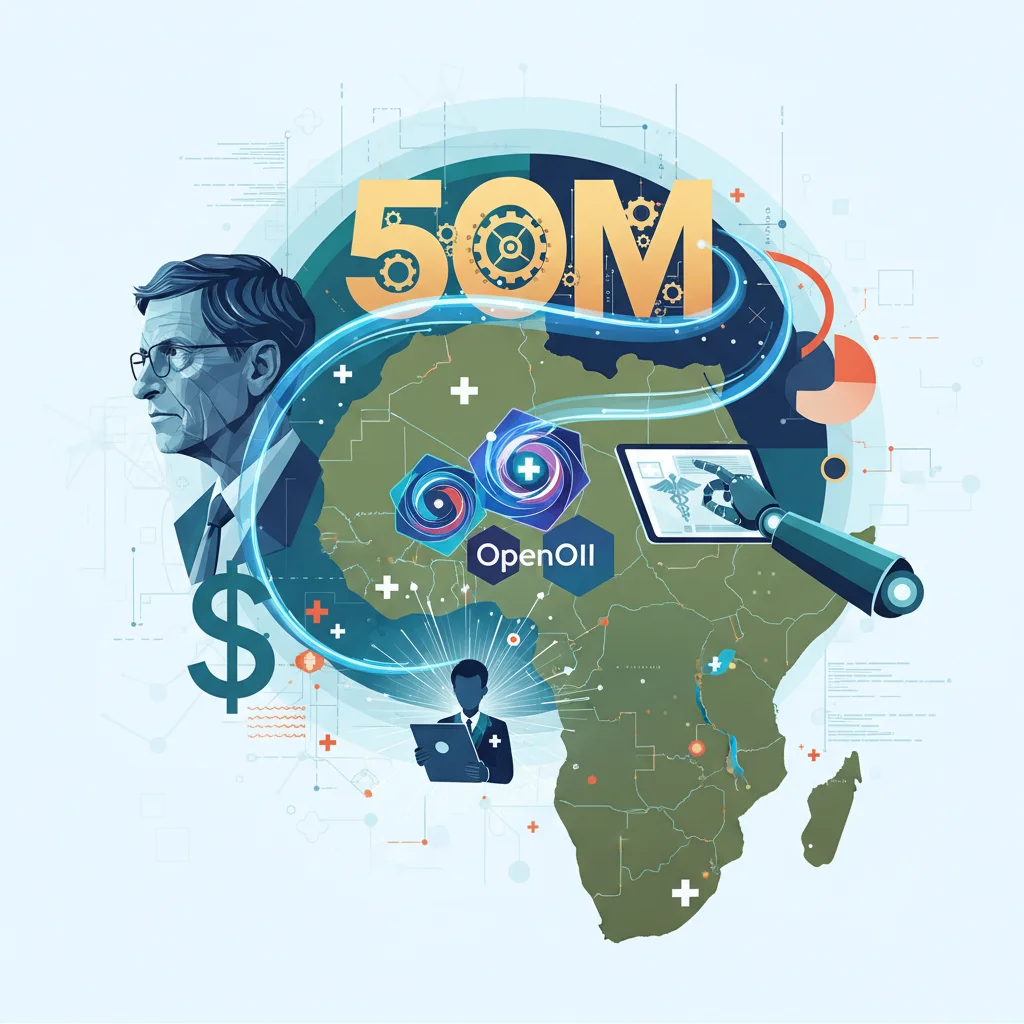
But what if the solution wasn’t just more people, but smarter tools? What if every nurse or community health worker could have an expert medical consultant in their pocket? This is the vision behind a groundbreaking new initiative. The Bill & Melinda Gates Foundation, in a powerful alliance with OpenAI, is backing a $50 million, five-year plan to roll out advanced artificial intelligence in health clinics across Africa and South Asia. This isn’t just a donation; it’s a calculated investment in a future where AI acts as a crucial force multiplier for overburdened healthcare systems.
At the heart of this ambitious project is the UK-based health tech group Babyl, which will spearhead the deployment. The goal? To leverage sophisticated AI and machine learning models to support healthcare workers, improve diagnostic accuracy, and dramatically ease the administrative burden that keeps them from their primary mission: caring for patients.
The Anatomy of an AI-Powered Healthcare Revolution
So, what does this $50 million infusion of capital and technology actually look like on the ground? It’s not about replacing doctors with robots. Instead, it’s about augmenting human expertise with the power of intelligent software. The initiative focuses on deploying an AI-powered platform that acts as a digital health assistant for clinicians.
This system, built by Babyl and powered by cutting-edge models with support from OpenAI, will perform several critical functions:
- AI-Powered Triage: When a patient arrives, a community health worker can input symptoms into the system. The AI analyzes the information against a vast medical database to suggest potential conditions, assess urgency, and recommend the next steps. This ensures that the most critical cases are prioritized, a life-saving function when resources are scarce.
- Clinical Decision Support: For healthcare professionals, the AI serves as a “second opinion.” It can provide information on differential diagnoses, suggest relevant tests, and offer access to the latest treatment guidelines. This is invaluable for workers who may be geographically isolated from senior colleagues.
- Streamlined Automation: The platform will automate routine administrative tasks like note-taking and patient record updates. By transcribing consultations and summarizing key information, it frees up precious minutes for every patient interaction, allowing clinicians to focus on human connection and care.
This entire ecosystem is delivered as a SaaS (Software as a Service) model, running on the cloud. This approach is critical for scalability and accessibility, as it eliminates the need for expensive on-premise hardware in remote clinics and ensures the software is always up-to-date with the latest medical knowledge and AI improvements.
To better understand the key components of this partnership, let’s break down the roles of the major players involved.
| Organization | Role & Contribution |
|---|---|
| Bill & Melinda Gates Foundation | Primary funder and strategic partner, providing a significant portion of the $50mn investment. Drives the global health mission and ensures the project aligns with public health goals. |
| OpenAI | Technology partner, providing access to and expertise on its advanced large language models (LLMs). Ensures the AI engine is state-of-the-art and capable of complex medical reasoning. |
| Babyl | The implementation partner. A health-tech group with existing operations in Rwanda, Babyl is responsible for developing, deploying, and managing the AI software platform in clinics. |
| Local Governments (e.g., Rwanda) | Crucial collaborators for regulatory approval, integration with national health systems, and ensuring the technology meets the specific needs of their populations. |
Why Rwanda is the Perfect Launchpad for Health-Tech Innovation
The decision to pilot and scale this technology in countries like Rwanda is no accident. For years, Rwanda has positioned itself as a hub for technological innovation in Africa. The government has been famously proactive in embracing digital solutions, from drone delivery of medical supplies to a national digital ID system. Babyl, under its “Babyl Rwanda” brand, already operates one of the largest digital health services in the region, a testament to this forward-thinking environment (source).
This existing digital infrastructure and political will create a fertile ground for introducing advanced artificial intelligence. The lessons learned in Rwanda will be invaluable for creating a blueprint that can be adapted and rolled out to other countries facing similar healthcare challenges, such as Ethiopia, Kenya, and Nigeria.
An Unlikely Alliance: Why Apple Is Swallowing Its Pride to Power Siri with Google AI
The real test, however, won’t be the sophistication of the AI’s programming, but its resilience and adaptability. Can the models be fine-tuned to understand local dialects, cultural nuances in describing symptoms, and region-specific diseases? How will the system perform in low-bandwidth environments? The success of this project will set a major precedent. If it works, it could unlock billions in further investment and fundamentally reshape how we deliver care in the world’s most underserved communities. If it stumbles, it will be a cautionary tale about the vast gap between Silicon Valley code and the complex reality of a rural health clinic.
The Double-Edged Sword: Balancing Promise with Peril
No technological leap forward comes without its challenges, and deploying AI in such a sensitive domain requires a clear-eyed view of both the benefits and the risks. The potential upside is transformative, but the potential pitfalls are equally significant.
The Promise: A New Paradigm for Healthcare
- Democratized Expertise: The system effectively puts the knowledge of thousands of medical journals and specialists into the hands of a local nurse.
- Unprecedented Scale: Unlike human doctors, an AI-powered system can be scaled across thousands of clinics simultaneously for a fraction of the cost.
- Data-Driven Public Health: Aggregated, anonymized data from the platform could provide health ministries with real-time insights into disease outbreaks and health trends, enabling faster and more effective responses.
- Efficiency Gains: By handling triage and admin, the AI frees human workers to do what they do best: provide empathetic, hands-on care.
The Peril: Navigating the Ethical and Technical Minefield
- Algorithmic Bias: AI models are trained on data. If that data is primarily from Western populations, the AI could be less accurate for African patients, potentially perpetuating health inequities. Rigorous testing and fine-tuning on local data are non-negotiable.
- Data Privacy and Cybersecurity: Handling sensitive patient health information requires Fort Knox-level security. A data breach would be catastrophic, not just for individuals, but for public trust in digital health solutions. Robust encryption, access controls, and compliance with local data sovereignty laws are paramount.
- The “Human-in-the-Loop” Imperative: The AI is a tool to support, not replace, human judgment. Clear protocols must be in place to ensure a qualified human clinician makes the final call on any diagnosis or treatment plan. Over-reliance on the technology could be dangerous.
- The Digital Divide: The success of such a system depends on reliable electricity and internet connectivity, which can be inconsistent in many rural areas. Offline functionality and low-bandwidth optimization will be key technical hurdles.
Monzo Down: What a Single Outage Reveals About the Fragile Future of Cloud Banking
The Call to Action for Startups and Developers
This high-profile initiative is a massive signal to the global tech community. It validates the market for sophisticated, AI-driven solutions in emerging economies and opens up a new frontier for innovation. For entrepreneurs and developers, this isn’t just a distant news story; it’s a call to action.
The Gates/OpenAI/Babyl project will undoubtedly create a platform, but an entire ecosystem of tools and services will be needed to support it. This creates opportunities for:
- Hyper-Local Startups: Companies that specialize in collecting and annotating local medical data to reduce algorithmic bias.
- Cybersecurity Experts: Specialists in securing health-tech platforms and ensuring compliance with diverse national data privacy laws.
- Integration Specialists: Developers who can build bridges between this new AI platform and existing government health information systems.
- Ed-Tech Innovators: Creators of training modules that teach healthcare workers how to use these new AI tools effectively and ethically.
The demand for talent with skills in machine learning, cloud architecture, and secure software development will skyrocket in the global health sector. This project is just the beginning.
Netflix's Ultimate Endgame: Why a Warner Bros. Bid is a High-Stakes Play for AI and Cloud Dominance
The Dawn of a New Era in Global Health
The partnership between the Gates Foundation, OpenAI, and Babyl is more than just an investment; it’s a bold declaration that artificial intelligence is ready to move from the lab to the front lines of global healthcare. By directly addressing the critical issue of staff shortages, this $50 million bet aims to create a more equitable and efficient healthcare future for millions. It’s a complex, ambitious endeavor fraught with challenges, but its success could provide the blueprint for one of the most meaningful applications of AI in human history—turning the tide on a global health crisis, one patient at a time.