The Corporatist Threat: Why Your Old Model of Political Risk Is Dangerously Obsolete
The Blind Spot in Modern Investing
For decades, the playbook for assessing international investment risk was clear and well-rehearsed. An investor, considering deploying capital in a foreign country, would first consult the sovereign risk ratings from agencies like Moody’s or S&P. They would analyze the stability of the government, the rule of law, the risk of expropriation, and the potential for currency controls or civil unrest. This was the world of political risk—a risk defined by the actions of nation-states. But what if the greatest political risk today isn’t coming from governments alone, but from the complex, symbiotic, and often opaque relationship between governments and mega-corporations?
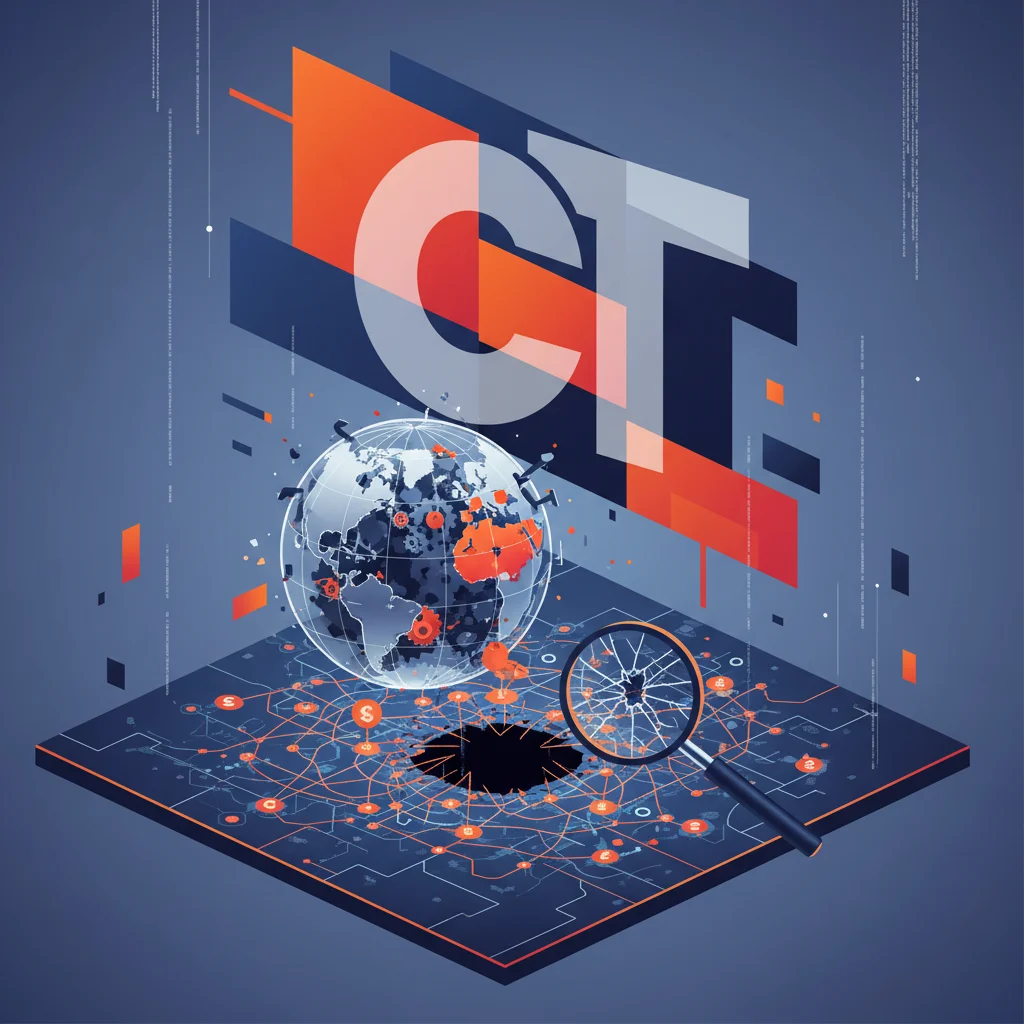
In a thought-provoking letter to the Financial Times, Andrew Mills of Insight Financial Research argues precisely this. He contends that the classic model is failing because we have entered a new era of “rising corporatism.” This isn’t just an academic term; it’s a fundamental shift in the global economy that has profound implications for investing, finance, and the stability of the stock market. The lines between corporate power and state power are blurring, creating a new, poorly understood category of risk that can blindside even the most diligent investor.
This new paradigm demands a complete overhaul of how we think about political risk. It’s no longer just about what a country’s government might do to a company, but what governments and corporations might do together, and how giant corporations now wield power that was once the sole domain of the state.
From Country Risk to Corporate-State Nexus
To understand this shift, we must first appreciate the old model. Traditional political risk was primarily concerned with the sovereign power of a state. The nightmare scenarios for international investors were events like a revolutionary government seizing foreign-owned assets, a sudden devaluation of the currency, or the imposition of capital controls that trap investments within a country’s borders. The focus was geographically contained and actor-specific: the nation-state was the primary source of risk.
The new model, which we can call “corporatist risk,” is far more complex. It describes a two-way street of influence and power that intertwines the world’s largest companies with national governments.
- Governments Using Corporations as Policy Instruments: As Mills points out in his letter published in the FT, governments increasingly use corporations to achieve foreign policy and domestic social objectives. When Western governments imposed sanctions on Russia, it wasn’t just a state-to-state action. They compelled multinational corporations in banking, energy, and consumer goods to cease operations and divest assets, effectively deputizing them as agents of foreign policy.
- Corporations Influencing State Policy: Conversely, corporations are no longer passive recipients of regulation. Through immense lobbying efforts, they actively shape legislation, regulation, and tax policy to their benefit. In the U.S. alone, corporate lobbying spending reached a staggering $4.1 billion in 2022, a figure that highlights the scale of corporate influence in the corridors of power. This “regulatory capture” can create unlevel playing fields, stifle competition, and introduce risks for smaller players and the broader market.
This dynamic creates a feedback loop where state and corporate interests become increasingly aligned, often at the expense of free-market principles and smaller economic actors. The risk is no longer confined to a single country’s borders; it’s embedded within the structure of multinational corporations themselves.
Scotland's Final Frontier: Charting the Investment Trajectory of a New Space Economy
Case Studies in Corporatist Risk
This isn’t a theoretical problem. We see its effects across the financial landscape every day.
1. The Weaponization of ESG
Environmental, Social, and Governance (ESG) criteria began as a way for ethically-minded investors to screen companies. Today, it has evolved into a powerful tool of industrial and social policy. Large asset managers, often in alignment with government climate goals, wield their immense voting power to compel corporate boards to adopt specific environmental targets or social policies. This can force entire sectors to reallocate capital, sometimes based on political agendas rather than pure economics or shareholder value. For an investor, a company’s stock performance may now depend as much on its ability to navigate these quasi-political ESG demands as on its core business operations.
2. Big Tech: The New Sovereign Powers?
The relationship between governments and major technology firms is a prime example of the corporatist dynamic. These companies possess vast control over information, communication, and digital infrastructure—areas once managed by public utilities or government agencies. We see governments attempting to rein them in through antitrust actions and data privacy regulations, creating massive uncertainty for the tech sector. Simultaneously, these same companies are critical to national interests, from cybersecurity to the advancement of AI, leading to complex partnerships and dependencies. This creates a volatile environment where a single regulatory decision or geopolitical spat can erase billions in market value overnight.
3. Geopolitics and the Global Supply Chain
The US-China trade and technology war has turned the global supply chain into a geopolitical battleground. Companies in sectors like semiconductors and advanced financial technology are no longer just commercial entities; they are strategic assets in a global power struggle. Governments now restrict who these companies can sell to (e.g., export controls on advanced chips) and where they can operate. A company’s dependence on a single-source supplier in a geopolitically sensitive region is no longer just a logistical risk—it’s a major political liability that traditional models fail to capture. According to a report by the IMF, this geopolitical fragmentation poses a significant threat to the global financial system by increasing uncertainty and volatility.
A New Framework for Political Risk Analysis
To navigate this new reality, investors and business leaders need to discard their outdated maps and adopt a new framework. The focus must shift from a purely geographic lens to a relational one, analyzing the intricate network of connections between corporations and states.
The table below contrasts the traditional model of political risk with the emerging corporatist risk model:
| Factor | Traditional Political Risk Model | Corporatist Risk Model |
|---|---|---|
| Primary Actor | The Nation-State | The State-Corporation Nexus |
| Key Dangers | Expropriation, currency controls, civil unrest, nationalization. | Regulatory capture, weaponized sanctions, politically-driven ESG mandates, supply chain disruptions, lobbying influence. |
| Key Metrics | Sovereign debt ratings, rule of law index, political stability scores. | Lobbying expenditures, regulatory dependency, geopolitical exposure of supply chains, key personnel’s political ties. |
| Geographic Focus | Primarily emerging markets or politically unstable nations. | Global, including developed markets (e.g., US, EU) where corporate influence is highest. |
| Analysis Method | Country-level macroeconomic and political analysis. | Network analysis, stakeholder mapping, and sector-specific regulatory forecasting. |
The Shadow State: Why Whitehall's Billion-Pound Consulting Habit Matters for Your Money
What This Means for You: Actionable Insights
Understanding this new risk paradigm is the first step. The next is incorporating it into your decision-making, whether you are an investor, a CEO, or a finance professional.
For Investors:
Your due diligence process must now include a “corporatist risk” audit. Ask critical questions: How much does this company spend on lobbying? Is its business model heavily dependent on favorable regulations that could change with a new political administration? Is it operating in a sector deemed “strategic” by major world powers? Diversification is still key, but it must now include diversification away from concentrated regulatory and geopolitical risks, not just asset classes or countries.
For Business Leaders:
Navigating this environment is no longer just the job of the legal or compliance department. It is a core strategic function. Building resilient supply chains, diversifying markets, and developing a sophisticated understanding of the political landscape in which you operate are paramount. Proactive engagement with policymakers is essential, not just to lobby for your interests, but to anticipate and adapt to the shifting winds of industrial policy.
For the Financial Technology Industry:
This complexity creates a massive opportunity. The fintech world is poised to develop the tools needed to analyze and mitigate these new risks. This means creating platforms that go beyond standard financial data, incorporating data on lobbying, political connections, regulatory filings, and geopolitical sentiment into trading algorithms and investment analysis platforms. The next generation of risk management will be data-driven and powered by advanced financial technology.
Geopolitical Tremors: How US-Iran Tensions Could Reshape Your Investment Portfolio
Conclusion: The Unseen Risk is the Greatest
The world has changed. The clear-cut division between the public and private sectors that underpinned classic free-market capitalism is fading. As Andrew Mills rightly identified, we are in an age of rising corporatism, where the interplay of state and corporate power is now a primary driver of market outcomes. To ignore this shift is to navigate the modern investment landscape with an obsolete compass.
The risks are no longer just “over there” in some distant, unstable country. They are embedded in the very structure of the global economy and the balance sheets of the world’s largest companies. By recognizing, analyzing, and adapting to the reality of corporatist risk, investors and leaders can not only protect themselves from unforeseen shocks but also identify new opportunities in an increasingly complex world. The future of successful investing and strategic management will belong to those who see the board for what it is—a complex game where corporations and governments are now playing as a team.