From Greenland to Global Markets: How a Diplomatic Spat Threatens to Derail US-EU Trade
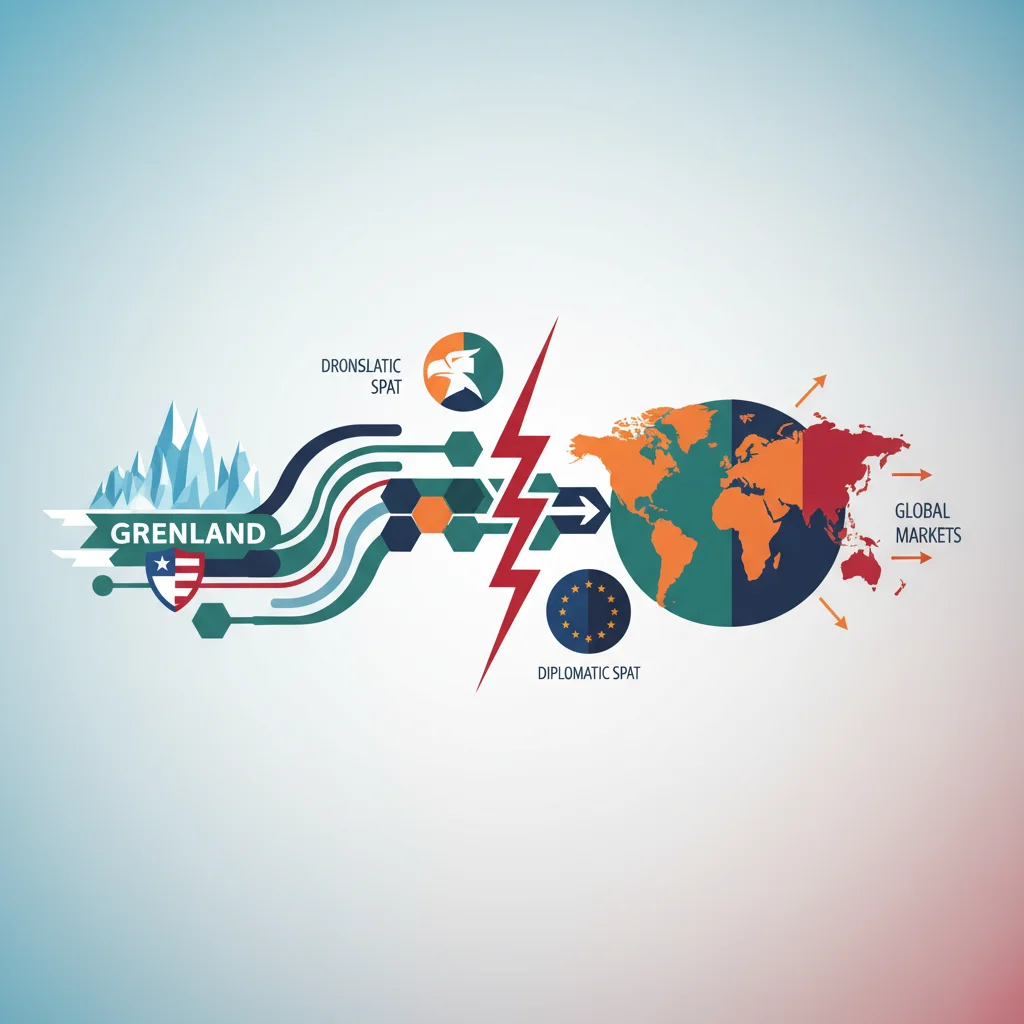
In the world of international relations and high-stakes finance, catalysts for market volatility can emerge from the most unexpected quarters. Recently, a seemingly outlandish proposition—former U.S. President Donald Trump’s push to acquire Greenland—has spiraled into a significant transatlantic rift, culminating in Europe’s decision to suspend the approval of a crucial U.S. tariffs deal. This development is far more than a curious diplomatic footnote; it serves as a stark reminder of how geopolitical posturing can directly threaten economic stability, rattle the stock market, and reshape the landscape for international investing.
For investors, business leaders, and finance professionals, understanding the intricate dance between diplomacy and economics is no longer optional. The suspension of this trade agreement, directly linked to tensions over Greenland, underscores a volatile new era where political whims can have immediate and tangible consequences for global commerce and financial markets. This article delves into the layers of this complex issue, analyzing the geopolitical context, the economic fallout, and the critical implications for the future of finance and trading.
The Geopolitical Spark: More Than Just an Island
At first glance, the notion of the United States purchasing Greenland from Denmark sounds like a relic of a bygone era of colonial expansion. However, the move, though unconventional, was rooted in modern strategic interests. Greenland’s location in the Arctic Circle gives it immense geopolitical importance, offering a strategic vantage point for military operations and monitoring. Furthermore, as climate change accelerates the melting of polar ice, new shipping lanes and access to vast, untapped reserves of rare-earth minerals, oil, and gas are emerging. These resources are critical for everything from smartphones to advanced defense systems, making Greenland a prize in the 21st-century global economy.
The Danish government’s response was swift and unequivocal. Prime Minister Mette Frederiksen labeled the idea “absurd,” emphasizing that “Greenland is not for sale.” The ensuing diplomatic fallout led to the abrupt cancellation of a planned state visit by President Trump. While the headlines focused on the diplomatic drama, the European Union was taking note. The incident was viewed not as an isolated eccentricity but as another example of a transactional, “America First” approach to foreign policy that unnerved long-standing allies. This erosion of trust became the direct catalyst for a major economic countermove: hitting the pause button on trade negotiations. According to a BBC report, the move to suspend the tariff deal approval was a direct consequence of these “renewed tensions.”
Geopolitical Tremors: How New US Tariffs on Iran Trade Could Rattle the Global Economy
Reigniting the Flames of a Transatlantic Trade War
The now-suspended deal was intended to be a ceasefire in an escalating trade conflict between the two largest economic blocs in the world. For years, the U.S. and EU have been locked in disputes over a range of goods, from steel and aluminum to aircraft subsidies and digital services taxes. These tensions have already had a measurable impact on the global economy, disrupting supply chains and creating uncertainty for multinational corporations.
The U.S.-EU economic relationship is colossal, with trade in goods and services reaching nearly $1.3 trillion annually (source: Office of the U.S. Trade Representative). Tariffs imposed by either side act as a tax on this activity, raising costs for businesses and, ultimately, for consumers. The suspension of a de-escalation agreement signals that existing tariffs may remain in place and that the threat of new ones looms large, particularly in sensitive sectors like the automotive industry.
To put the scale of this economic partnership into perspective, consider the following key trade statistics:
| Metric | Value (Most Recent Full Year Data) |
|---|---|
| Total U.S.-EU Trade in Goods & Services | $1.3 Trillion |
| U.S. Goods & Services Exports to EU | $554 Billion |
| U.S. Goods & Services Imports from EU | $719 Billion |
| U.S. Foreign Direct Investment in EU | $4.1 Trillion |
| EU Foreign Direct Investment in U.S. | $3.2 Trillion |
Data sourced from the Office of the U.S. Trade Representative and other economic aggregates.
This table illustrates the deep integration of the two economies. A prolonged trade dispute doesn’t just affect exporters and importers; it threatens the returns on trillions of dollars in cross-border investing, impacting pension funds, corporate profits, and the overall health of the stock market.
The Ripple Effect: From Global Economics to Your Portfolio
When the world’s two largest economies spar, the shockwaves are felt globally. For the broader economy, prolonged trade uncertainty acts as a powerful headwind. The International Monetary Fund has repeatedly warned that trade disputes suppress global GDP growth by discouraging business investment, complicating supply chain management, and increasing inflation (source). Companies that rely on transatlantic trade, from German car manufacturers to American agricultural exporters, face a difficult choice: absorb the higher costs of tariffs, which hurts profitability, or pass them on to consumers, which can dampen demand.
This uncertainty is poison for the stock market. Markets thrive on predictability, and the arbitrary nature of politically motivated trade actions creates the opposite. Investors are forced to price in higher risk, which can lead to lower valuations and increased volatility. Key market indices can swing wildly on a single tweet or a statement from a trade official. Specific sectors are particularly vulnerable:
- Automotive: A perennial target in U.S.-EU trade talks, carmakers and their parts suppliers face significant risk from potential auto tariffs.
- Technology: While not the focus of this specific dispute, the tech sector is often caught in the crossfire of regulatory and tax-related disagreements, such as digital services taxes.
- Aerospace: The long-running Boeing-Airbus subsidy dispute is a constant source of tariff threats.
- Consumer Goods & Agriculture: These sectors are frequently targeted with retaliatory tariffs, impacting everything from French wine to American whiskey.
For the modern investor, this environment demands a sophisticated approach to risk management. Diversification across asset classes and geographic regions remains a cornerstone of sound investing, but it’s no longer enough. A deeper understanding of how geopolitics influences economics is essential for successful trading and long-term wealth preservation.
The Future of Finance in an Unpredictable World
This episode is a microcosm of a larger trend: the weaponization of economic policy for political ends. As this trend continues, the world of banking and finance must adapt. The traditional mechanisms of international trade, which rely on stable correspondent banking relationships and predictable regulatory frameworks, are being strained.
This is where innovation in financial technology (fintech) becomes critically important. As cross-border transactions become more complex due to tariffs and potential sanctions, there is a growing demand for fintech solutions that can enhance transparency, reduce friction, and automate compliance. For example, advanced platforms can help businesses calculate complex tariff liabilities in real-time or navigate the patchwork of international regulations.
Looking further ahead, the concept of blockchain technology offers a compelling, albeit futuristic, vision for a more resilient global trade system. A distributed ledger could provide an immutable record of a product’s journey through the supply chain, simplifying customs clearance and verifying origins. Smart contracts could automate payments upon the verified receipt of goods, reducing reliance on traditional intermediaries and building trust in a low-trust environment. While mainstream adoption is still years away, the current geopolitical instability is undoubtedly a powerful catalyst for research and development in this space.
From Scrapped Plans to a New Economic Artery: The Birmingham-Manchester Rail Link Reimagined
Conclusion: Navigating the New Nexus of Politics and Profit
The suspension of the U.S.-EU tariff deal, sparked by a dispute over Greenland, is a potent illustration of our hyper-connected world. A single diplomatic maneuver can set off a chain reaction that impacts international economics, corporate balance sheets, and investment portfolios across the globe. It proves that in the 21st century, the disciplines of finance, economics, and international relations are inextricably linked.
For business leaders and investors, the key takeaway is the need for vigilance and adaptability. The era of stable, rules-based globalization is being challenged, replaced by a more fragmented and competitive landscape. Success in this new environment will require not only sharp financial acumen but also a keen understanding of the geopolitical currents that shape the global economy. Staying informed, diversifying intelligently, and embracing the financial technology that can help navigate this complexity will be the defining features of successful investing and trading in the years to come.