From Assembly Lines to Front Lines: Why Renault’s Drone Deal is a Landmark Moment for Tech and Defense
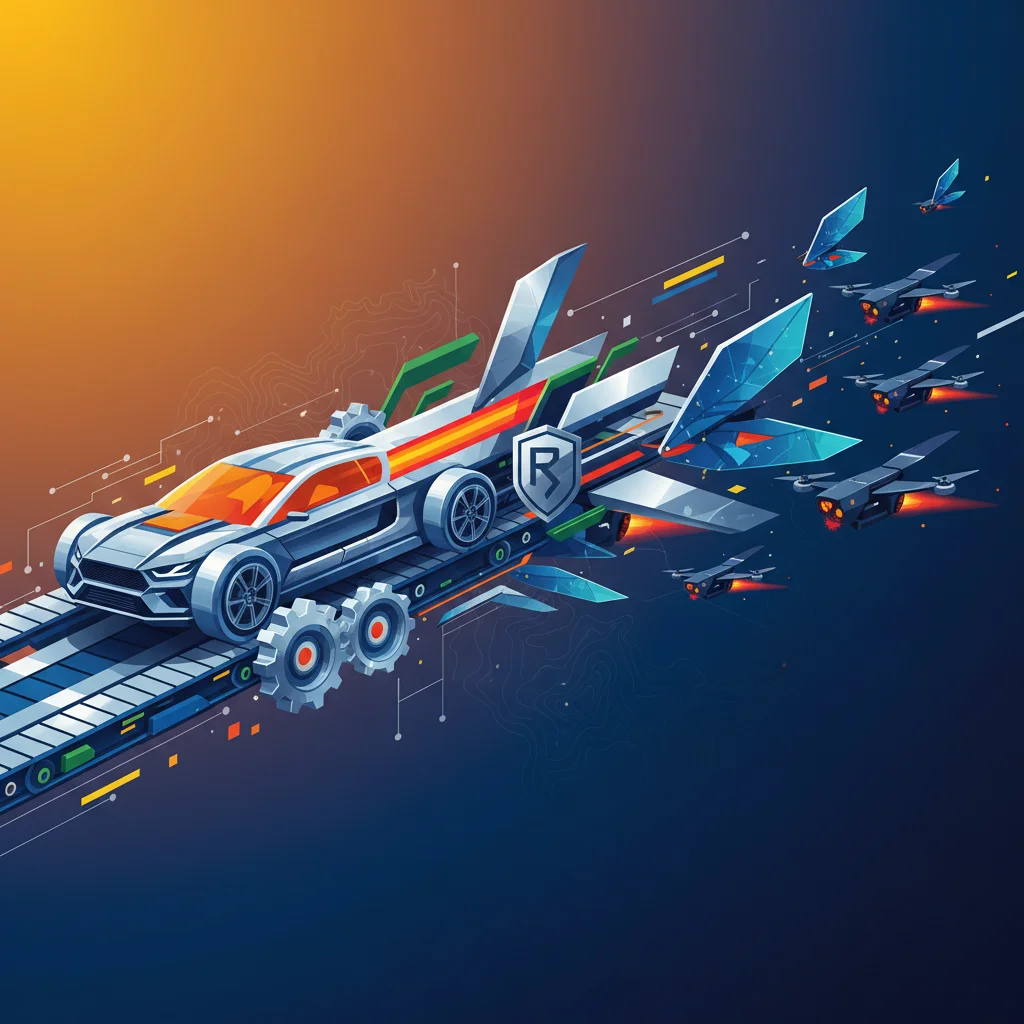
In a move that feels ripped from the pages of a techno-thriller, one of Europe’s most iconic car manufacturers, Renault, is retooling parts of its operation to build military drones. This isn’t a concept or a future-forward press release; it’s a concrete deal. Renault is partnering with French defense group Turgis Gaillard to produce advanced unmanned aerial vehicles (UAVs) for Ukraine, as reported by the Financial Times. At first glance, the image of a car factory churning out drones is jarring. But look closer, and you’ll see this isn’t just a story about a car company making a new product. It’s a powerful signal about the future of manufacturing, the critical role of software and AI in modern geopolitics, and a new paradigm of industrial innovation born from necessity.
For developers, entrepreneurs, and tech professionals, this alliance is more than just a headline. It’s a living case study in industrial agility, the power of automation, and the blurring lines between commercial and defense technology. It demonstrates how core competencies in mass production, supply chain logistics, and advanced software development are becoming strategic assets in a rapidly changing world. Let’s break down why this seemingly unusual partnership is a game-changer and what it means for the future of technology.
The Unexpected Alliance: When Automotive Precision Meets Aerospace Innovation
The partnership brings together two very different worlds. On one side, you have Groupe Renault, a titan of the automotive industry with over a century of experience in mass-producing complex machines for the consumer market. Their expertise lies in lean manufacturing, global supply chains, and high-level automation. On the other, you have Turgis & Gaillard, a more agile and modern French defense company, responsible for designing the high-tech Aarok drone—a sophisticated piece of military hardware.
So, why does this make sense? The challenge in modern defense isn’t just designing a brilliant piece of technology; it’s producing it at scale, quickly and cost-effectively. Legacy defense contractors are often criticized for slow, wildly expensive production cycles. Ukraine needs drones not in a decade, but now, and in large numbers. This is where Renault’s industrial might becomes a strategic weapon.
Renault understands how to:
- Optimize Assembly Lines: They are masters of the moving assembly line, a concept that can be adapted from building cars to building drones. The principles of modular assembly, quality control at every station, and just-in-time inventory are directly transferable.
- Leverage Automation: Modern car factories are wonders of automation, with robots performing tasks from welding to painting with incredible precision. This same robotic programming and automation infrastructure can be repurposed for drone manufacturing, ensuring consistency and speed.
- Manage Complex Supply Chains: A single car has tens of thousands of parts sourced from hundreds of suppliers globally. Managing this intricate dance is Renault’s daily business. This expertise is invaluable for sourcing the complex electronics, composites, and sensors needed for the Aarok drone.
According to the deal, Renault will utilize two of its sites for the project, adapting its existing industrial prowess for a completely new application (source). This is a prime example of “dual-use” potential, where civilian industrial capacity can be pivoted to meet urgent defense needs.
The Hard Reset: Why Your Robot Revolution Is Failing and How to Fix It
More Than a Flying Machine: The Software, AI, and Cybersecurity Core
To think of the Aarok drone as just a piece of hardware is like thinking of a smartphone as just a piece of glass and metal. The true power of modern UAVs lies in the immense stack of technology that powers them, a domain deeply familiar to software developers and tech professionals.
Artificial Intelligence and Machine Learning: At its heart, an advanced drone is an AI-powered edge computing device. The on-board systems rely heavily on machine learning algorithms for a range of functions:
- Autonomous Navigation: Flying in GPS-denied environments or navigating complex terrain without a human pilot requires sophisticated AI models.
- Object Recognition: Machine learning is used to identify and classify objects on the ground from high altitudes, distinguishing between a civilian vehicle and a military target, for example.
- Predictive Maintenance: AI can analyze sensor data from the drone’s components to predict potential failures before they happen, a crucial feature for mission reliability.
Cloud, SaaS, and Software-Defined Operations: A single drone is powerful, but a fleet of drones operating as a networked system is revolutionary. This is where cloud infrastructure and Software-as-a-Service (SaaS) models come into play. Mission data is often streamed to a central cloud platform for analysis, intelligence gathering, and command and control. The drone’s operating system and mission-specific software can be updated over the air, much like a Tesla receives a software update. This software-defined approach means the drone’s capabilities can evolve long after it has left the factory floor.
Cybersecurity: The Invisible Battlefield: With this level of connectivity comes immense vulnerability. For a military drone, cybersecurity is not an add-on; it is a fundamental design requirement. Every line of code, every communication protocol, and every data link must be hardened against jamming, spoofing, and hacking attempts. A breach could mean not just the loss of an asset, but the compromise of sensitive intelligence or, worse, the weapon being turned against its operators. This requires a deep bench of cybersecurity expertise, from penetration testing to encrypted communications, making it a critical field for innovation.
The New Defense Model: Agility and Scale Over Monolithic Programs
The Renault-Turgis Gaillard partnership is a perfect illustration of the clash between old and new defense procurement models. The traditional approach is often slow and bureaucratic, while the new model, driven by startups and commercial tech, prioritizes speed and iteration.
Here’s a comparison of these two worlds:
| Attribute | Traditional Defense Model | New Tech-Driven Model (e.g., Renault/Turgis Gaillard) |
|---|---|---|
| Development Cycle | Decades-long, linear development (waterfall). | Rapid, iterative development (agile), often measured in months. |
| Key Players | Large, established defense prime contractors. | Partnerships between agile startups and industrial giants. |
| Technology Source | Bespoke, proprietary military technology. | Adaptation of commercial off-the-shelf (COTS) technology, especially software and AI. |
| Cost Structure | Extremely high per-unit cost, massive R&D overhead. | Focused on lowering per-unit cost through mass production and existing tech. |
| Innovation Driver | Government requirements and long-term contracts. | Market-driven innovation, speed, and battlefield necessity. |
This new model is a huge opportunity for startups and tech companies. The Pentagon and European ministries of defense are increasingly looking for companies that can deliver cutting-edge software, AI, and automation solutions quickly. They recognize that the most advanced artificial intelligence isn’t being developed in a top-secret lab, but by the same companies powering our social media feeds and cloud services. This deal proves that industrial giants are also a key part of this new ecosystem, providing the scale that startups often lack (source).
Deepfakes, Disinformation, and a Political Ultimatum: Is Time Up for Social Media's Self-Regulation?
The Future is a Hybrid: Implications for Tech Professionals
What does this mean for someone working in tech? It means your skills are more relevant to national and global security than ever before. The future of defense is being written in Python and C++, managed on AWS and Azure, and optimized by machine learning engineers.
For Developers and Programmers: The demand for secure, resilient, and efficient code has never been higher. Whether it’s programming the flight controls of a drone, developing the user interface for its ground control station, or building the cloud backend to process its data, the opportunities are immense. This is a field where robust programming is not just a best practice; it’s a mission-critical requirement.
For Entrepreneurs and Startups: The barrier to entry in the defense market is lowering. If you have a groundbreaking innovation in AI, robotics, cybersecurity, or data analytics, governments are now more willing to listen. The “dual-use” grant programs and venture capital arms of defense departments are actively seeking out commercial innovation they can adapt.
For the Tech Industry at Large: This deal is a wake-up call. The neat lines separating “consumer tech,” “enterprise software,” and “defense tech” are dissolving. The technologies being developed for self-driving cars have direct applications in autonomous drones. The cloud architecture built for a SaaS product can be hardened for military logistics. This convergence creates both massive opportunities and complex ethical landscapes that the industry must navigate.
Two Heads, One Throne: Why the Co-CEO Model is Tech's New Power Play
A Glimpse into the Future
The collaboration between a car company and a defense firm to build drones for a nation at war is a profound moment. It is a testament to human ingenuity and industrial adaptability under pressure. It underscores the fact that in the 21st century, a nation’s strength is measured not just by its military hardware, but by the agility and innovation of its entire industrial and technological base (source).
The Renault-Turgis Gaillard deal is more than just a business agreement. It is a blueprint for the future—a future where automation, software, and artificial intelligence are the cornerstones of both commercial success and strategic defense. It’s a future where the code you write or the manufacturing process you optimize could have an impact far beyond what you ever imagined.