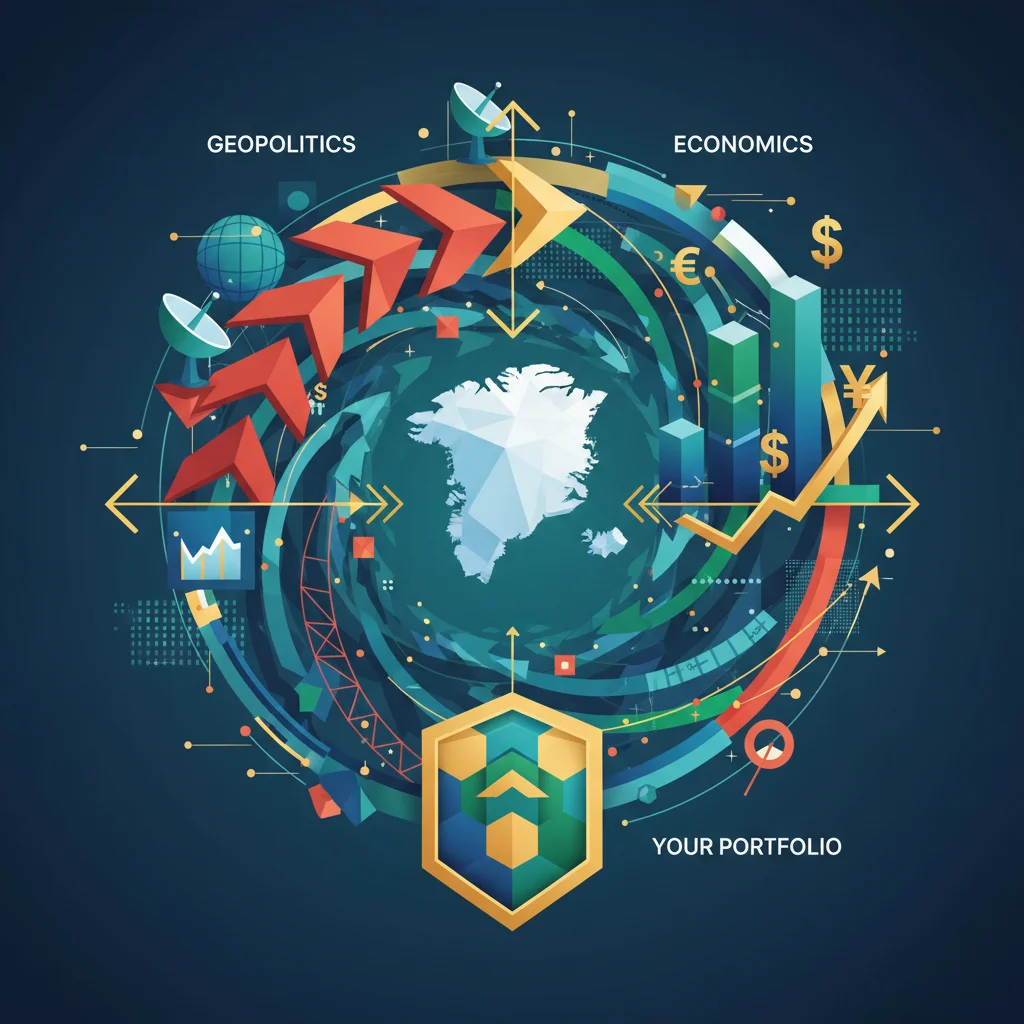
Greenland’s Price: Analyzing the High-Stakes Intersection of Geopolitics, Economics, and Your Portfolio
In a move that reverberates from the icy fjords of Nuuk to the trading floors of Wall Street, a geopolitical gambit has been laid bare. A recent BBC report reveals a stark ultimatum: former US President Donald Trump has threatened to impose new taxes on eight key US allies if they stand in the way of his proposed acquisition of Greenland. This isn’t just a diplomatic curiosity; it’s a flashing red signal for investors, business leaders, and anyone involved in the global economy. The Danish Prime Minister’s defiant response that “Europe won’t be blackmailed” sets the stage for a conflict where the weapons are not missiles, but tariffs, and the battlefield is the international stock market.
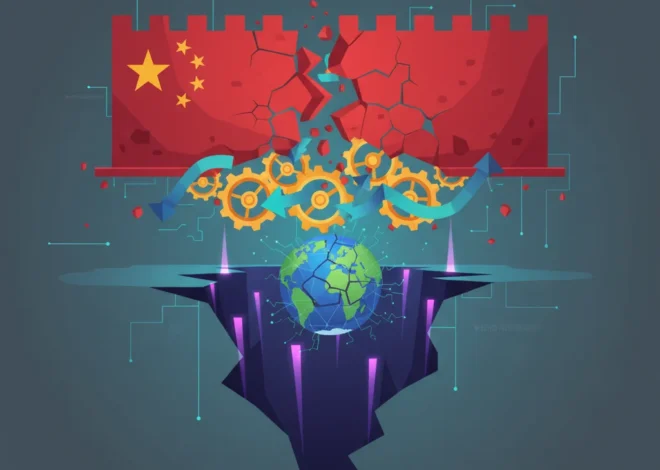
This development, while centered on a sparsely populated Arctic island, is a microcosm of a much larger trend: the increasing weaponization of economics in foreign policy. For decades, the post-war consensus was built on a foundation of free trade and diplomatic norms. Today, that foundation is cracking under the weight of transactional geopolitics. Understanding the financial implications of this standoff is no longer optional; it is essential for navigating the volatile landscape of modern investing and international finance.
The Strategic Value: Why Greenland is More Than Just Ice
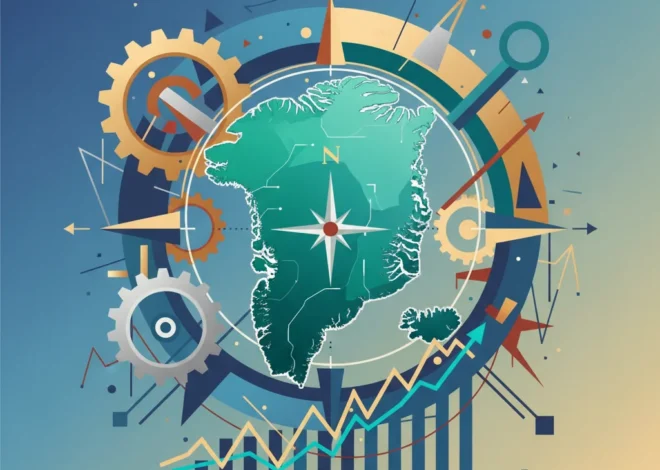
To grasp the financial stakes, one must first understand why Greenland has suddenly become a focal point of global power plays. Its value is twofold: geostrategic and economic. From a military perspective, Greenland anchors the GIUK gap (Greenland, Iceland, UK), a critical naval chokepoint for controlling access to the North Atlantic. The US has operated Thule Air Base in Greenland for decades, a vital component of its early-warning missile defense system. As Arctic ice melts and new shipping lanes open, Greenland’s strategic importance is set to skyrocket.
However, for those in finance and business, the real story lies buried beneath the ice sheet. Greenland is believed to hold vast, untapped reserves of natural resources, including oil, natural gas, and, most critically, rare earth elements (REEs). REEs are essential components in everything from smartphones and electric vehicles to advanced military hardware. Currently, China dominates the global REE market, a fact that causes significant unease in Western capitals. According to the U.S. Geological Survey, these 17 metallic elements are critical to high-tech manufacturing and national security. Gaining access to a stable, non-Chinese supply of REEs would be a monumental strategic and economic victory for the United States.
Below is a snapshot of the estimated resource potential that is driving this geopolitical friction.
| Resource Category | Estimated Potential & Strategic Importance |
|---|---|
| Rare Earth Elements (REEs) | Potentially one of the largest deposits outside of China; crucial for financial technology hardware and defense systems. |
| Oil & Gas | The U.S. Geological Survey once estimated the region could hold up to 50 billion barrels of undiscovered oil and gas (source). |
| Uranium, Zinc, and Iron | Significant deposits exist, offering diversification for global commodity markets and industrial supply chains. |
| Geostrategic Location | Control over emerging Arctic shipping routes, which could dramatically reduce global transit times and costs. |
This resource wealth transforms the proposed “takeover” from a real estate absurdity into a calculated move on the global economic chessboard. For investors, this means any escalation could send shockwaves through commodity markets, particularly affecting companies involved in mining, shipping, and high-tech manufacturing.
The EU's New Arsenal: How Loans-for-Arms Will Reshape European Finance and Defense
The Economics of Blackmail: Tariffs as a Foreign Policy Cudgel
The threat to “impose new taxes on eight US allies” is a clear reference to tariffs. A tariff is a tax on imported goods, designed to make foreign products more expensive and, in theory, encourage consumption of domestic goods. However, in this context, they are not being used as a tool of traditional economic protectionism but as a coercive lever to achieve a geopolitical objective. This tactic has profound implications for the global economy.
First, it introduces a level of unpredictability that markets abhor. The stability of international trade agreements has been a cornerstone of global growth. When these agreements can be threatened or discarded based on unrelated diplomatic disputes, it creates massive uncertainty for businesses. Companies planning multi-billion dollar supply chains can no longer rely on stable tariff schedules, forcing them to price in a new “geopolitical risk premium.” This uncertainty can stifle investment, depress corporate earnings, and lead to increased volatility in the stock market.
Second, such actions invite retaliation. If the US imposes tariffs on key European allies, the European Union is almost certain to respond in kind, targeting iconic American products. This escalates into a trade war, a scenario that hurts all parties involved. A 2019 analysis by the International Monetary Fund during the US-China trade war warned that such conflicts act as a drag on global GDP, disrupting supply chains and dampening consumer and business confidence. The intricate web of global finance means that a trade dispute between the North Atlantic allies would not be contained; its effects would ripple through emerging markets and affect global trading patterns.
Navigating the Fallout: Implications for Investing, Banking, and FinTech
For the finance professional, investor, or business leader, the key question is: “What does this mean for me?” The implications are broad and touch upon nearly every aspect of modern finance.
For those involved in investing and trading, the most immediate impact is heightened volatility. Geopolitical shocks like this create binary outcomes that are difficult to price. Will the threat be carried out? Will Europe capitulate? Will a compromise be found? Each possibility sends asset prices swinging. This environment favors agile traders but poses significant challenges for long-term, buy-and-hold investors. Strategies that hedge against geopolitical risk, such as holding gold, diversifying currencies, or investing in sectors less exposed to international trade, become increasingly attractive.
From M*A*S*H to the Market: What Hawkeye Pierce Teaches Us About AI in Finance
The banking sector faces a different set of challenges. A trade war between the US and Europe would strain international lending and transaction systems. Banks with heavy exposure to transatlantic trade would face increased credit risk as their corporate clients suffer from disrupted supply chains and higher costs. Furthermore, the use of economic sanctions and tariffs puts the global financial plumbing, much of which is dollar-denominated, under immense pressure. It raises questions about the long-term dominance of the US dollar as the world’s reserve currency if its use is perceived as being tied to political whims.
This is where the conversation turns to financial technology, or fintech. The weaponization of the conventional financial system creates a powerful incentive for nations to develop alternatives. We may see an accelerated push towards central bank digital currencies (CBDCs) or state-backed blockchain initiatives designed to facilitate international trade outside of the traditional, US-influenced correspondent banking system. If nations fear being cut off or economically punished, they will inevitably seek out or create financial rails that are more resilient to geopolitical pressure. This Greenland dispute, therefore, could inadvertently become a catalyst for innovation in the fintech space, as the world seeks to de-risk its financial interdependence.
Hedge Fund Billions, AI's Big Bet, and the Economy's Pulse: Decoding the Future of Finance
Conclusion: A New Era of Economic Statecraft
The standoff over Greenland is more than a bizarre diplomatic headline. It is a stark illustration of the new age of economic statecraft, where tariffs, sanctions, and financial leverage are the primary tools of foreign policy. The Danish Prime Minister’s firm rejection of the threat highlights the deep ideological rift between traditional multilateralism and a more aggressive, transactional approach to international relations.
For anyone operating in the world of global finance and economics, the takeaway is clear: political risk is now a core component of financial risk. The lines between the State Department and the Treasury Department have blurred, and the fallout from their decisions can directly impact your portfolio, your company’s bottom line, and the stability of the entire global economy. Watching the developments in the Arctic is no longer just for climate scientists and diplomats; it’s now essential homework for every serious investor.