The AI on My Wrist: How an Algorithm Hacked My Brain and My Marathon
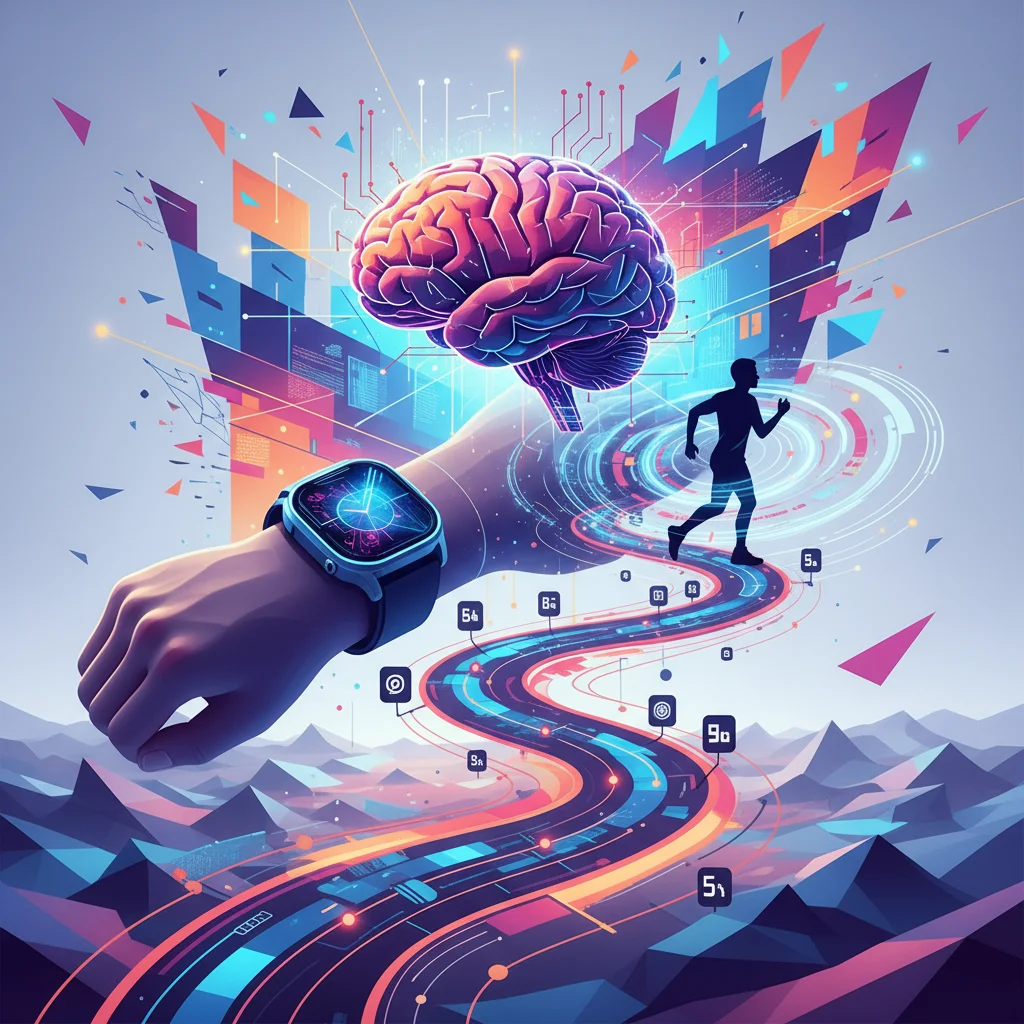
We’ve all been there. A sudden jolt of ambition, a flash of a future, healthier self. For many, it’s a gym membership in January. For Financial Times journalist Tim Harford, it was the audacious goal of running a marathon. But his coach wasn’t a seasoned runner with a stopwatch and a clipboard. It was a piece of silicon and plastic strapped to his wrist: a Garmin fitness tracker.
What followed was a journey not just of physical endurance, but a fascinating, and at times bizarre, dance between human will and algorithmic direction. Harford’s story, detailed in his article “Without my fitness tracker I’d never have run so far,” is more than a tale of marathon training. It’s a perfect microcosm of our growing relationship with artificial intelligence, a case study in how modern software can motivate, manage, and manipulate us. For anyone in the tech world—from developers and entrepreneurs to product managers—it’s a masterclass in what makes a product truly “sticky.”
The Algorithm as the Ultimate Personal Trainer
For years, marathon training plans have been static, printed on paper or found on websites. They are a one-size-fits-all solution to a deeply personal challenge. Enter the modern fitness tracker, a marvel of hardware miniaturization, sensor technology, and, most importantly, sophisticated machine learning algorithms.
Harford’s Garmin didn’t just give him a generic plan. It became a dynamic, responsive coach. After each run, it would analyze his heart rate, pace, and perceived effort, then adjust the next day’s workout accordingly. Feeling strong? The algorithm might push for a longer tempo run. A poor night’s sleep detected by the watch? It might suggest a lighter recovery day. This isn’t just simple automation; it’s adaptive personalization delivered via a seamless SaaS (Software as a Service) model, powered by data processed in the cloud.
The core innovation here is the feedback loop.
- Data Collection: The watch constantly gathers data (biometrics, GPS, etc.).
- Cloud Processing: This data is sent to the cloud, where a machine learning model analyzes it against your historical performance and a massive dataset from other runners.
- Personalized Prescription: The algorithm generates a specific, tailored workout.
- User Action: The user completes the workout, generating new data.
This cycle is what makes the product so compelling. It removes the cognitive load of planning. The user only has one job: execute the plan. As Harford notes, this outsourcing of decision-making was a relief, allowing him to focus solely on the physical act of running (source).
Nvidia's AI Empire: Genius Investment or a Trillion-Dollar Bubble?
Gamification and the Psychology of Algorithmic Compliance
Why did this digital coach succeed where human willpower often fails? The answer lies in masterful psychological engineering, a practice every startup founder dreams of perfecting. The system is built on powerful principles of gamification and behavioral science.
- Clear, Achievable Goals: The AI breaks down an overwhelming goal (“run a marathon”) into small, daily, non-negotiable tasks (“run 4.83km at a 5:30/km pace”).
- Positive Reinforcement: Completing a workout provides a satisfying checkmark, a digital “well done,” and a sense of progress. This triggers a small dopamine hit, reinforcing the behavior.
- The Fear of Failure: More powerfully, there’s an implicit pressure not to “disappoint” the algorithm. Missing a run breaks the chain and forces the algorithm to recalculate, a subtle form of negative reinforcement. You’re not just letting yourself down; you’re messing up the data.
This dynamic creates an almost master-servant relationship. The user feels compelled to obey the instructions delivered by the software. Let’s compare this new paradigm with the traditional approach to training.
| Feature | Traditional Training Plan | Algorithmic Coaching (AI) |
|---|---|---|
| Personalization | Generic, based on broad experience levels (beginner, intermediate). | Hyper-personalized, adapts daily based on biometric data. |
| Feedback Loop | Slow or non-existent. You adjust based on “feel” over weeks. | Immediate. Today’s run directly influences tomorrow’s plan. |
| Motivation | Entirely intrinsic. Relies on self-discipline. | Extrinsic and intrinsic. Gamified rewards, progress tracking, and fear of “breaking the streak.” |
| Flexibility | Rigid. A missed day can throw off the whole schedule. | Dynamic. The plan fluidly adjusts to missed workouts, illness, or fatigue. |
| Technology | Pen and paper, spreadsheet, or static PDF. | Wearable sensors, cloud computing, machine learning, SaaS platform. |
When Obedience Turns Bizarre: The Human Cost of Perfect Logic
The most revealing part of Harford’s experience is when his obedience to the algorithm led to some truly strange behavior. The software, a product of pure logic and programming, lacks human context and common sense. Its goal is data purity, not social grace.
Harford describes needing to run exactly 12.87 kilometers. When he reached his front door at 12.7km, he didn’t stop. He ran “up and down the street a couple of times, then round and round a tree” to hit the exact target prescribed by his digital master (source). In another instance, the watch demanded a run with a very low heart rate, forcing him to a walk so slow that a “man with a Zimmer frame” nearly overtook him.
These anecdotes are hilarious, but they’re also deeply instructive for tech professionals. They highlight the gap between computational instruction and real-world application. A human coach would say, “Just run about 13k, and don’t worry about the last 100 meters.” An algorithm, by its nature, demands precision. This is a crucial lesson in user experience (UX) and AI design: how do we build systems that are smart enough to know when their own precision is counterproductive or just plain weird?
This is the frontier of human-computer interaction. We are no longer just using tools; we are entering into partnerships with them. And like any partnership, it requires communication, flexibility, and the wisdom to know when to ignore your partner’s more nonsensical suggestions.
Paywalling Safety? The X Grok AI Controversy and the High Price of Innovation
The Takeaway: Lessons for the Future of Tech and Business
Ultimately, the algorithm worked. Harford not only ran the marathon but finished with a respectable time of 3 hours and 37 minutes, a success he attributes almost entirely to his watch. The story offers powerful takeaways for anyone building or investing in technology today.
For Startups and Entrepreneurs: The holy grail is a product that changes user behavior and becomes indispensable. The fitness tracker is a masterclass. By offloading cognitive work (planning), providing a clear path to a desired goal, and using powerful psychological hooks, it creates immense user dependency and loyalty. The lesson is to solve a complex problem with a simple, adaptive interface that makes the user feel both managed and empowered.
For Software Developers and AI Engineers: The challenge is no longer just about creating powerful algorithms; it’s about creating wise ones. The next wave of innovation in AI will be in contextual understanding. How can we program nuance, common sense, and flexibility? How can a system learn that “close enough” is sometimes better than “perfectly precise”? This involves moving beyond pure data-driven logic to incorporate more sophisticated models of human behavior and reasoning.
For All of Us: We are the first generation to navigate a world where our coaches, advisors, and managers might be algorithms. Harford’s story is a reminder to embrace these tools for their incredible power to help us achieve our goals, but to do so with a critical eye. We must retain our human judgment, our intuition, and our right to say, “That’s a silly idea,” and walk through our front door, even if the watch says we have another 170 meters to go.
The Quantum Tipping Point: Are We Finally Entering the Era of Useful Quantum Computers?
The fusion of human ambition and artificial intelligence created a marathon runner. It’s a powerful testament to where technology is today. But as we delegate more of our lives to these systems, this story also serves as a crucial, and often comical, reminder of who should ultimately be in charge.

Related Posts
My AI Coach Made Me Run in Circles: What a Marathon Taught Me About Trusting Algorithms
The UK’s Proposed Social Media Ban for Kids: A Ticking Clock for Big Tech, A Gold Rush for AI Startups