The AI Superpower Showdown: 3 Overlooked Reasons China Could Win the Race
For years, the narrative has been set in stone: Silicon Valley, with its constellation of brilliant startups and tech giants, is the undisputed king of artificial intelligence. From OpenAI’s GPT-4 to Google’s Gemini, the West has consistently delivered the headline-grabbing breakthroughs. But what if this is just the opening act? What if the real, long-term advantages in the AI race lie not in a single killer algorithm, but in something far more fundamental?
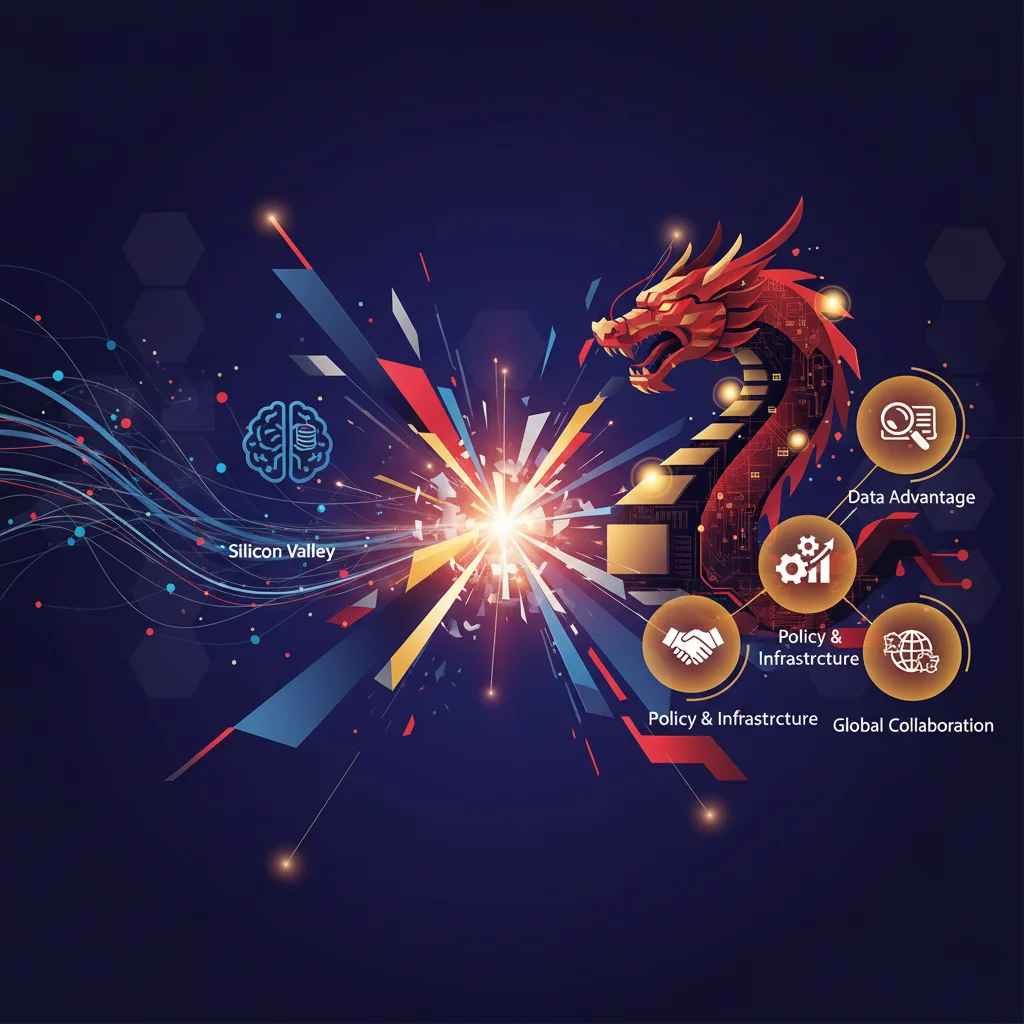
A compelling argument is emerging that challenges this conventional wisdom. While the world is mesmerized by the latest Large Language Models (LLMs), China is quietly building an unshakeable foundation based on three pillars: near-limitless energy, a strategic embrace of open-source models, and its unparalleled manufacturing muscle. This isn’t about building a better chatbot; it’s about building the engine that will power the future of global innovation and automation.
Let’s dive into the factors that could propel Beijing into first place, and what it means for developers, entrepreneurs, and the entire tech landscape.
1. The Unseen Fuel: AI Runs on Raw Power
We often think of AI and software as ethereal concepts floating in the cloud. The reality is much more grounded. Training and running advanced machine learning models is one of the most energy-intensive computational tasks ever conceived. The servers in massive data centers that power our AI tools are incredibly thirsty for electricity. According to some estimates, training a single major AI model can consume as much electricity as 100 US homes do in an entire year.
This is where China’s first major advantage comes into play: energy abundance. While Western nations grapple with complex energy politics and aging infrastructure, China is on an unprecedented building spree. It’s leading the world in deploying solar, wind, and hydropower. More critically, it’s also aggressively expanding its nuclear power capacity, with 22 of the 58 nuclear reactors currently under construction globally located in China.
Why does this matter for startups and developers?
- Lower Operational Costs: Cheaper and more abundant energy translates directly to lower costs for training and deploying AI models. This allows Chinese companies to experiment, iterate, and scale their AI operations at a cost structure that Western companies may struggle to match.
- Scalability: As AI models become exponentially larger, their energy needs will skyrocket. A nation with a robust, scalable, and state-supported energy grid is better positioned for the next generation of AI development.
The AI race might be won not just with clever programming, but with sheer electrical brute force. China is preparing for that reality.
2. The Open-Source Gambit: A Strategic End-Run Around Sanctions
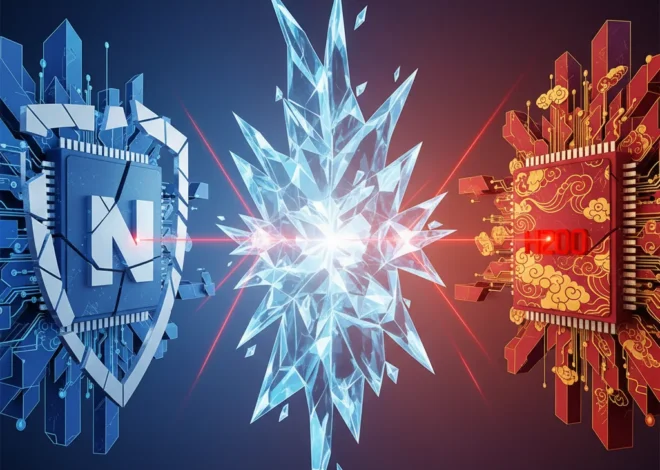
The US strategy to maintain its AI lead has heavily relied on restricting China’s access to one key component: high-end semiconductor chips, like those made by Nvidia. These chips are the specialized hardware essential for training sophisticated models. In response, China hasn’t just tried to build its own chips; it has embraced a powerful, alternative strategy: open-source AI.
While leading US labs like OpenAI and Anthropic keep their most powerful models proprietary and behind a paywall (a classic SaaS model), a vibrant ecosystem of powerful open-source models like Meta’s Llama and Mistral AI’s models has emerged. Chinese tech companies have seized upon this trend with gusto.
Instead of trying to build one monolithic “GPT-killer” from scratch with restricted hardware, they are taking these powerful open-source foundations and fine-tuning them for specific tasks. This approach is clever for several reasons:
- It Mitigates Hardware Disadvantage: Optimizing and running slightly smaller, specialized open-source models is less computationally intensive. It allows Chinese firms to achieve 80-90% of the performance of a cutting-edge model using less powerful, domestically produced, or more widely available hardware, effectively circumventing the US chip blockade.
- It Fosters Rapid Innovation: The open-source community is a global hotbed of creativity. By tapping into it, Chinese developers can stand on the shoulders of giants, accelerating their development cycles without massive upfront R&D costs.
- It’s Cheaper and More Adaptable: For thousands of Chinese startups, leveraging open-source is a more capital-efficient way to build AI-powered products, leading to a Cambrian explosion of new applications tailored to the domestic market.
Paywalling Safety? The X Grok AI Controversy and the High Price of Innovation
3. The Factory of the World Becomes the Factory for AI
For decades, China’s manufacturing prowess has been its economic calling card. Now, that same strength is being repurposed for the age of artificial intelligence. The AI revolution isn’t just about code; it’s about the physical manifestation of that code in robots, smart devices, autonomous vehicles, and automated factories.
This is where China’s vertical integration of hardware and software creates a formidable advantage. While a US-based AI company might design a brilliant robotics algorithm, it will likely rely on a complex global supply chain to actually build and deploy that robot at scale. Chinese companies, by contrast, can design, prototype, manufacture, and deploy AI-powered hardware at a speed and scale that is difficult to match.
Consider the “embodied AI” wave—AI that can physically interact with the world. China is already the world’s largest market for industrial robots. As these machines get infused with next-generation AI, Chinese factories will become living laboratories for improving AI in the physical world, creating a powerful feedback loop of continuous innovation and improvement. This rapid path from digital code to physical automation is a critical, and often underestimated, advantage.
Here’s a look at how the two approaches stack up based on these key pillars:
| Factor | United States / West | China |
|---|---|---|
| Primary AI Model Strategy | Dominated by large, proprietary, closed-source models (e.g., OpenAI’s GPT series). Focus on achieving state-of-the-art performance. | Rapid adoption and adaptation of open-source models. Focus on widespread application and customization. |
| Energy Foundation | Facing political and infrastructural challenges to scaling energy production for massive AI data centers. | Massive state-led investment in renewables and nuclear, creating an abundance of low-cost energy for computation. |
| Hardware & Application Link | Strong in chip design (e.g., Nvidia) but relies on a global supply chain for manufacturing and hardware integration. | Unmatched manufacturing ecosystem allows for rapid prototyping and at-scale deployment of AI-powered hardware (robotics, IoT). |
From Abstract Models to Real-World Impact
The ultimate victory in the AI race won’t be determined by who has the highest benchmark score on a theoretical test. It will be won by the nation that most effectively integrates AI into its economy and society to drive productivity and solve real-world problems.
The Chinese government’s top-down industrial policy is laser-focused on this goal. Beijing isn’t just funding AI research; it’s pushing for the mass adoption of automation in its manufacturing sector to counter rising labor costs and a shrinking workforce. As one expert noted, China’s goal is to have “AI running the factories and building the machines that build everything else.”
This application-first mindset could allow China to leapfrog the West in specific domains. While Western AI is heavily focused on knowledge work and digital services, China’s focus on industrial and physical AI could see them dominate the next wave of smart manufacturing, logistics, and robotics.
The Helicopter and the Coder: What a 1970s War Machine Teaches Us About Building Resilient Tech
What This Means for You: Navigating a New AI World Order
This shift in the AI landscape has profound implications for tech professionals, entrepreneurs, and policymakers. The era of unquestioned Silicon Valley dominance may be ending, giving way to a more multipolar and competitive world.
For developers, the rise of high-quality open-source models, heavily driven by Chinese adoption and contribution, is a massive opportunity. It democratizes access to powerful AI, allowing smaller teams and startups to build innovative products without being beholden to the API costs of a few large players.
For businesses, it means a more complex geopolitical landscape. Supply chains, data governance, and cybersecurity will become even more critical considerations. A company’s AI strategy will need to account for two diverging technological ecosystems, each with its own rules, standards, and capabilities. The need for robust cybersecurity measures to protect intellectual property and sensitive data will only intensify in this competitive environment.
The AI Cold War Has a New Player: Why South Korea's Naver is the Dark Horse You Can't Ignore
Conclusion: It’s a Marathon, Not a Sprint
The race for AI supremacy is far from over. The United States still possesses incredible advantages in fundamental research, capital markets, and a culture of disruptive innovation. However, it’s a mistake to dismiss China’s challenge by focusing solely on chip sanctions and chatbot performance.
By building a seemingly unassailable foundation of energy, leveraging the global open-source movement, and connecting it all with a world-class manufacturing engine, China is playing a long game. It is betting that in the marathon of technological development, the winner is not who starts the fastest, but who has the most sustainable power to endure and scale. The world of technology is watching closely, and the outcome is anything but certain.