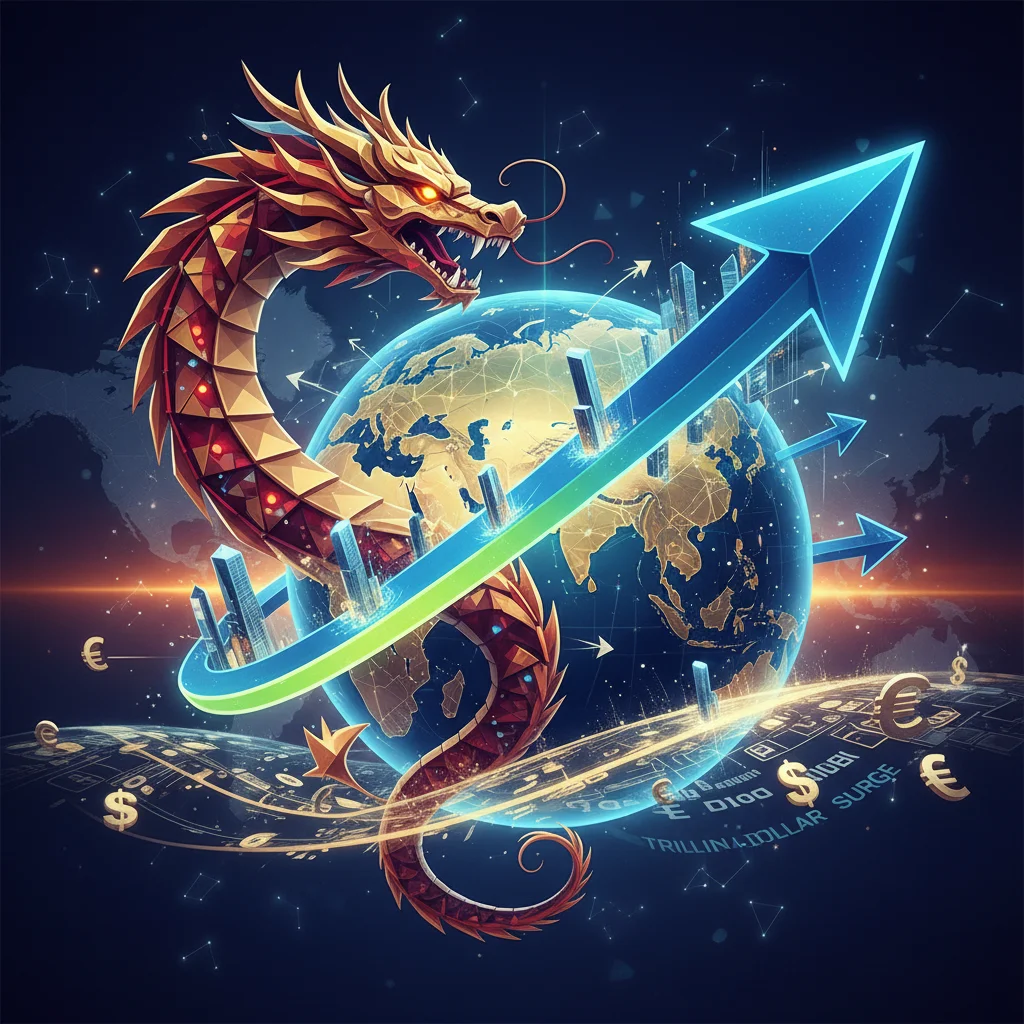
China’s Trillion-Dollar Pivot: What the 2025 Belt and Road Spending Surge Means for the Global Economy
The Dragon’s New Gambit: Unpacking the Record-Breaking Belt and Road Investment
In the grand theater of global economics, China has just made a monumental move. New research reveals that spending on President Xi Jinping’s signature foreign policy, the Belt and Road Initiative (BRI), surged to an unprecedented record in 2025. According to a report from the Financial Times, this wave of capital isn’t just about building bridges and ports anymore. It signals a strategic pivot—a calculated, aggressive move to secure critical resources and reshape the global supply chain. This isn’t merely a continuation of an old policy; it’s the beginning of a new chapter in global finance and geopolitics.
For years, the Belt and Road Initiative was synonymous with sprawling infrastructure projects: railways carving through mountains, ports rising from quiet coastlines, and power grids energizing developing nations. But the 2025 data paints a different picture. The focus has sharpened, zeroing in on the raw materials that will power the next century of technology and industry. From lithium mines in South America to cobalt deposits in Africa and rare earth elements across Asia, Beijing’s checkbook is strategically targeting the building blocks of the modern economy. This shift has profound implications for investors, business leaders, and anyone involved in the international stock market, banking, and finance.
Following the Money: A Strategic Focus on Resources
To truly understand the magnitude of this pivot, we need to look beyond the headline numbers and analyze where the capital is flowing. While traditional infrastructure remains a component, the overwhelming emphasis is now on securing upstream assets in the mining and energy sectors. This strategic reallocation of funds is a clear indicator of China’s long-term economic planning. The goal is to control the source of the materials that fuel everything from electric vehicles and smartphones to advanced aerospace technology.
The latest data indicates a significant concentration of investment in specific, high-demand sectors. Here’s a comparative breakdown of the primary focus areas for BRI financing in 2025:
| Investment Sector | Primary Focus | Geographic Concentration | Strategic Importance |
|---|---|---|---|
| Mining & Metals | Lithium, Cobalt, Copper, Rare Earths | Africa, South America | Battery production, EVs, high-tech electronics |
| Energy | Oil & Gas Pipelines, LNG Terminals, Solar & Wind Farms | Central Asia, Middle East, Southeast Asia | Energy security, transition to renewables |
| Technology Infrastructure | 5G Networks, Data Centers, Fiber Optic Cables | Africa, Southeast Asia, Eastern Europe | Digital Silk Road, controlling data flows |
| Logistics & Transport | Strategic Ports, High-Speed Rail | Global (e.g., Piraeus, Gwadar) | Controlling global trade chokepoints |
This resource-centric approach demonstrates a sophisticated evolution in China’s global investment strategy. It’s a move away from simply building a road to actively acquiring the quarry that provides the materials for it. This has a direct impact on the global commodity markets, influencing everything from short-term trading prices to long-term supply and demand dynamics. Investors in the commodity space must now factor in the BRI as a primary market driver, as a single large-scale Chinese investment can reshape the outlook for an entire resource class (source).
Beyond the Cones: Unpacking the Hidden Financial Costs of Infrastructure Gridlock
The Evolving Financial Architecture of the BRI
A multi-trillion-dollar initiative requires a complex and robust financial engine. The recent surge in spending is not only notable for its size but also for the sophistication of the financial mechanisms behind it. While state-owned policy banks like the China Development Bank and the Export-Import Bank of China remain the primary financiers, the model of engagement is becoming more diverse and technologically advanced.
We are seeing a move beyond traditional, straightforward loans. The new phase of BRI financing incorporates a blend of:
- Equity Stakes: Instead of just lending money, Chinese entities are taking direct ownership stakes in mines, ports, and energy fields, giving them greater control and a share in the profits.
- Public-Private Partnerships (PPPs): Collaborating with local governments and private firms in host countries to share risk and improve project viability.
- Currency Diversification: An increasing number of deals are being settled in Chinese Yuan (RMB) rather than US Dollars, a clear move to internationalize the yuan and chip away at the dollar’s dominance in global trade and finance.
Furthermore, the role of financial technology (fintech) in this expansion cannot be overstated. There is growing evidence that China is leveraging its leadership in fintech to streamline BRI transactions. The use of blockchain technology is being explored to enhance transparency and security in cross-border payments and supply chain management. Most significantly, China’s central bank digital currency (CBDC), the e-CNY or digital yuan, presents a powerful tool. It could allow Beijing to bypass traditional banking systems like SWIFT for BRI-related transactions, offering greater efficiency, control, and insulation from potential US-led financial sanctions. This integration of advanced financial technology into a geopolitical project is a landmark development in modern economics (source).
The Silent Shock: How Energy Poverty is Reshaping the US Economy and Your Investment Portfolio
Navigating the New BRI: Risks and Opportunities for Global Investors
For investors and business leaders, China’s revitalized BRI presents a dual-edged sword of immense opportunity and significant risk. The sheer scale of the initiative is creating new markets and driving demand, but navigating its complexities requires careful analysis and strategic foresight.
The Investment Opportunities
- Commodity Markets: The most direct play is in the commodities China is targeting. Increased demand for lithium, copper, and cobalt could provide a long-term tailwind for mining stocks and commodity-focused ETFs. Astute traders can capitalize on the volatility and trends driven by major BRI announcements.
- Second-Order Beneficiaries: Look for companies that support the BRI ecosystem. This includes global construction and engineering firms, heavy machinery manufacturers, and logistics providers that are contracted for these massive projects.
- Emerging Market Growth: The BRI’s investment can be a powerful catalyst for economic growth in host countries. Investing in the stock markets of nations receiving significant, well-managed BRI funding could yield substantial returns as their infrastructure and economies develop.
The Inherent Risks
- Geopolitical Volatility: BRI projects are often located in politically unstable regions. A change in government or a rise in anti-China sentiment can lead to projects being nationalized, renegotiated, or cancelled, resulting in significant losses for investors.
- Debt Sustainability: The “debt-trap” narrative, while often debated, highlights a real risk. Countries unable to service their BRI-related debts may face economic crises, which can destabilize the region and negatively impact investments.
- Lack of Transparency: Many BRI deals are negotiated behind closed doors, with limited transparency regarding their terms and financial viability. This opacity makes it difficult for outside investors to perform adequate due diligence.
The key for any investor is to approach the BRI with a clear-eyed view, balancing the potential for high growth with the associated geopolitical and financial risks. Diversification and a deep understanding of the local political economy are paramount.
The '1, 2, 4, 8, 16…?' Puzzle: A Masterclass in Financial Misdirection
Conclusion: The Reshaping of the Global Economic Map
The record-breaking BRI spending in 2025 is more than a statistic; it is a declaration of intent. China is no longer just a participant in the global economy—it is actively architecting a new version of it, with its own supply chains, trade routes, and financial systems. This strategic pivot towards securing essential resources is a foundational move in a long-term plan to secure its economic future and expand its global influence.
For the rest of the world, this presents a moment of reckoning. It challenges the existing international order and forces nations and corporations alike to decide how they will engage with this new reality. As investors and leaders in finance, understanding the intricacies of the Belt and Road Initiative is no longer optional. It is essential for navigating the complex and rapidly evolving landscape of the 21st-century global economy.

Related Posts
The Price of Protection: How Trump’s Transactional Foreign Policy is Reshaping the Global Economy

The Davos Playbook: An Insider’s Guide to Navigating the World’s Most Elite Summit