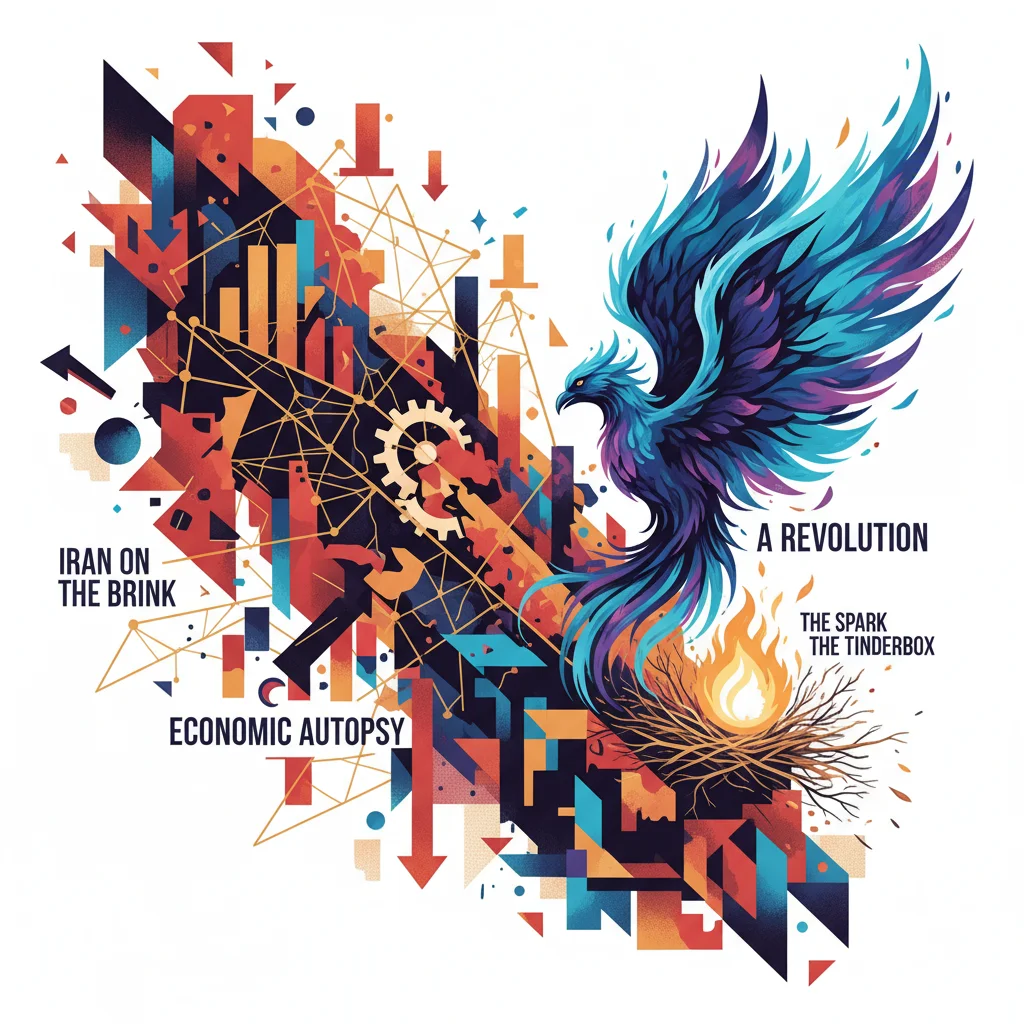
Iran on the Brink: An Economic Autopsy of a Revolution
The Spark and the Tinderbox: Why Iran’s Uprising Was Years in the Making
In September 2022, the tragic death of 22-year-old Mahsa Amini in the custody of Iran’s morality police ignited a firestorm of protest across the nation. Chants of “Woman, Life, Freedom” echoed from Tehran to the smallest villages, capturing global attention. On the surface, it was a revolt against decades of social repression. But beneath the surface, a deeper, more volatile force was at play: a catastrophic economic collapse that had left millions of Iranians with nothing to lose.
This was not just a cultural clash; it was the culmination of years of international isolation, crippling sanctions, and profound economic mismanagement by a regime that consistently chose ideological purity over the financial well-being of its people. For investors, business leaders, and anyone involved in global finance, understanding the economic anatomy of this uprising is crucial. It serves as a stark case study in how failed economics can unravel a nation, with significant implications for regional stability, energy markets, and geopolitical risk assessment.
Anatomy of a Meltdown: The Three Pillars of Iran’s Economic Ruin
The protests that brought the Islamic Republic to the brink were fueled by a perfect storm of financial despair. Three core factors systematically dismantled the Iranian economy, pushing a proud and educated populace to its breaking point.
1. The Sanctions Straitjacket
The most significant external pressure came from the United States’ “maximum pressure” campaign, re-instated in 2018. This wasn’t just a set of trade restrictions; it was a comprehensive effort to sever Iran from the global financial system. The sanctions effectively crippled Iran’s primary source of revenue—oil exports—and cut off its access to international banking networks. The consequences were devastating:
- Oil Revenue Collapse: Iran’s ability to sell crude oil, the lifeblood of its state-run economy, plummeted, starving the government of essential foreign currency.
- Financial Isolation: Iranian banks were largely blacklisted from the SWIFT international payments system, making legitimate international trading and commerce nearly impossible.
- Humanitarian Impact: While intended to target the regime, the sanctions made it incredibly difficult to import essential goods, including medicine and food, driving up prices for ordinary citizens.
2. The Currency’s Freefall and Inflation’s Rise
For the average Iranian, the most tangible sign of the crisis was in their wallet. The Iranian rial entered a state of near-perpetual collapse. This currency devaluation, combined with rampant government spending and economic isolation, triggered hyperinflation. According to analysts cited by the Financial Times, inflation has persistently remained above 40 percent, a catastrophic level that decimates savings and purchasing power (source). Even the local stock market, which some hoped would be a hedge, proved too volatile and disconnected from economic reality to offer a safe haven for citizen investing.
To put this in perspective, here’s a snapshot of the economic pressures facing Iranians in the lead-up to the protests:
| Economic Indicator | Impact on the Population |
|---|---|
| Chronic Inflation | Consistently over 40%, eroding savings and making basic necessities unaffordable. |
| Currency Devaluation | The rial lost a significant portion of its value against the US dollar, wiping out the wealth of the middle class. |
| Youth Unemployment | High rates of joblessness, particularly among the educated youth, creating a sense of hopelessness and frustration. |
| Poverty Levels | An estimated one-third of the population fell below the poverty line, a stark increase driven by the economic crisis (source). |
3. Regime Intransigence and Mismanagement
The final pillar of the collapse was the regime’s own making. Faced with a choice between pragmatic economic reform and hardline ideology, Tehran consistently chose the latter. The failure to revive the 2015 nuclear deal (JCPOA) was a critical miscalculation. A renewed deal would have lifted many of the most painful sanctions, unlocking billions in frozen assets and reopening pathways to the global economy. However, the leadership’s refusal to compromise, coupled with deep-seated corruption and a focus on funding regional proxies over domestic needs, convinced the public that their government was indifferent to their suffering.
The Lego Principle: What "Smart" Toys Teach Us About Dumb Investments
A Digital Generation’s Defiance
A crucial element of this story is the generational divide. Iran has a young, highly educated, and digitally-savvy population. Unlike their parents, they have no memory of the 1979 revolution and feel little allegiance to its aging clerical leaders. Through VPNs and encrypted messaging, they see a world of opportunity and freedom that is denied to them.
This technological fluency has also opened up alternative financial avenues, however limited. In an environment where the formal banking system is broken and the national currency is worthless, some Iranians have turned to the world of fintech and cryptocurrency. While not a mainstream solution, the use of blockchain-based assets for wealth preservation and cross-border transactions represents a small but significant act of defiance against a failed state-controlled financial apparatus. This trend highlights a broader global theme: when traditional financial technology fails its citizens, they will innovate to survive.
The Aftermath: A Regime on Borrowed Time?
The regime responded to the protests with brutal force. Thousands were arrested, and hundreds were killed in a violent crackdown that eventually cleared the streets. Supreme Leader Ali Khamenei, now 84, remains firmly in control, and the hardliners have consolidated their power (source). From the outside, it may appear that the system weathered the storm.
However, this is a dangerous misreading of the situation. The crackdown did not solve any of the underlying economic grievances. Inflation still rages, the currency is still weak, and the youth still see no future. The regime may have won the battle on the streets, but it has profoundly lost the war for legitimacy with its own people, particularly the younger generation.
The government’s strategy now seems to be a pivot towards the East, seeking economic lifelines from China and Russia. While this may provide some relief, it cannot replace integration with the global economy. It is a survival tactic, not a strategy for prosperity.
Trump's 10% Credit Card Rate Cap: Economic Lifeline or Financial Chaos?
Conclusion: The Inescapable Link Between Economic Health and Political Stability
The story of Iran’s “Woman, Life, Freedom” movement is inextricably linked to the story of its collapsed economy. It is a lesson written in the language of hyperinflation, sanctions, and systemic mismanagement. The protests revealed the deep fragility of a regime that has alienated its most valuable asset: its own people.
For the international community, investors, and financial professionals, Iran serves as a critical case study. It demonstrates that no amount of ideological rhetoric or state force can indefinitely suppress a population denied basic economic dignity. The fundamental contract between a government and its citizens is a financial one as much as it is a social one. When that contract is broken, the consequences are explosive. The streets of Iran may be quieter now, but the economic tinderbox remains, waiting for the next spark.
Venezuela's 0 Billion Default: Deconstructing the Most Complex Debt Restructuring in History