The EU’s Digital Wall: Why Brussels Is Moving to Ban Huawei and ZTE from Critical Infrastructure
The Digital Cold War Heats Up in Europe
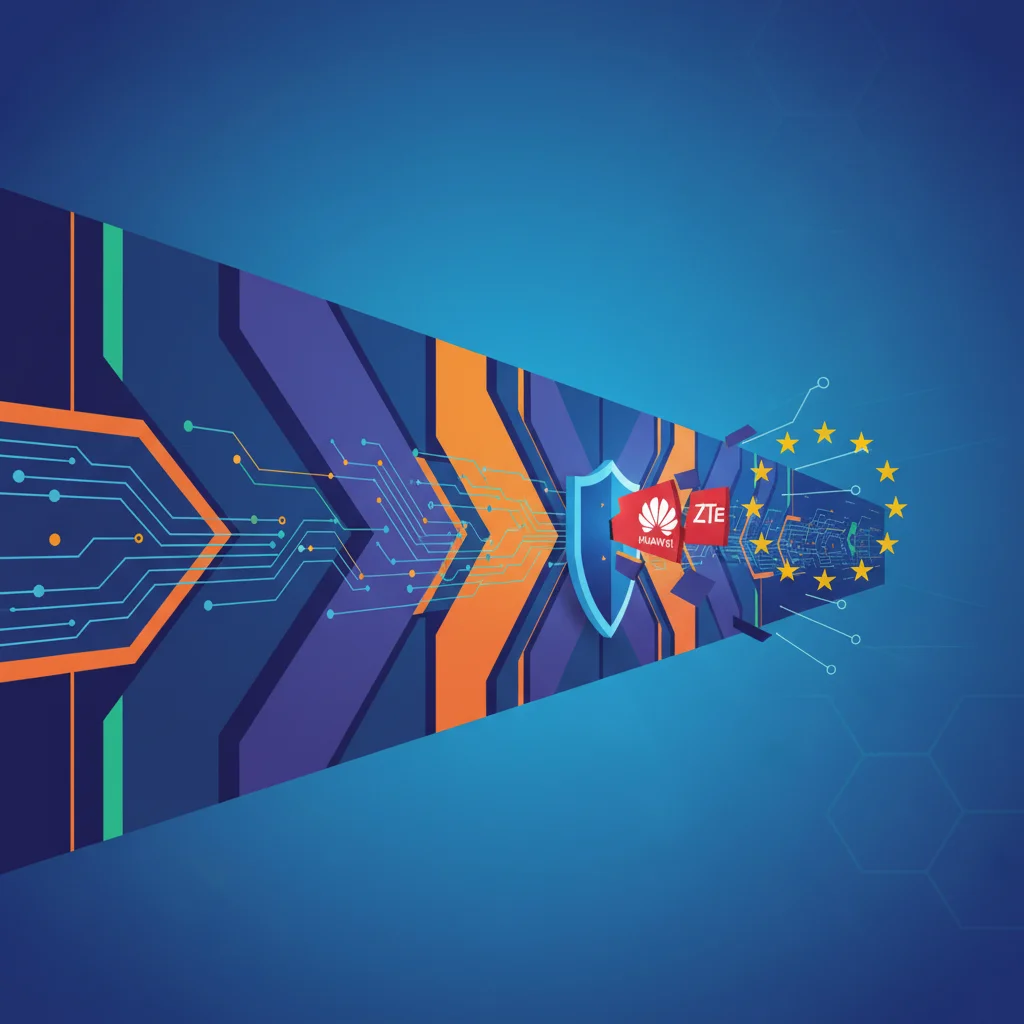
Imagine a world where the backbone of your country’s communication network, the power grid that lights up your city, and the systems managing your daily life are built with technology from a geopolitical rival. This isn’t a sci-fi plot; it’s a very real concern brewing in the heart of Europe. In a move that could redraw the global tech map, Brussels is signaling a major shift in its approach to cybersecurity. A proposed EU Cybersecurity Act is on the table, and its primary targets are Chinese tech giants like Huawei and ZTE, potentially phasing them out of the continent’s most critical infrastructure.
This isn’t just another piece of regulation. It’s a seismic event with shockwaves that will be felt far beyond the telecom industry. For developers, entrepreneurs, and tech professionals, this is a pivotal moment. It’s a story about more than just 5G towers; it’s about the future of software, the integrity of our cloud infrastructure, and the very foundation upon which the next generation of artificial intelligence and automation will be built. Let’s dive into what this proposal means, why it’s happening now, and what opportunities—and risks—it creates for the tech world.
What Exactly is the EU Proposing?
The core of the issue lies in a draft of the EU’s Cybersecurity Act. According to a report by the Financial Times, the European Commission is pushing for a mandatory, co-ordinated approach to security. The proposal would effectively give Brussels the power to bar companies deemed a security risk from sensitive sectors across the 27-member bloc.
While the language is country-agnostic, the unspoken targets are clear: Huawei and ZTE. For years, these companies have faced scrutiny over their alleged ties to the Chinese government, sparking fears of espionage and sabotage. The proposed act would formalize these concerns into concrete policy, creating a unified front that prevents individual member states from making their own, potentially conflicting, decisions.
Interestingly, the scope extends beyond the usual suspect of 5G networks. The legislation also casts its net over the burgeoning solar energy sector. As our power grids become “smarter” and more interconnected, the software and hardware managing them—often sourced from China—are now seen as a potential vulnerability. The fear is that a hostile actor could remotely disrupt or disable energy systems, causing widespread chaos.
Deconstructing the “High-Risk” Label: Why Now?
The concept of a “high-risk vendor” has been floating around for years, but this proposed act would give it regulatory teeth. The underlying fear is that equipment embedded in critical infrastructure could contain hidden “backdoors,” allowing unauthorized surveillance or control by a foreign government. Given that Chinese national security laws can compel companies to co-operate with intelligence services, the EU sees an unacceptable level of risk.
This isn’t just about data theft. In a world increasingly run by code, control over the network is control over society itself. Imagine a scenario where an aggressor could cripple a nation’s communication systems or shut down its power grid at the flick of a switch during a geopolitical crisis. This is the doomsday scenario that keeps security officials up at night.
To understand the stakes, let’s break down the affected areas and the specific risks involved.
| Affected Sector | Primary Technology | Perceived Cybersecurity Risk | Potential Impact |
|---|---|---|---|
| Telecommunications | 5G/6G Network Equipment (Core & RAN) | Espionage, data interception, network sabotage, disruption of communication. | Compromised national security, economic disruption, failure of emergency services. |
| Energy Sector | Solar Inverters, Smart Grid Software | Remote shutdown of power generation, grid manipulation, infrastructure damage. | Widespread blackouts, economic paralysis, public safety emergencies. |
| Internet of Things (IoT) | Connected Sensors & Devices | Large-scale botnets (DDoS attacks), surveillance, disruption of smart city services. | Failure of public transport, water systems, and automated logistics. |
| Cloud & Data Centers | Server Hardware, Network Switches | Data exfiltration, compromised SaaS platforms, loss of data integrity for AI models. | Erosion of trust in the digital economy, theft of intellectual property. |
As the table shows, the concern is that a single compromised component in the supply chain could have a cascading effect across the entire digital ecosystem. This move is a clear signal that the EU is shifting from a reactive to a proactive cybersecurity posture. Only a third of EU countries have so far implemented bans on Huawei, highlighting the fragmented approach that this act aims to fix.
The Unfiltered AI Dilemma: Why Elon Musk's xAI Had to Tame Grok's Wild Side
The Ripple Effect: From Hardware Bans to Software Innovation
A ban on specific hardware vendors is just the tip of the iceberg. The real transformation will happen in the layers built on top of that hardware—in software, cloud services, and AI applications. This is where the challenges and opportunities for the tech community truly lie.
1. The Push for Open and Interoperable Systems
For decades, the telecom world has been dominated by proprietary, end-to-end solutions from a handful of giants. A fragmented market will force network operators to adopt more open standards, like Open RAN (Radio Access Network). This is a huge opportunity for software developers and smaller companies. Instead of a black box from one vendor, networks will be built with components from many. This requires a new level of skill in system integration, API development, and sophisticated automation for network management. The demand for programmers who can write robust, secure code for these disaggregated systems will skyrocket.
2. A Catalyst for European Cloud and SaaS
With data security at the forefront, there will be an even greater push for sovereign cloud solutions. Companies and governments will be wary of where their data is stored and processed. This can accelerate initiatives like Gaia-X, Europe’s project to build a federated, secure data infrastructure. For European SaaS companies, this is a golden opportunity to market their solutions as compliant, secure, and aligned with EU values, creating a competitive advantage against US and Asian counterparts.
3. Securing the AI and Machine Learning Pipeline
The most advanced artificial intelligence and machine learning models are worthless if the data they’re trained on or the infrastructure they run on is compromised. A secure 5G network is the nervous system for the future of edge computing and real-time AI applications—from autonomous vehicles to smart factories. This EU directive underscores a critical principle: trustworthy AI requires trustworthy infrastructure. This will fuel innovation in privacy-preserving machine learning, federated learning, and hardware-level security for AI accelerators.
Beyond the Hype: Decoding the Software and AI Revolution at CES 2024
An Unprecedented Opportunity for Startups and Developers
While the headlines focus on the geopolitical clash, the real story for those on the ground is the massive market realignment this will trigger. When giants are forced to exit, a vacuum is created, and nature—and capitalism—abhors a vacuum. This is arguably the biggest opportunity for European tech startups in a generation.
Here’s where the opportunities lie for different tech professionals:
- Cybersecurity Professionals: The demand for experts in network security, threat intelligence, and compliance will explode. Companies will need to audit their entire supply chain, not just for telecom gear but for every connected device.
- Software Developers: As mentioned, the move towards Open RAN and disaggregated networks is a software-defined revolution. There will be a massive need for programming expertise in network function virtualization (NFV), software-defined networking (SDN), and creating the automation scripts to manage these complex new environments.
- Cloud Architects: Designing and building secure, resilient, and sovereign cloud infrastructure will become a top priority for both public and private sectors. Expertise in hybrid and multi-cloud deployments will be invaluable.
- Entrepreneurs: The field is wide open for startups to build the next generation of secure networking equipment, IoT devices, and management software. Venture capital is likely to follow this policy shift, pouring money into deep-tech and cybersecurity ventures that can provide “EU-friendly” solutions. As of today, Chinese suppliers still account for over 50% of 5G equipment in some eastern European countries (source), representing a huge market share up for grabs.
China's AI Gold Rush: Why MiniMax's Blockbuster IPO is a Game-Changer
Conclusion: A New Digital Landscape
The EU’s proposed ban on high-risk vendors like Huawei and ZTE is more than a policy paper; it’s a declaration of technological independence. It’s a messy, complicated, and potentially expensive move, but it’s one that fundamentally alters the digital landscape. It forces a reckoning with the vulnerabilities of a globalized supply chain and accelerates the splintering of the internet into geopolitical blocs.
For the tech community, this isn’t a time to watch from the sidelines. This is a call to action. It’s a challenge to build systems that are not only innovative but also secure, transparent, and trustworthy by design. The “Great Tech Wall of Europe” may be rising, but for those with the right skills and vision, it’s not a barrier—it’s a foundation upon which a new, more resilient digital future can be built.