The Roman Wall Blues of Modern Finance: Are We Guarding a Crumbling Empire?
In the world of high finance and global economics, we often seek complex models and dense data to understand our current state. We look to sophisticated charts, quarterly reports, and the intricate dance of the stock market. Yet, sometimes, the most profound insights come not from a spreadsheet, but from a century-old poem about a lonely, forgotten soldier.
A recent letter to the Financial Times pointed to W.H. Auden’s “Roman Wall Blues” as a strikingly relevant metaphor for our times. The poem is a raw, gritty monologue from a Roman legionary stationed on Hadrian’s Wall, a man at the edge of an empire, feeling its decay in his very bones. He’s cold, sick, and ignored by a distant, bureaucratic Rome. His disillusionment is total. This isn’t a grand epic about the fall of an empire; it’s a ground-level view of systemic rot, a sentiment that resonates with startling clarity in today’s financial landscape.
The soldier’s lament—of broken promises, meaningless rhetoric from the top, and a quiet yearning for the whole system to just collapse—serves as a powerful allegory for the challenges facing our modern economy. From legacy banking systems to the anxieties of the individual investor, the echoes of that Roman soldier’s blues are all around us. We are all, in some way, standing watch on a wall, wondering if it can still protect us and whether the “barbarians” at the gate represent a threat or a long-overdue liberation.
The Crumbling Walls of the Financial Establishment
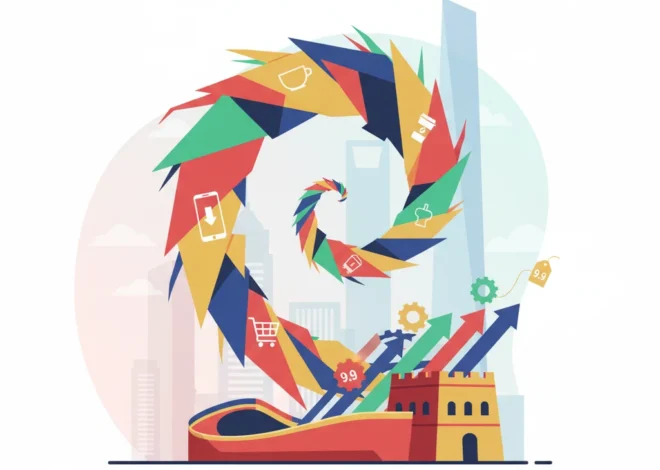
Every complex society builds walls for protection. In the Roman Empire, it was literal stone. In our modern global economy, our walls are systems of regulation, established banking institutions, and long-held economic theories. These structures were designed to create stability, foster trust, and keep the “barbarians” of chaos and collapse at bay. For decades, they largely succeeded. But like any ancient fortification, these walls are showing deep and worrying cracks.
The 2008 global financial crisis was the first great earthquake that shook these foundations, revealing that the architects of the system were not infallible. The walls were hastily patched with new regulations like Dodd-Frank, but the underlying vulnerabilities remained. Today, the strain is evident everywhere:
- Legacy Banking vs. Financial Technology: Traditional banking institutions, the very bedrock of our financial wall, often operate on decades-old technology. They are the slow, cumbersome sentinels, while nimble fintech startups—the new “barbarians”—are scaling the walls with user-friendly apps, lower fees, and innovative services that meet modern consumer demands. The very concept of banking is being unbundled and rebuilt outside the old fortifications.
- Monetary Policy’s Blunted Swords: Central banks, the legions tasked with defending the economy, are finding their traditional weapons less effective. For years, they struggled to generate inflation; now, they fight to contain it. The blunt instruments of interest rate hikes feel like throwing stones against a complex, multifaceted enemy of supply chain disruption, geopolitical tension, and shifting global trade patterns.
- The Erosion of Trust: Perhaps the most dangerous crack is the erosion of public trust in the financial system. A 2023 Edelman Trust Barometer report found that financial services remain one of the least trusted sectors globally. This is the institutional equivalent of the soldier losing faith in his Emperor.
These crumbling walls force us to question whether the old system is still fit for purpose. Are we pouring resources into maintaining a structure that is fundamentally unsuited for the 21st-century economy? Beyond the Barrel: Why ExxonMobil Told Trump Venezuela is 'Uninvestable' and What It Means for Global Finance
The Soldier’s Lament: Disillusionment on the Economic Front Lines
Auden’s poem is most powerful in its focus on the individual. The soldier complains, “I’ve lice in my tunic and a cold in my nose.” This isn’t a strategic analysis; it’s the raw, miserable reality of the person tasked with upholding the system. Today, this soldier has many faces: the retail investor, the mid-level finance professional, the small business owner, the gig economy worker.
The poem’s lines offer a chillingly accurate diagnosis of modern economic anxiety:
“The Emperor’s issue is a mile-high pile / Of disused Latin tags.”
Anyone who has tried to read a prospectus, understand a new tax law, or decipher the minutes from a Federal Reserve meeting can relate. Our financial world is saturated with jargon and complexity that feels deliberately obtuse. This “mile-high pile” of corporate-speak and bureaucratic language creates a massive barrier between the financial elite and the general public, fostering a sense of alienation and the feeling that the system isn’t built for them.
“I’ve served my time and I’m due for a pension, / But the state has no money, the state has no money.”
This is perhaps the most direct and painful parallel. The promise of a secure retirement, the bedrock of the 20th-century social contract, is evaporating. The burden of saving for the future has been systematically shifted from institutions to individuals. Defined-benefit pension plans have become relics, replaced by defined-contribution plans that place all the market risk squarely on the employee’s shoulders.
The global pension gap is a well-documented crisis. According to the World Economic Forum, the retirement savings gap in the world’s eight largest pension markets is projected to reach a staggering $400 trillion by 2050. The soldier’s fear is now the mathematical reality for billions.
This table illustrates the dramatic shift in retirement risk from the employer (the “Empire”) to the employee (the “soldier”) in the United States over the past few decades.
| Retirement Plan Type | Percentage of Private Sector Workers (1980) | Percentage of Private Sector Workers (2022) | Key Characteristic |
|---|---|---|---|
| Defined-Benefit (Pension) | ~60% | ~15% | Employer bears investment risk; provides a guaranteed income. |
| Defined-Contribution (e.g., 401(k)) | ~17% | ~68% | Employee bears investment risk; outcome is not guaranteed. |
Source: Data synthesized from U.S. Bureau of Labor Statistics and Employee Benefit Research Institute reports.
Brexit's Next Chapter: How a Political Showdown Could Redefine UK Finance and Investment
The Barbarians at the Gate: Disruption or Liberation?
In the final, desperate stanza, Auden’s soldier gives up: “So come, you barbarians, and sack the place, / I’m sick of the whole damned show.” He is so alienated from the empire he is supposed to defend that he would rather see it destroyed.
This sentiment is a radicalizing force in our economy today. When people feel the game is rigged, they stop playing by the rules. They start cheering for the “barbarians.” Who are these modern barbarians? They are the forces of disruption that challenge the centralized, top-down “Roman” model of finance and economics.
- Fintech and Neobanks: These companies are “sacking” the traditional banking sector not with swords, but with superior technology, customer experience, and transparency. They offer everything from seamless international payments to high-yield savings accounts, all through a smartphone, leaving the old guard looking slow and obsolete.
- Blockchain and Decentralized Finance (DeFi): This is the most radical barbarian force. Blockchain technology offers a new model for trust that doesn’t rely on a central authority like a bank or government. DeFi aims to rebuild the entire financial system—lending, borrowing, trading, insurance—on open-source protocols, theoretically cutting out the powerful intermediaries who have long controlled the flow of capital.
- The Rise of the Retail Trader: The GameStop saga was a perfect example of the soldier’s cry. A legion of retail investors, connected by social media, launched a direct assault on the Wall Street establishment. For many involved, it wasn’t just about the money; it was about being “sick of the whole damned show” and wanting to see the “emperors” of hedge funds feel some pain. This form of trading is a rebellion.
The key insight is that these “barbarians” are not necessarily a purely destructive force. They represent a powerful demand for a more inclusive, transparent, and efficient financial system. They are the inevitable response to the failings of the old empire. The Trillion-Dollar Question: Trump, Big Oil, and the High-Stakes Gamble on Venezuela's Black Gold
Rebuilding the Wall or Opening the Gates? A Strategic Choice
Auden’s poem leaves us at a precipice. The soldier is waiting, the wall is crumbling, and the barbarians are on the horizon. For investors, business leaders, and policymakers today, this allegory presents a critical strategic choice: do we try to reinforce the old walls, or do we have the courage to engage with the forces of change?
For Investors: The lesson is clear—complacency is a portfolio killer. Being the dutiful Roman soldier, trusting in the old fortifications of a simple 60/40 portfolio, may no longer be enough to protect against the “wet wind” of inflation and volatility. A modern investment strategy requires looking beyond the traditional walls. This means understanding the disruptive potential of financial technology, exploring alternative asset classes, and recognizing that systemic risk is real and growing. It means being skeptical of “disused Latin tags” from financial gurus and doing your own research.
For Business Leaders: The “soldier’s blues” is a silent culture killer in any organization. Are your employees bogged down by bureaucracy? Are your company’s promises (of career growth, a healthy work-life balance, a secure future) perceived as empty? Leaders in the finance industry, particularly in banking, must decide whether to treat fintech and blockchain as existential threats to be fought or as new paradigms to be embraced through partnership and innovation.
For Policymakers: The poem is a stark warning against neglecting the populace. When a system stops serving the people on its front lines, it loses its legitimacy. Pumping liquidity into the banking system while pensions falter and wages stagnate is the modern equivalent of sending “disused Latin tags” to a freezing soldier. Sustainable economic policy must focus on rebuilding the foundations of shared prosperity, not just patching the cracks in the fortress wall.
W.H. Auden wrote his poem in 1938, on the cusp of a world-shattering conflict, but its message is timeless. The strength of any system, whether it’s a military empire or the global financial order, is not measured by the height of its walls, but by the conviction of the people who stand on them. The widespread feeling of “Roman Wall Blues” in our economy is a signal we cannot afford to ignore. The future of finance depends on whether we can build a system that people believe is worth defending.