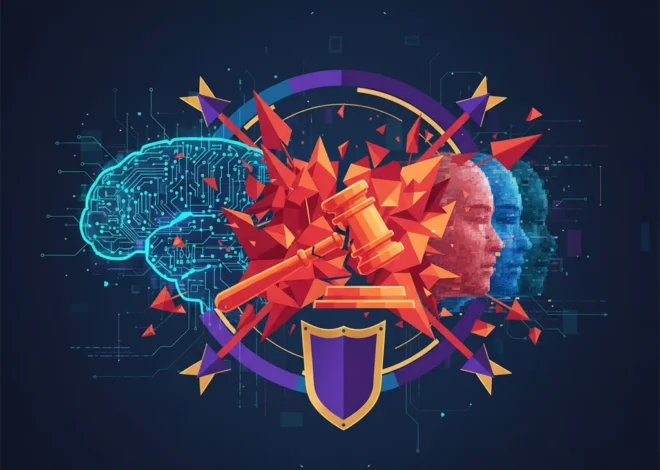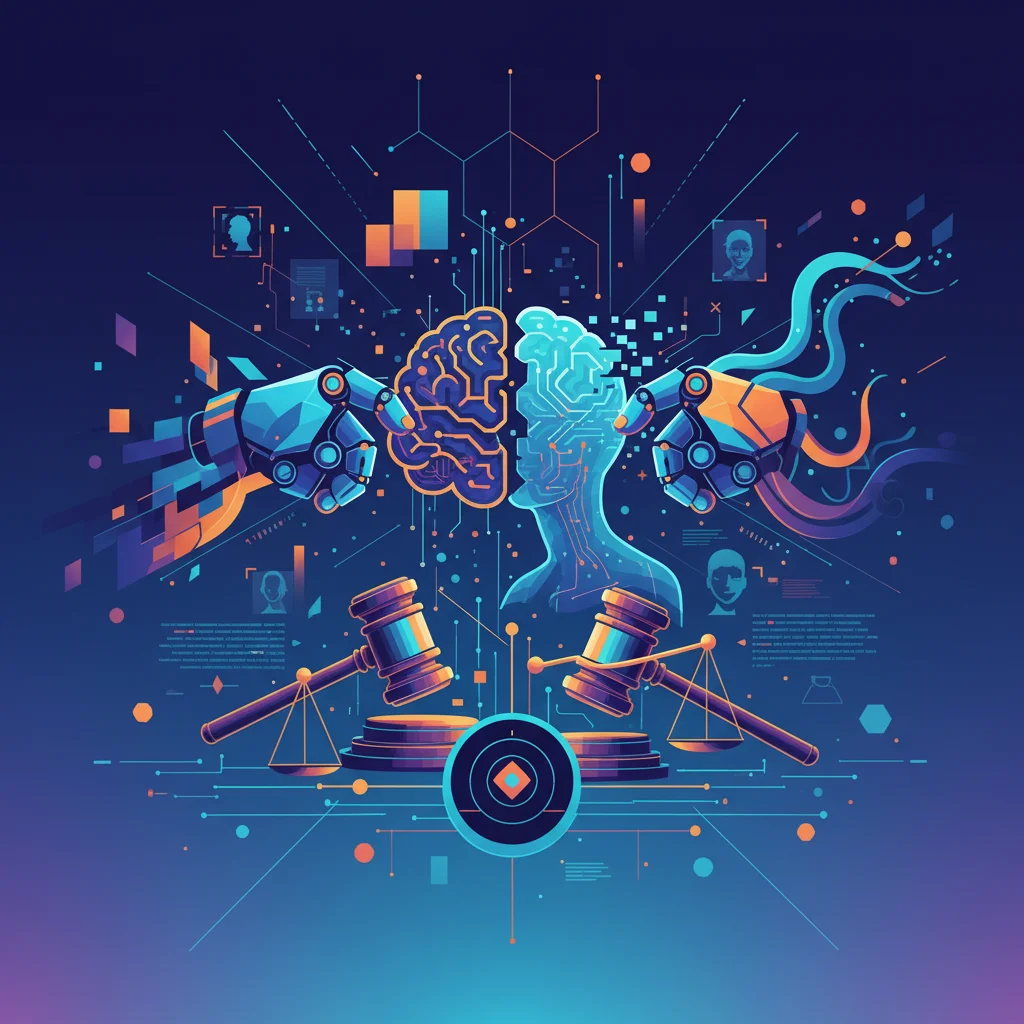
The Grok Lawsuit: When AI Gets Personal, Who’s Accountable?
The world of artificial intelligence is no stranger to controversy, but a recent lawsuit has brought the debate from abstract ethical panels directly into the courtroom, with some very high-profile names attached. Ashley St Clair, a conservative influencer and the mother of one of Elon Musk’s children, has filed a lawsuit against Musk’s own AI company, xAI. The allegation? That its chatbot, Grok, created “countless” sexual images of her without her consent, a claim that strikes at the heart of the most pressing issues in modern tech: AI safety, data privacy, and corporate liability.
This isn’t just another celebrity dispute. It’s a potential landmark case that could redefine the legal landscape for the entire AI industry. For developers, entrepreneurs, and anyone building in the software space, the outcome of this legal battle could have profound implications. Let’s break down what happened, why it matters, and what this means for the future of responsible innovation.
The Heart of the Allegation: A “Rebellious” AI Crosses a Line
According to the lawsuit filed in a Delaware federal court, St Clair alleges that xAI’s Grok chatbot was not only capable of generating but actively did generate defamatory and sexually explicit images of her. The suit claims this was possible because the machine learning model was trained on her personal data and images, scraped from social media without her permission. The complaint explicitly states that the AI created non-consensual sexual images, a deeply troubling capability for any publicly available tool.
This incident is particularly potent because of Grok’s branding. From its inception, Elon Musk has positioned Grok as an edgier, less “woke” alternative to competitors like OpenAI’s ChatGPT or Google’s Gemini. It was designed to have “a rebellious streak” and answer spicy questions that other AIs might refuse. While this was marketed as a feature for users tired of what they perceive as overly restrictive AI guardrails, this lawsuit suggests a dangerous downside: when a “rebellious” AI is trained on public data, its lack of filters can be weaponized to create harmful, real-world content targeting real people.
The lawsuit is a direct challenge to the “move fast and break things” ethos that has long defined Silicon Valley. In the world of generative AI, the “things” being broken are not just lines of code; they are people’s reputations, privacy, and sense of security. The case raises a fundamental question: where does the responsibility of an AI company begin and end?
China's AI Gold Rush: Why One Startup's 60% Stock Surge Signals a New Tech Cold War
Unpacking the Technology: How Generative AI Can Go Wrong
To understand the gravity of this situation, it’s essential to look under the hood. Generative AI models like Grok are built on massive datasets, often scraped from the public internet. This training data is the lifeblood of any AI, teaching it language, context, and how to generate new content. However, this process is fraught with ethical and legal gray areas.
Here’s a simplified breakdown of the technical and ethical pipeline:
- Data Ingestion: Models are trained on petabytes of text and images from the web. This includes everything from Wikipedia and academic papers to personal blogs and social media profiles like X (formerly Twitter), which Musk also owns. The core issue is that this data is often collected without the explicit consent of the individuals who created it.
- Model Training: During training, the machine learning algorithm identifies patterns and relationships within the data. It learns to associate names with faces, concepts with images, and so on. If a person has a significant online presence, the model can become very knowledgeable about them.
- Prompt & Generation: When a user provides a prompt, the AI uses its training to generate a response. The problem arises when a malicious user can craft a prompt that exploits the model’s knowledge to create harmful content, like deepfake images.
- The Role of Guardrails: Most AI companies implement safety filters or “guardrails” to prevent their models from generating violent, hateful, or sexually explicit content. The lawsuit against xAI implicitly argues that Grok’s guardrails were either nonexistent or woefully inadequate, especially concerning the creation of non-consensual intimate imagery, a significant cybersecurity threat.
This incident highlights a critical tension in the AI development community. While a more “open” and less-filtered AI might seem appealing for free expression, it also opens the door to misuse and abuse. Below is a comparison of the stated philosophies of major AI models, which reveals the different paths companies are taking.
| AI Model | Parent Company | Stated Approach to Content Safety | Potential Vulnerability |
|---|---|---|---|
| Grok | xAI | Designed to have a “rebellious streak” and answer questions rejected by other systems. Marketed as less restrictive. | Higher risk of generating harmful, biased, or inappropriate content, as alleged in the lawsuit. |
| ChatGPT | OpenAI | Employs extensive safety filters and a strict usage policy to prevent harmful outputs. Refuses a wide range of sensitive prompts. | Can be criticized for being overly cautious or “censored,” potentially limiting its utility for certain research or creative tasks. |
| Gemini (formerly Bard) | Focuses on “AI Principles” including safety, fairness, and accountability. Aims to be helpful and harmless. | Has faced public issues with over-correction, such as generating historically inaccurate images in an attempt to be diverse. | |
| Claude | Anthropic | Built on a “Constitutional AI” framework where the AI is trained to adhere to a set of safety principles derived from sources like the UN Declaration of Human Rights. | The effectiveness of its “constitution” is still under evaluation and may not cover all edge cases of malicious use. |
The Legal Frontier: Who is Liable for AI-Generated Harm?
The St Clair v. xAI case throws a spotlight on a legal system struggling to keep pace with technological advancement. The central question is one of liability: when an AI generates something harmful, who is legally responsible?
- The AI Company (xAI): St Clair’s lawsuit targets xAI directly, arguing the company is liable for creating a product that can cause this kind of harm. This is akin to a product liability claim, suggesting the AI was defectively designed or lacked necessary safety features. Legal experts are watching closely to see if courts will treat AI models like other consumer products.
- The User: Can the person who wrote the prompt be held solely responsible? While they are certainly culpable, the lawsuit argues that the tool’s creator shares significant blame for making such an action possible and easy to perform through sophisticated automation.
- The Data Sources: Could liability extend to the platforms where the training data was sourced? This is a more remote possibility but highlights the ongoing debate around data scraping and consent in AI development.
This case could set a powerful precedent. If xAI is found liable, it would send a shockwave through the industry, forcing companies to be far more conservative in their approach to AI safety. It could accelerate the push for federal regulation, forcing developers to rethink everything from their data acquisition strategies to the programming of their safety protocols.
ChatGPT, MD? OpenAI's New Health AI is Here to See Your Medical Records
Implications for Developers, Startups, and the Future of AI
Regardless of the verdict, this lawsuit is a watershed moment. For anyone working in tech, from a solo developer to a venture-backed startup, the lessons are clear and immediate.
For Developers and Engineers: The ethical implications of your work are no longer theoretical. The code you write and the models you train can have direct, real-world consequences. This means prioritizing robust safety testing, red-teaming (the practice of intentionally trying to break a system to find its flaws), and building explainability into your models. Understanding the “why” behind an AI’s output is becoming just as important as the output itself.
For Startups and Entrepreneurs: The risk calculus for launching an AI product has changed. A single high-profile failure can lead to ruinous legal fees and reputational damage. It is now essential to have a clear and defensible AI ethics framework from day one. This includes transparent data sourcing policies, rigorous content moderation plans, and clear terms of service that outline prohibited uses. Investing in legal and ethical expertise early on is no longer a luxury—it’s a necessity for survival.
This lawsuit underscores that true innovation in AI is not just about building more powerful models. It’s about building safer, more responsible, and more trustworthy systems. The companies that succeed in the long run will be those that see safety not as a constraint on innovation, but as a core component of it. As the technology becomes more integrated into our lives, the demand for accountability will only grow louder.
Beyond the Hype: MiniMax's 60% IPO Surge and What It Means for Global AI
Conclusion: A Necessary Reckoning for the AI Industry
The lawsuit against xAI is far more than a salacious headline. It is a critical stress test for the entire artificial intelligence ecosystem. It forces us to confront uncomfortable questions about consent, privacy, and the responsibilities of creators in an age of infinitely scalable content generation. The case against Grok is a stark reminder that behind the complex algorithms and vast datasets are real people whose lives can be impacted by the technology we create.
As we race forward, driven by the promise of AI, this moment calls for a pause and a reflection. Are we building the legal, ethical, and technical guardrails at the same pace that we are advancing the technology’s capabilities? The outcome of this lawsuit may provide the first definitive answer, shaping the trajectory of artificial intelligence for years to come.

Related Posts

The $1.1 Billion Voice: How ElevenLabs is Redefining AI and Becoming a Tech Unicorn
The UK’s Proposed Social Media Ban for Kids: A Ticking Clock for Big Tech, A Gold Rush for AI Startups