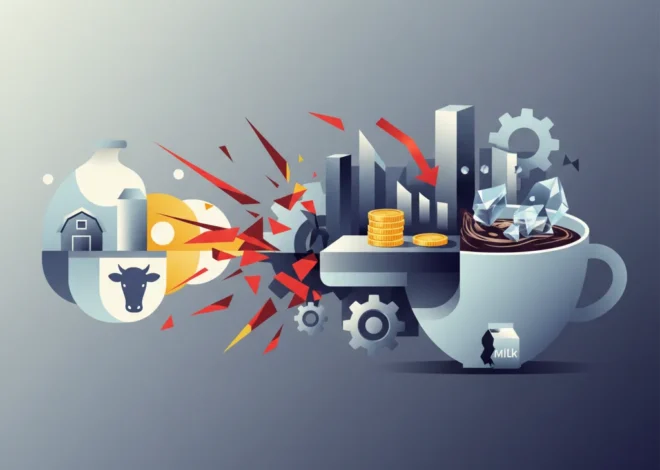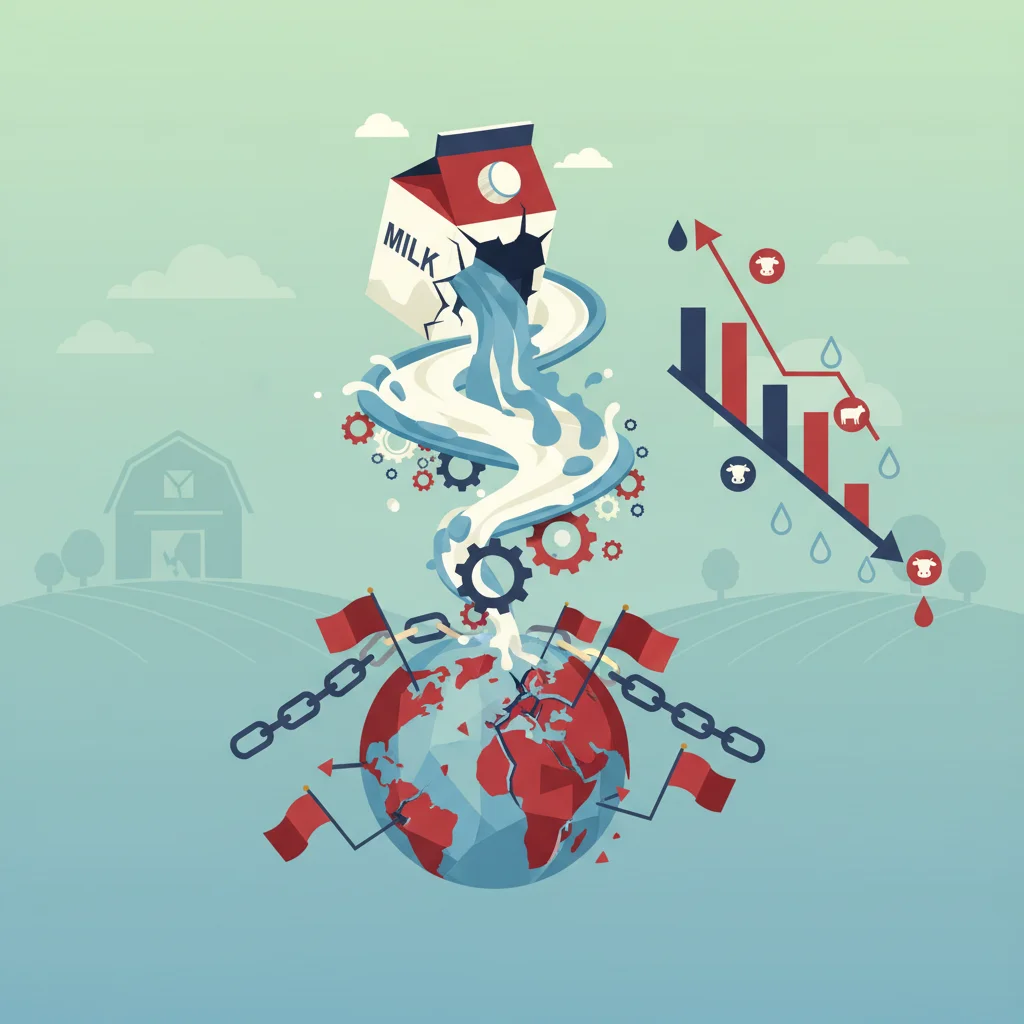
The Milk Market Meltdown: Why a Dairy Crisis is a Red Flag for the Global Economy
In the quiet countryside, far from the frenetic energy of the trading floor, a crisis is unfolding. It doesn’t involve complex derivatives or high-frequency trading, but its economic tremors are just as significant. For farmers like Adam and Lucy Johnstone, the reality is stark: the price they receive for their milk has plummeted over the last three months. They, along with thousands of other dairy farmers, are in what they call “survival mode”, a precarious state that should capture the attention of investors, business leaders, and anyone with a stake in the stability of our economy.
At first glance, the plight of a single farm may seem disconnected from the world of high finance. However, the dairy industry serves as a powerful microcosm of broader economic principles, a canary in the coal mine for supply chain fragility, commodity market volatility, and banking sector risk. Understanding this crisis is not just about agriculture; it’s a crucial lesson in economics, finance, and the intricate connections that bind our modern world.
The Economics of the Squeeze: When Revenue Dries Up
The core of the issue lies in a classic economic squeeze. While the revenue per liter of milk has fallen dramatically, the costs of production have not. In fact, key inputs like feed, fertilizer, and energy remain stubbornly high, a lingering effect of recent global inflation and geopolitical instability. This creates a negative margin environment where every liter of milk produced can potentially cost the farmer more than they earn.
To illustrate the financial pressure, consider this simplified breakdown of the price collapse farmers are facing. While the original report notes a “tumble,” let’s visualize what that looks like in practice for a farmer’s balance sheet.
| Time Period | Illustrative Price per Litre (Pence) | Change |
|---|---|---|
| Three Months Ago | 50p | Baseline |
| Two Months Ago | 42p | -16% |
| Current Month | 35p | -30% from Baseline |
Note: This table provides an illustrative model based on reports of significant price drops.
This isn’t just a spreadsheet exercise; it’s a direct threat to the livelihood of producers and the stability of our food supply. The Johnstones’ herd of 220 cows is not just a farm; it’s a small business with significant capital investment and operational expenses. When revenue falls by nearly a third in a single quarter, the business enters a critical state. This situation is a stark reminder that the foundational sectors of our economy are not immune to the volatility often associated with the stock market.
From the Farm Gate to the Financial Markets
The crisis on the farm inevitably ripples outward, touching various aspects of finance and investing. Milk is a commodity, and its price is determined by a complex interplay of global supply, demand, processor purchasing power, and retailer strategies. For investors, this volatility presents both risks and analytical challenges.
Companies in the food processing and retail sectors, many of which are publicly traded on the stock market, are directly impacted. While lower raw material costs might seem beneficial for processors like Danone, Arla, or Nestlé, the situation is more nuanced. A collapsing dairy sector could lead to supply shortages in the long term, creating future price shocks. Furthermore, the reputational and regulatory risks associated with being seen to profit from the struggles of farmers are significant. Investors in these companies must look beyond the short-term margin benefits and assess the long-term sustainability of their supply chains.
This is where a sophisticated understanding of commodity trading and economics becomes vital. The price of milk isn’t set in a vacuum. It’s influenced by global production trends, trade policies, and consumer behavior. For those involved in finance, analyzing the dairy market offers a real-world case study in inelastic demand, supply-side shocks, and the power dynamics within a value chain. Beyond the Algorithm: Securing Your Finance Career in the Age of AI
The Hidden Risk in the Banking Sector
When an entire industry enters “survival mode,” the banking sector should take notice. Modern farming is a capital-intensive business. Land, machinery, and livestock represent enormous investments, often financed through substantial loans. Banks, particularly regional and agricultural lenders, have significant exposure to this sector.
A prolonged period of negative or near-zero profitability for dairy farmers dramatically increases the risk of loan defaults. According to the BBC’s report, some farmers are receiving prices that are “well below the cost of production”. This is an unsustainable model that erodes capital and makes debt servicing increasingly difficult. A wave of defaults in the agricultural sector could place significant stress on the balance sheets of lending institutions, creating a credit crisis in rural economies that could have wider contagion effects.
This highlights a critical area of risk analysis for financial institutions and investors. Evaluating a bank’s health requires looking beyond its real estate and corporate loan books and understanding its exposure to foundational industries like agriculture. The current dairy crisis is a stress test for agricultural lending portfolios across the country. The Ultimate M&A Deal: A Finance Playbook for Acquiring a Country
Can Financial Technology Offer a Sustainable Future?
While the immediate outlook is challenging, this crisis also presents an opportunity to explore innovative solutions, particularly from the world of financial technology. The traditional models of agricultural finance and supply chain management are ripe for disruption. Here’s how fintech and related technologies could play a transformative role:
Below is a summary of potential technological interventions that could help mitigate future crises.
| Technology | Potential Application in Dairy Farming |
|---|---|
| Fintech Platforms | Provide alternative financing models like peer-to-peer lending or crowdfunding for equipment purchases, reducing reliance on traditional banking and potentially offering better terms. |
| Blockchain Technology | Create transparent, immutable records of the milk’s journey from farm to consumer. This “provenance tracking” can empower farmers to command premium prices for high-quality, sustainably produced goods. |
| Parametric Insurance | Develop new insurance products, powered by financial technology, that automatically pay out when milk prices fall below a pre-agreed threshold, providing a crucial safety net. |
| Data Analytics & AI | Utilize advanced analytics to help farmers optimize herd management, predict yield, and manage input costs more effectively, improving their operational efficiency and financial resilience. |
These technologies are not a panacea, but they represent a paradigm shift. By leveraging financial technology, we can create more transparent, efficient, and equitable systems. For example, a blockchain-based supply chain could disintermediate some of the powerful middlemen, allowing farmers to capture a greater share of the final retail price. This isn’t just a theoretical concept; it’s a tangible path toward rebalancing the economics of food production. A report from the National Farmers’ Union highlighted that farmers received just 2p from a pint of milk sold at a discount store, a figure that underscores the profound imbalance in the current system. Trump's 2026 Firestorm: How One Week of Chaos is Redefining Global Finance
Conclusion: A Wake-Up Call for the Broader Economy
The story of Adam and Lucy Johnstone is more than a human-interest piece; it’s a critical economic signal. The milk price crisis reveals deep-seated vulnerabilities in our supply chains, the brutal nature of commodity markets, and the interconnectedness of every sector, from farming to banking and finance.
For investors and business leaders, the lesson is clear: long-term value creation depends on the health and sustainability of your entire value chain, right down to the primary producer. Ignoring a crisis at the foundation will inevitably lead to instability at the top. As we navigate a complex global economy, paying attention to the fields and farms is not just sentimental—it’s a fundamental principle of sound economic and financial strategy.

Related Posts
The ROI of a Free Breakfast: Deconstructing the Financial Power of Corporate Social Responsibility

The Cellular Secret to Economic Stability: What Biology Teaches Us About Supply Chains, Fintech, and Market Crashes