The Original Sin of Central Banks: How a Generation of Easy Money Brought Us to the Brink
We stand at an economic crossroads. Inflation remains stubbornly high, interest rates are climbing at a dizzying pace, and the word “recession” hangs heavy in the air. It’s tempting to blame these troubles on recent events—a global pandemic, snarled supply chains, or geopolitical conflicts. But what if these are merely the symptoms of a much deeper, self-inflicted wound? What if the very institutions charged with safeguarding our economic stability have, for decades, been sowing the seeds of the current crisis?
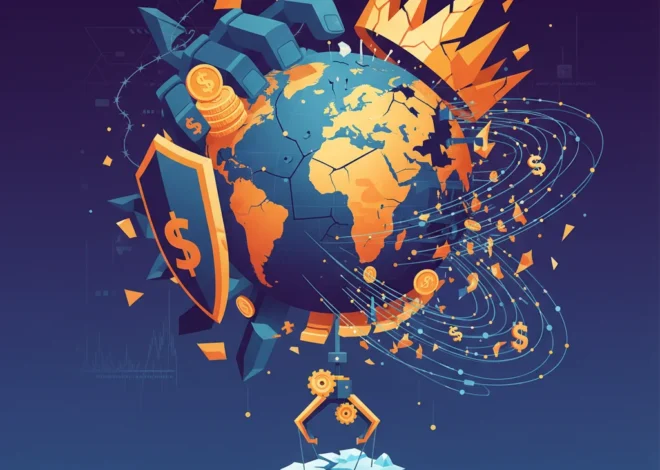
According to William White, a man who has had a front-row seat to the inner workings of global finance, that’s precisely the case. As the former Chief Economist at the Bank for International Settlements (the central bank for central banks), White is not an outside critic; he’s a seasoned insider. In a recent, stark letter to the Financial Times, he argues that central banks must confront their “original sin”: a decades-long addiction to ultra-easy monetary policy that began long before the 2008 financial crisis. This isn’t just about recent mistakes; it’s about a foundational error in judgment that has painted the global economy into a corner with no easy exit.
This post delves into White’s powerful argument. We will unpack the “original sin” of monetary easing, explore the cascade of unintended consequences it unleashed, and analyze the perilous trap central bankers now find themselves in. For investors, business leaders, and anyone concerned with the future of our economy, understanding this perspective is no longer optional—it’s essential for navigating the turbulent waters ahead.
What is the “Original Sin”? Deconstructing Decades of Easy Money
To understand the crisis, we must first understand the policy. For much of the last two decades, the primary prescription for any economic ailment, big or small, has been “monetary easing.” In simple terms, this means making money cheaper and more abundant to encourage borrowing, spending, and investing.
The main tools in this kit include:
- Lowering Interest Rates: By cutting the benchmark interest rate, central banks make it cheaper for commercial banks to borrow money, a saving that is theoretically passed on to consumers and businesses through lower loan and mortgage rates. In the post-2008 era, this was taken to an extreme with Zero Interest-Rate Policy (ZIRP).
- Quantitative Easing (QE): When cutting rates to zero wasn’t enough, central banks started creating new money electronically to buy massive quantities of government bonds and other financial assets. This pumped liquidity directly into the financial system, pushing down long-term interest rates and encouraging investors to buy riskier assets like stocks.
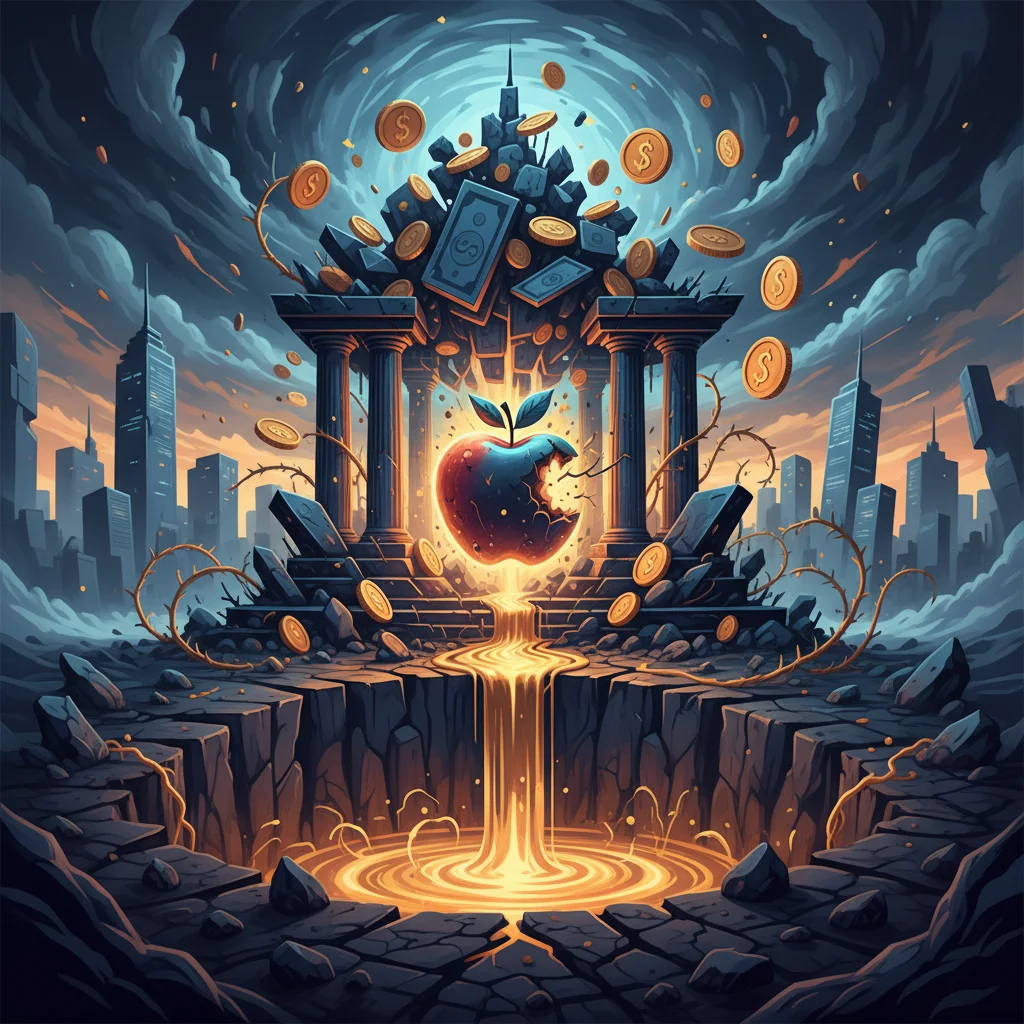
Initially, these were presented as emergency measures—a powerful antibiotic to fight the acute infection of the 2008 global financial crisis. The problem, as White points out, is that the patient was never weaned off the drug. The “temporary” fix became a permanent feature of the global economy. Every minor market wobble or hint of an economic slowdown was met with another dose of easy money. The original sin wasn’t just using these tools; it was the refusal to withdraw them, creating a dangerous addiction across the entire economic system.
The Domino Effect: Why the UK's Pub Rates Relief Is Igniting a Wider Call for Tax Reform
The Unintended Consequences: A System Poisoned by its Cure
A policy intended to foster stability and growth has, over time, created a landscape riddled with fragility and distortion. The long-term side effects of chronic monetary easing have been severe and are now coming home to roost.
Here’s a breakdown of the intended goals versus the damaging, long-term realities of these policies.
| Intended Effect of Monetary Easing | Actual Long-Term Consequence |
|---|---|
| Encourage business investment and hiring. | Creation of “Zombie Companies”: Inefficient, heavily indebted firms that should have failed were kept alive by cheap credit, suppressing productivity and preventing capital from flowing to innovative new ventures. |
| Promote consumer spending and boost demand. | An Unprecedented Debt Supercycle: Governments, corporations, and households took on staggering levels of debt, believing low rates would last forever. This debt now makes the system acutely vulnerable to rising interest rates. |
| Stabilize financial markets and boost asset prices (the “wealth effect”). | Massive Asset Bubbles and Soaring Inequality: The stock market and real estate prices became detached from economic fundamentals, disproportionately benefiting the wealthy who own these assets while wage growth for the average person stagnated. |
| Provide a “backstop” to prevent financial crises. | Pervasive Moral Hazard: Investors and banks were conditioned to believe the central bank would always intervene to prevent losses (the “central bank put”). This encouraged reckless risk-taking, knowing they would be bailed out. |
These consequences are not theoretical. We see them everywhere. The explosion in corporate debt, the proliferation of unprofitable tech companies sustained by venture capital, and the widening chasm between asset owners and wage earners are all direct results of this multi-decade experiment. As one analyst noted, central banks effectively “eliminated the business cycle, but in doing so, they broke the business model” of a healthy, functioning capitalist economy (source).
The Day of Reckoning: Trapped Between Inflation and a Financial Crash
Now, the bill has come due. The very inflation that central bankers dismissed as “transitory” has become entrenched, forcing them to slam on the brakes by raising interest rates at the fastest pace in decades. But they are attempting this in an economy that has been fundamentally rewired to function only on cheap money.
This is the essence of the trap. If they continue to raise rates aggressively to crush inflation, they risk triggering a catastrophic chain reaction:
- Highly indebted corporations could default en masse.
- The housing market could crash as mortgage payments become unaffordable.
- The immense “shadow banking” system could seize up.
- Even governments with massive debt loads could face a fiscal crisis.
This is why William White is deeply skeptical of the popular notion of a “soft landing,” where inflation is tamed without causing a severe recession. He argues that the imbalances built up over years of easy money are simply too large to be unwound gently. As he states in his letter, central banks must “confront the uncomfortable fact that a ‘soft landing’ is highly unlikely” (source). The choice they face is no longer between good and bad, but between bad and worse: tolerate high inflation or knowingly trigger a deep and painful recession.
Beyond the Headlines: Analyzing the Financial Shockwaves of Iran's Protests and Digital Blackout
What This Means for You: Navigating a New Economic Paradigm
The era of easy money is over, and the rules of investing, finance, and business strategy are being rewritten in real-time. Believing that things will simply return to the pre-inflation “normal” is a dangerous assumption.
For Investors and Traders: The “buy the dip” mentality, predicated on the belief that the central bank will always step in to rescue the stock market, is likely dead. Market fundamentals, cash flow, and profitability will matter more than ever. The focus must shift from momentum-driven trading to resilient, long-term investing. Diversification beyond traditional stocks and bonds, into assets that can weather inflation, will be crucial. The entire financial technology landscape will be tested as easy venture capital funding dries up.
For Business Leaders: The era of growth-at-all-costs funded by cheap debt is finished. The new mantra must be operational efficiency, strong balance sheets, and sustainable profitability. Businesses that are over-leveraged or lack a clear path to generating real cash flow are highly vulnerable. Resilience, not just rapid expansion, is the new key to survival.
For the Public: Understanding the basics of economics and finance is no longer a niche interest. The decisions made in the halls of central banks will have a direct and profound impact on everything from your mortgage payment and job security to the long-term value of your savings. A public that understands the trade-offs involved is crucial for holding policymakers accountable.
The Investor's Crossword: Decoding the Puzzles of the Modern Economy
The path ahead is uncertain and will likely be painful. The “original sin” of relying on the monetary printing press to solve every problem has left us with a legacy of debt, distortion, and deep-seated fragility. As William White urges, the first step toward a solution is an honest admission of the problem. Central banks must stop promising painless solutions and begin a frank conversation with the public about the difficult choices that lie ahead. Only by confronting the mistakes of the past can we hope to build a more sustainable and resilient economic future.