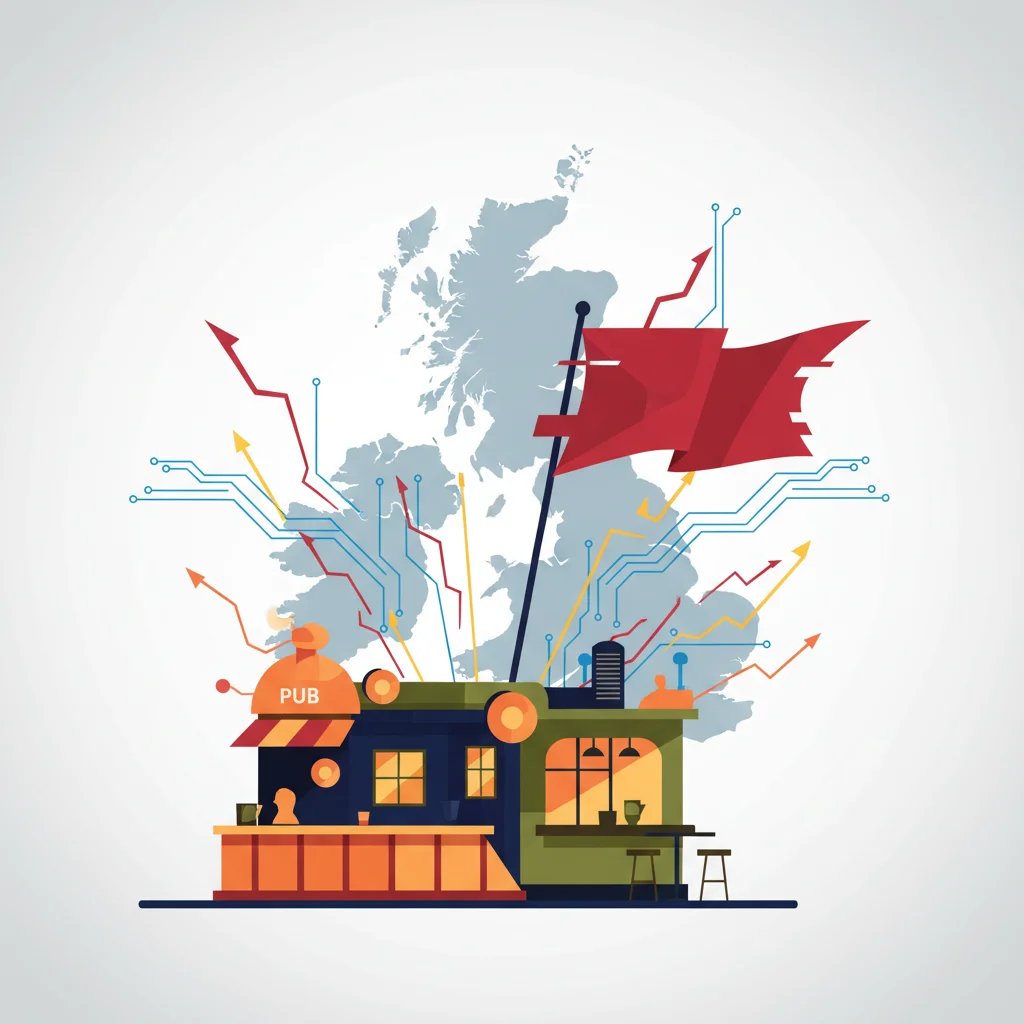
Beyond the Bar Tab: Why the UK Hospitality Crisis is a Red Flag for the Entire Economy
The familiar warmth of a local pub, the buzz of a favourite restaurant, the comfort of a neighbourhood café—these are more than just businesses; they are the cornerstones of communities and a vital engine of the UK economy. But behind the welcoming facades, a storm is brewing. A coalition of more than 40 of the UK’s leading hospitality firms has issued a stark warning to the government, declaring they “don’t need a sticking plaster” but a fundamental overhaul of a tax system they argue is pushing them to the brink. This isn’t just a niche industry issue; it’s a canary in the coal mine for the UK’s broader economic health, with profound implications for finance, investing, and public policy.
This collective cry for help signals a critical inflection point. After navigating the unprecedented challenges of a global pandemic, hospitality businesses now face a perfect storm of soaring energy costs, persistent inflation, and a looming wave of tax increases. For investors, finance professionals, and business leaders, understanding the intricacies of this crisis is essential. It offers a real-time case study in fiscal policy, corporate resilience, and the delicate interplay between government revenue and economic vitality.
The Anatomy of a Financial Squeeze
To grasp the severity of the situation, one must look beyond the headline and dissect the precise financial pressures crippling the sector. The protest from industry leaders isn’t an abstract complaint; it’s a direct response to a multi-pronged assault on already razor-thin profit margins. The core issues are deeply rooted in the UK’s tax and regulatory framework.
The primary grievances centre on two key areas: Value Added Tax (VAT) and business rates. During the pandemic, the government temporarily reduced VAT for the hospitality sector to 5%, later rising to 12.5%, to provide a lifeline. However, this has since reverted to the standard 20%. While understandable from a public finance perspective, this 7.5 percentage point jump acts as a direct tax on turnover, forcing businesses to either absorb the cost—further eroding profitability—or pass it on to consumers already grappling with a cost-of-living crisis.
Simultaneously, the spectre of business rates looms large. These are taxes on commercial properties, and for many pubs and restaurants, they represent one of their largest fixed costs after wages and rent. A period of rates relief is coming to an end, meaning many businesses face a sudden and significant increase in their overheads. According to industry body UKHospitality, the sector is overpaying on business rates by £2.4 billion each year, highlighting a structural imbalance that long predates the pandemic.
To illustrate the compounding nature of these costs, consider the typical financial breakdown for a hospitality venue:
| Cost Category | Description & Impact |
|---|---|
| Labour Costs | Rising minimum wage and competition for skilled staff have pushed payroll expenses to historic highs, often accounting for over 30% of revenue. |
| Cost of Goods Sold (COGS) | Supply chain disruptions and inflation have dramatically increased the price of food, beverages, and other raw materials. |
| Energy Bills | Despite some government support, energy costs for businesses remain volatile and significantly higher than pre-crisis levels, impacting everything from cooking to refrigeration. |
| Business Rates & VAT | These represent significant, often inflexible, government-mandated costs that directly impact cash flow and profitability. |
| Financing Costs | Higher interest rates from central banking authorities have made servicing debt and securing new capital for investment or refurbishment more expensive. |
When combined, these factors create a vicious cycle. Reduced profitability hampers a business’s ability to invest in growth, service its debt, and remain competitive. This financial distress is no longer a problem for the few; it’s a systemic risk to a sector that employs millions and is a cornerstone of British culture.
The Coming Copper Crisis: Why a Metal Shortage Poses a Systemic Risk to the Global Economy
The Government’s Tightrope: Balancing the Books on the Back of Business?
From the perspective of the Treasury, the policy decisions are not made in a vacuum. The UK government is navigating its own immense financial challenges, grappling with the monumental debt incurred during the pandemic and the ongoing need to fund public services. The unwinding of tax reliefs and support measures is a necessary step in the journey toward fiscal consolidation. The core principle of economics dictates that revenue must be raised to meet expenditure, and broad-based taxes like VAT are among the most efficient ways to do so.
However, the hospitality sector argues that this approach is dangerously short-sighted. By extracting maximum tax revenue now, the government risks triggering a wave of business failures, which would ultimately lead to lower tax receipts in the long run, higher unemployment benefit payments, and gaping holes in high streets across the country. The quote from the pub owners—”we don’t need a sticking plaster”—is a powerful indictment of short-term, reactive policymaking. They are calling for a long-term, strategic vision for the sector’s tax burden, one that fosters growth rather than stifling it. This could include a permanent, lower rate of VAT for hospitality and a fundamental reform of the archaic business rates system, potentially linking it to turnover rather than property value.
The Ripple Effect: From Pub Landlords to the Stock Market
The financial health of the hospitality industry is a powerful bellwether for the wider economy, and its struggles create ripple effects that extend far into the worlds of finance and investing. Investors and analysts watch this sector closely as an indicator of consumer confidence and discretionary spending.
For those involved in the stock market, the implications are direct. Publicly listed pub and restaurant groups, such as Mitchells & Butlers, Wetherspoons, and Restaurant Group (owner of Wagamama), will see their valuations directly impacted by this fiscal pressure. A challenging tax environment can lead to downgraded earnings forecasts, reduced dividend payouts, and depressed share prices. This not only affects direct shareholders but also the pension funds and institutional investors who hold these stocks.
The impact cascades through the supply chain. Breweries, food producers, logistics companies, and even farmers are all exposed. A downturn in hospitality means cancelled orders and reduced demand, threatening the viability of businesses far removed from the front lines of customer service. The banking sector is also watching nervously. Banks hold significant loan books tied to hospitality, from small business loans for independent pubs to large corporate financing for major chains. A wave of insolvencies would lead to a spike in loan defaults, creating a potential credit risk that could tighten lending standards for all small and medium-sized enterprises (SMEs).
Geopolitical Chess: Why a Squeeze on Venezuela's Oil Has China—and Global Investors—on Edge
Can Financial Technology Offer a Lifeline?
While policy reform is the ultimate goal, businesses cannot afford to wait. In this challenging environment, many are turning to technology to find efficiencies and build resilience. This is where financial technology, or fintech, is playing an increasingly crucial role. The fintech revolution isn’t just about mobile payments and digital banking; it’s about providing sophisticated tools that were once the exclusive domain of large corporations to businesses of all sizes.
Modern fintech solutions can help hospitality businesses fight back against margin compression in several ways:
- Advanced Inventory Management: AI-powered systems can now predict demand with incredible accuracy, reducing food waste (a major cost) and ensuring optimal stock levels.
- Dynamic Pricing: While controversial if implemented poorly, data-driven pricing models can help businesses optimize their menus and pricing in real-time to maximize revenue during peak hours.
- Streamlined Payments & Accounting: Integrated Point-of-Sale (POS) and accounting systems automate bookkeeping, simplify tax reporting, and provide real-time cash flow analysis, giving owners the data they need to make smarter decisions.
- Alternative Finance: When traditional banking channels are restrictive, fintech lenders can offer more flexible and accessible forms of capital for businesses needing to invest in new equipment or bridge a short-term cash flow gap.
Looking further ahead, some innovative firms are even exploring blockchain technology for supply chain transparency. By creating an immutable record of a product’s journey from farm to table, businesses can guarantee provenance, improve food safety, and potentially identify cost-saving efficiencies in their supply chains. While still nascent, it demonstrates how deep-tech solutions are being considered to solve age-old industry problems.
The Renminbi Riddle: Is China's Currency the World's Most Powerful Economic Lever?
The Road Ahead: A Call for a Sustainable Economic Strategy
The protest from the UK’s hospitality leaders is a critical juncture. It is a plea to move beyond short-term fiscal fixes and develop a long-term economic strategy that recognizes the sector’s value. The outcome of this campaign will have lasting consequences. A failure to act could lead to a permanent scarring of the UK’s high streets, a loss of jobs, and a weakening of the social fabric.
For investors, the path forward requires a nuanced understanding of both the risks and the opportunities. The current environment presents significant headwinds, but well-run, resilient companies that leverage technology and adapt their business models may emerge stronger. For policymakers, the challenge is to craft a tax and regulatory system that is both fair and pro-growth—one that allows these vital businesses to not just survive, but to thrive, invest, and continue serving their communities.
This is more than a story about pubs and restaurants; it’s a story about the future of the UK economy. The decisions made in the coming months will determine whether a key pillar of that economy is allowed to crumble or is given the stable foundation it needs to rebuild and grow for years to come.

Related Posts
Trump’s Tariff Playbook: A Deep Dive into Economic Impact and Future Investment Risks

The Greenland Gambit: Trump’s Tariff Threat Ignites a New Era of Geopolitical Economics