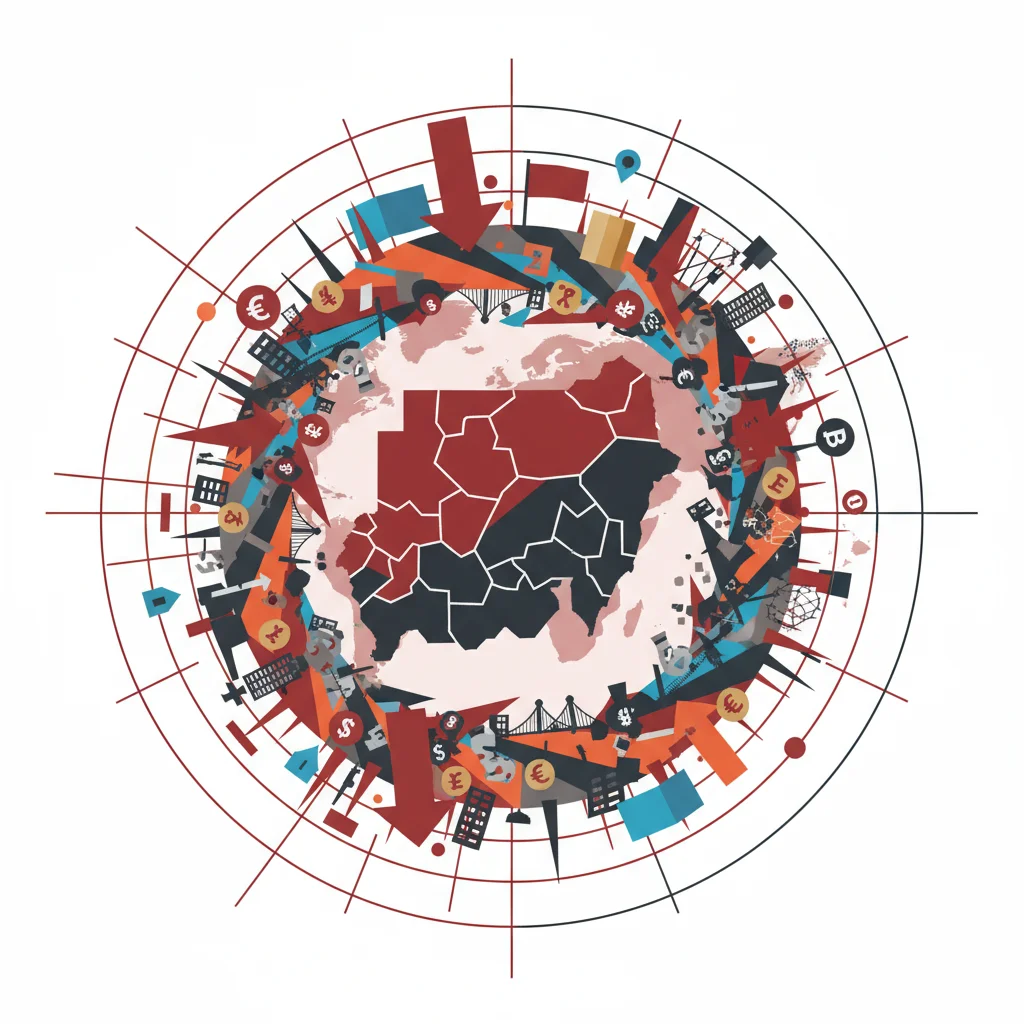
Sudan’s Economic Implosion: Why the World’s Worst Crisis is a Red Flag for Global Investors
In a world saturated with news, some crises fail to capture the global spotlight they desperately need. The ongoing conflict in Sudan is a stark example. While headlines may flicker and fade, the reality on the ground has devolved into what experts are calling the world’s worst humanitarian crisis. But this is not merely a distant tragedy; it’s a catastrophic failure of a state, a complete unraveling of an economy, and a geopolitical vortex with profound implications for international stability, regional trade, and the very concept of sovereign risk.
For investors, finance professionals, and business leaders, the events in Sudan are more than a humanitarian footnote—they are a case study in the ultimate tail risk. This is what happens when political conflict metastasizes into a deliberate strategy of economic annihilation. Understanding the dynamics at play is crucial for anyone involved in emerging markets, geopolitical risk analysis, or international finance.
The Anatomy of a State’s Collapse
The conflict, which erupted in April 2023, pits two rival military factions against each other: the Sudanese Armed Forces (SAF), representing the traditional state military, and the Rapid Support Forces (RSF), a powerful paramilitary group that evolved from the notorious Janjaweed militias of the Darfur conflict. This is not a civil war in the conventional sense; as expert Alex de Waal notes, it is a violent struggle between two entities that were once partners in a military junta. Their falling out is a raw contest for absolute power and control over the nation’s resources.
The RSF, led by General Mohamed Hamdan Dagalo, known as Hemedti, has pursued a particularly brutal strategy. It’s a campaign characterized by widespread looting, systematic sexual violence, and ethnic cleansing, particularly in Darfur. Their goal is not just military victory but the complete dismantling and capture of the state’s economic infrastructure. They have effectively “eaten the state from within,” taking over everything from banks and factories to the nation’s lucrative gold mines.
Weaponizing the Economy: A Deliberate Implosion
The most alarming aspect for any economic observer is how the conflict has been waged through the deliberate destruction of Sudan’s formal economy. This is not collateral damage; it is a core strategic objective, particularly for the RSF.
Key pillars of the nation’s financial infrastructure have been systematically targeted:
- The Collapse of the Banking System: The RSF has looted the central bank and other financial institutions. This has led to a near-total collapse of the formal banking sector. Citizens cannot access their savings, businesses cannot process transactions, and the entire system of formal credit and finance has evaporated.
- Asset Stripping and Predatory Economics: The RSF’s model is one of violent asset stripping. They control a significant portion of Sudan’s gold trade, creating a war economy that operates outside of any legal or regulatory framework. This illicit wealth is then used to buy weapons and influence, creating a self-sustaining cycle of violence.
- Human Capital Flight: The professional and middle classes—the bedrock of any modern economy—have been decimated. Doctors, engineers, academics, and entrepreneurs have been forced to flee, representing a catastrophic brain drain that will cripple any future recovery efforts.
The result is a return to a primitive, predatory form of commerce. The lack of a functional financial system means that modern tools of finance and financial technology are useless. Remittances from the diaspora, a lifeline for many, are now incredibly difficult to transmit, forcing reliance on informal and often dangerous networks. This breakdown highlights the fragility of economic systems when the rule of law disappears. The Billion Playbook: Why Josh Harris is Betting Big on the Future of Sports
Below is a summary of the staggering human and economic cost of this conflict, based on expert analysis and humanitarian reports.
| Metric | Statistic/Status |
|---|---|
| Internally Displaced People | Over 10 million, the largest internal displacement crisis in the world (source) |
| People Facing Acute Food Insecurity | Approximately 25 million people, with 5 million on the brink of famine |
| Banking Sector | Effectively collapsed; central bank looted, formal transactions paralyzed |
| Key Economic Control | RSF controls major gold mines and agricultural lands, running a parallel war economy |
| International Response | Severely underfunded; diplomatic efforts have largely failed to halt the violence |
The Geopolitical Chessboard and Global Indifference
A crisis of this magnitude does not happen in a vacuum. It is fueled by external actors pursuing their own geopolitical interests. The United Arab Emirates has been widely cited as a key backer of the RSF, allegedly providing military and financial support. This allows the RSF to sustain its war effort and gives the UAE influence over a strategically vital region bordering the Red Sea, a critical artery for global trading.
On the other side, Egypt has historically supported the SAF, viewing it as a guarantor of stability on its southern border. This international dimension transforms the conflict into a proxy war, making any resolution incredibly complex. The failure of the United States and other Western powers to exert meaningful pressure has created a diplomatic void, allowing the violence and economic destruction to continue unabated.
The world’s seeming indifference is a crisis in itself. As Kholood Khair, a Sudanese political analyst, points out in the FT discussion, the international community has failed to even “feign interest” in a meaningful way. This neglect has devastating consequences, creating a permissive environment for atrocities and state collapse. The Billion-Dollar Phantom: How an Alleged Crime Lord's Arrest Exposes the Dark Side of Global Finance
The Final Frontier: Famine and the Point of No Return
The most immediate and horrifying consequence of this war is the looming famine. With agricultural production shattered, markets destroyed, and aid convoys blocked, millions of people are facing starvation. Alex de Waal, a world-renowned expert on Sudan and humanitarian crises, warns that the world is “staring down the barrel of a famine” on a scale not seen in decades (source).
This is not a natural disaster; it is a man-made catastrophe. Starvation is being used as a weapon of war. For the global financial system, a famine of this scale is not just a moral failing but a destabilizing event that will have ripple effects for years to come, creating refugee crises and further regional instability that will inevitably impact global markets.
The advanced tools of our modern world, from sophisticated fintech platforms for aid distribution to blockchain for supply chain transparency, are rendered impotent in the face of such fundamental political and security breakdowns. The crisis is a harsh reminder that technology and finance are built upon a foundation of basic order and rule of law—a foundation that has crumbled to dust in Sudan. The Coming Copper Crisis: Why a Metal Shortage Poses a Systemic Risk to the Global Economy
Conclusion: A Warning in Plain Sight
The story of Sudan is a cautionary tale about the speed and totality of state collapse. It demonstrates how quickly a country’s entire economic and financial apparatus can be dismantled and repurposed for predatory ends. For the general public, it is a humanitarian catastrophe demanding our attention. For investors and business leaders, it is a stark lesson in geopolitical risk and the profound fragility of the institutions that underpin the global economy.
Ignoring Sudan is not an option. Its collapse will send shockwaves across East Africa and the Red Sea region. It sets a dangerous precedent for how future conflicts may be fought: not for control of the state, but for its complete and profitable annihilation. The fluctuations of the stock market may seem a world away, but the institutional disintegration happening in Sudan is a fundamental threat to the stable, rules-based international order upon which global finance depends.

Related Posts
The Price of Protection: How Trump’s Transactional Foreign Policy is Reshaping the Global Economy

The Canary in the Coal Mine: What One Pensioner’s Story Reveals About Our Economic Future