Beyond the Balance Sheet: Why a Food Bank’s Relaunch is a Critical Signal for the Economy and Investors
The Unseen Economic Barometer: A Local Story with Global Implications
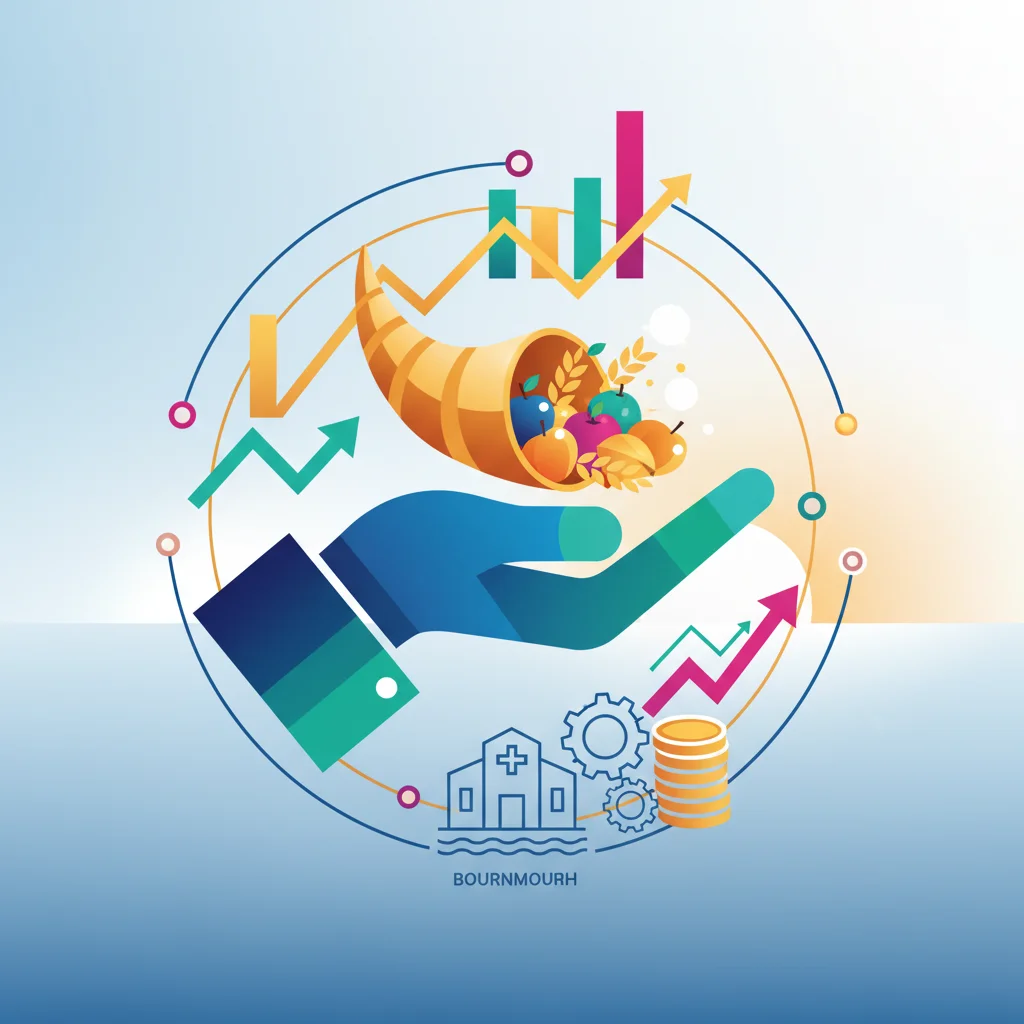
In the coastal town of Bournemouth, a seemingly local event has unfolded that carries profound implications for the wider economic landscape. The Kinson and West Howe Foodbank has not only reopened its doors after a devastating flood but has relaunched as a larger, more comprehensive community service. On the surface, this is a heart-warming story of community resilience. However, for astute investors, finance professionals, and business leaders, it is something more: a critical, real-time data point reflecting the underlying health of our economy.
While analysts pour over GDP figures, inflation rates, and stock market fluctuations, the demand for essential services like food banks provides a raw, unfiltered look into the financial reality of households. The expansion of such a service is a dual-sided signal. It speaks to incredible community spirit and organizational strength, but it also points to a persistent and growing need driven by economic pressures. Understanding this dynamic is no longer just a matter of social conscience; it is a crucial component of comprehensive economic analysis and forward-thinking investment strategy.
Grassroots Data: Decoding the Real-World Economy
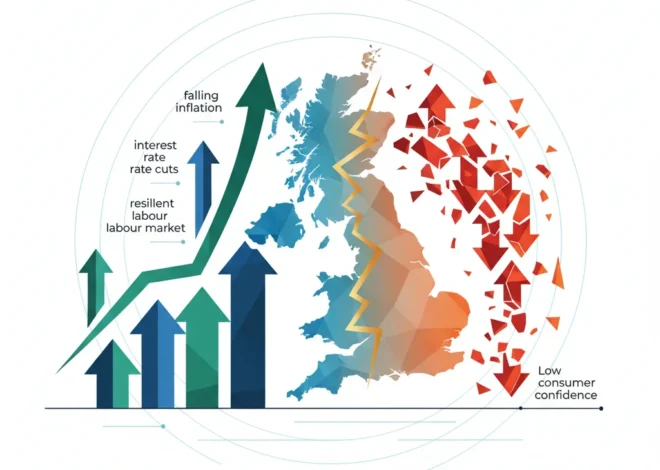
In the world of finance and economics, we are accustomed to lagging indicators. Official unemployment figures, quarterly corporate earnings, and national inflation statistics tell us where the economy was. The state of a local food bank, however, tells us where it is, right now. The rising demand for these services is a direct consequence of several key economic pressures:
- Inflationary Impact: Even as headline inflation cools, the cumulative effect of price rises on essential goods like food and energy has permanently eroded the purchasing power of many households.
- Wage Stagnation: For many, wage growth has not kept pace with the cost of living, creating a widening gap between income and essential expenditure.
- Interest Rate Hikes: Central banking policies designed to curb inflation have increased the cost of borrowing, putting immense pressure on mortgages and consumer debt, and leaving less disposable income for necessities.
Organizations like The Trussell Trust, a leading UK food bank network, provide stark data to support this. In 2022/23, their network distributed nearly 3 million emergency food parcels, a 37% increase on the previous year and the most they have ever distributed (source). This isn’t just a statistic; it’s a proxy for widespread financial distress that will inevitably ripple through the consumer economy, affecting retail sales, loan defaults, and overall market sentiment.
Geopolitical Chess: Why a Squeeze on Venezuela's Oil Has China—and Global Investors—on Edge
The ESG Imperative: Why Social Metrics Now Drive Investment Decisions
The growing prominence of food banks intersects directly with one of the most significant shifts in modern investing: the rise of Environmental, Social, and Governance (ESG) criteria. For years, the “S” in ESG was often the most ambiguous and overlooked component. Today, it is moving to the forefront. Investors increasingly recognize that a company’s long-term success is inextricably linked to the health and stability of the communities in which it operates.
A company’s relationship with social issues like food insecurity is a powerful indicator of its social governance. Corporate partnerships with organizations like the Kinson and West Howe Foodbank are no longer mere philanthropy; they are strategic investments in:
- Brand Reputation: Consumers and clients are more likely to support businesses that demonstrate a genuine commitment to social responsibility.
- Employee Engagement: A strong CSR program is a key factor in attracting and retaining top talent, particularly among younger generations who prioritize purpose-driven work.
- Risk Mitigation: Social instability, driven by economic hardship, can lead to supply chain disruptions, decreased consumer demand, and regulatory scrutiny. Proactive community engagement helps mitigate these risks.
The financial world is taking note. A 2023 report by PwC found that 82% of investors believe companies should embed ESG into their corporate strategy, and nearly half said they would be willing to divest from companies that aren’t taking sufficient action on ESG issues (source). The stock market is beginning to price in social responsibility, and the resilience of a local food bank is a tangible piece of that complex puzzle.
Fintech and Blockchain: The Next Frontier for Social Impact
The challenges faced by non-profits and community services also present a monumental opportunity for innovation, particularly from the world of financial technology. The operational hurdles of a food bank—logistics, fundraising, transparency, and distribution—are precisely the kinds of problems that fintech and blockchain are uniquely equipped to solve.
Imagine a future where the non-profit sector is supercharged by cutting-edge financial technology:
- Blockchain for Transparency: A primary concern for donors is understanding where their money goes. By using a distributed ledger, a charity could offer complete transparency. A donor could track their £10 contribution from the point of donation, through the purchase of specific goods, to its final distribution to a family in need. This would revolutionize trust and could dramatically increase charitable giving.
- Fintech for Efficiency: Modern payment platforms can streamline donations through micro-transactions, “round-up” features on daily purchases, and subscription-based giving models. Internally, financial technology can automate accounting, manage payroll, and optimize cash flow, freeing up valuable human resources to focus on the core mission.
- AI-Powered Logistics: Artificial intelligence can optimize the entire supply chain. Predictive analytics could forecast demand based on local economic data, ensuring the food bank has the right supplies at the right time, while route-optimization algorithms could make collections and deliveries more efficient, reducing fuel costs and waste.
This integration of technology can transform the operating model of social enterprises. Below is a comparison of a traditional vs. a fintech-enhanced non-profit model.
| Operational Area | Traditional Non-Profit Model | Fintech-Enhanced Model |
|---|---|---|
| Fundraising | Manual appeals, events, grant writing. Opaque fund tracking. | Automated micro-donations, subscription models, full transparency via blockchain. |
| Supply Chain | Manual inventory, estimated demand, potential for waste. | AI-driven demand forecasting, real-time inventory tracking, optimized logistics. |
| Financial Management | Basic accounting software, manual reporting, slow reconciliation. | Integrated financial platforms, automated reporting, real-time financial overview. |
| Donor Engagement | Periodic newsletters, annual reports. | Personalized impact reports, real-time tracking of contributions, direct feedback loops. |
This technological evolution is not a distant dream; it’s an emerging reality. The same innovative spirit that powers the stock market and modern banking can and should be applied to solving our most pressing social challenges.
The Renminbi Riddle: Is China's Currency the World's Most Powerful Economic Lever?
The Macroeconomic Impact of Micro-Level Resilience
Finally, it’s crucial to reframe the narrative. The relaunch of the Kinson and West Howe Foodbank is not a story of dependency, but an act of profound economic resilience. Strong social safety nets, whether state-sponsored or community-driven, act as crucial shock absorbers during economic downturns. By providing essential support, they prevent families from falling into deeper crises that are far more costly to address in the long run, such as homelessness or chronic health issues.
This local resilience has a tangible macroeconomic effect. It helps maintain a baseline of social stability, which is a prerequisite for a functioning economy. As a study from the Feeding America network highlights, food insecurity has direct economic costs related to increased healthcare needs and decreased worker productivity. By mitigating these issues at the source, community services contribute to a more stable and productive workforce—a direct benefit to every business and the economy at large.
The Billion Playbook: Why Josh Harris is Betting Big on the Future of Sports
Conclusion: The Smart Money is Watching Main Street
The story of a food bank in Bournemouth expanding its services is a microcosm of the complex interplay between society, technology, and the economy. To dismiss it as a mere local interest piece is to miss the bigger picture. It is a real-time indicator of economic stress, a case study in the growing importance of ESG’s social component, and a canvas for the future application of financial technology.
For the modern investor, banker, and business leader, the key takeaway is clear: the most insightful economic data is no longer confined to the trading floors of London or New York. It is found in the resilience of communities, the demand for essential services, and the innovative spirit that rises to meet a challenge. Paying attention to these signals is not just good citizenship; it’s a fundamental part of a sophisticated, 21st-century financial strategy.