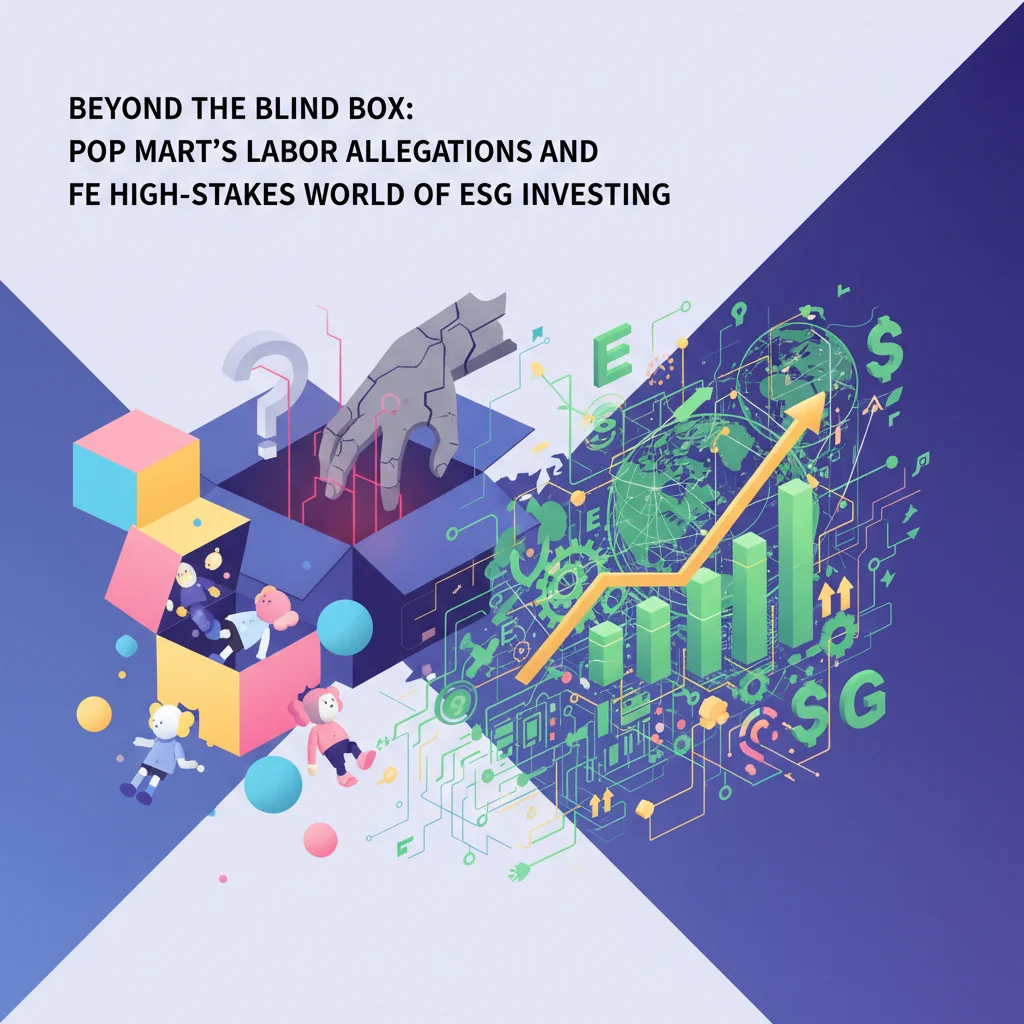
Beyond the Blind Box: Pop Mart’s Labor Allegations and the High-Stakes World of ESG Investing
In the vibrant world of collectibles, few names have generated as much buzz as Pop Mart. The company has masterfully captured the zeitgeist with its “blind box” toys, turning characters like Labubu and Molly into cultural phenomena and its stock into a darling of the Hong Kong Stock Exchange. For investors and finance professionals, Pop Mart has represented a compelling growth story—a tap into the powerful consumer economy of a new generation. However, recent allegations have cast a dark shadow over the glossy veneer of these art toys, forcing a critical conversation that extends far beyond collectible shelves and into the core of modern investing, corporate governance, and the very structure of our global supply chains.
A recent investigation reported by the BBC, based on claims from a labour rights group, has alleged significant worker exploitation at a factory manufacturing Pop Mart products. The claims are serious, painting a picture of neglected staff safety and welfare, a stark contrast to the whimsical and joyful image the brand projects. This news is more than a public relations crisis; it’s a critical stress test for the company’s operational integrity and a case study for anyone involved in finance, from retail trading to institutional investing.
The Allegations: A Look Behind the Curtain
According to the report, investigators from the labour group uncovered a series of troubling conditions at a key manufacturing facility. These allegations, if proven true, point to systemic failures in supply chain oversight. They include claims of inadequate safety protocols, poor working conditions, and a general disregard for the welfare of the very people responsible for creating the products that have driven Pop Mart’s meteoric rise. While the company has yet to issue a detailed public response to these specific claims, the situation immediately raises red flags for the global financial community.
This isn’t just about one factory or one brand. It’s a stark reminder of the inherent risks embedded in complex, international supply chains—risks that are increasingly being priced into the stock market through the lens of Environmental, Social, and Governance (ESG) criteria.
The Billion Playbook: Why Josh Harris is Betting Big on the Future of Sports
ESG Investing and the Materiality of “Social” Risk
For years, the “S” in ESG was often considered the most difficult component to quantify. Environmental metrics could be measured in carbon tonnes, and Governance could be assessed through board structures and shareholder rights. But Social—how a company treats its employees, suppliers, and communities—was often seen as nebulous. That perception is rapidly changing. Today, sophisticated investors and financial institutions understand that social risks are material risks.
A scandal involving worker exploitation can lead to a cascade of negative financial outcomes:
- Reputational Damage: In a hyper-connected world, brand image is a priceless asset. Allegations of unethical practices can alienate a core consumer base, especially younger generations who are increasingly values-driven.
- Supply Chain Disruption: Investigations, strikes, or the loss of a manufacturing partner can halt production, leading to product shortages and a direct hit to revenue.
- Regulatory and Legal Action: Governments worldwide are tightening regulations around supply chain due diligence. Fines, sanctions, and costly legal battles can erode profitability.
- Investor Flight: A growing number of institutional investors and ESG-focused funds have mandates that prohibit investment in companies with poor labour practices. Such allegations can trigger sell-offs, depressing the stock price.
The Pop Mart situation is a textbook example of why meticulous due diligence in the global economy is no longer optional. It highlights a fundamental principle of modern economics: long-term value creation is intrinsically linked to sustainable and ethical operations.
A Financial Snapshot: What’s at Stake for Pop Mart
To understand the financial gravity of the situation, it’s essential to look at the numbers that made Pop Mart a star on the stock market. The company’s rapid expansion and high-profit-margin business model have been incredibly attractive to investors. Below is a table summarizing key financial data that illustrates the scale of the enterprise now under scrutiny.
| Metric | Recent Performance Data | Source/Context |
|---|---|---|
| Market Capitalization | Fluctuates, but has been in the multi-billion USD range | Hong Kong Stock Exchange (1990.HK) |
| Annual Revenue | Approximately ¥6.3 billion CNY in 2023 (source) | Pop Mart 2023 Annual Results Announcement |
| Gross Profit Margin | Consistently above 55-60% | Indicative of a highly profitable business model |
| Global Store Count | Hundreds of retail stores and “roboshops” globally | Demonstrates rapid international expansion |
This financial success is precisely what makes the current allegations so potent. The high gross margins will inevitably lead to questions about cost management and whether those profits have come at the expense of worker welfare. For any analyst involved in trading or portfolio management, the core issue is whether the company’s valuation has adequately priced in the risk of its supply chain practices.
The Coming Copper Crisis: Why a Metal Shortage Poses a Systemic Risk to the Global Economy
Can Financial Technology Offer a Solution?
The challenges of monitoring a sprawling, global supply chain are immense. This is where innovation in financial technology, or fintech, and related fields like blockchain, offers a potential path forward. For decades, supply chains have been notoriously opaque. A brand might have a contract with a primary manufacturer, but have little to no visibility into the sub-contractors that provide raw materials or labour.
New technologies are emerging to solve this very problem:
- Blockchain for Traceability: A blockchain-based ledger can create an immutable record of a product’s journey from raw material to finished good. Each transaction and hand-off can be recorded transparently, making it much harder to hide unethical practices or substitute materials from unvetted suppliers.
- Fintech-Powered Supplier Verification: Financial technology platforms are now being used to vet and continuously monitor suppliers. These platforms can integrate data from audits, worker feedback hotlines, and public records to create a dynamic risk score for each partner in the supply chain.
- Smart Contracts: These self-executing contracts, often built on blockchain, can automate payments to suppliers upon the verified completion of ethical and quality milestones. For example, a payment could be automatically released once an independent audit confirming fair labour practices is uploaded to the system.
For the banking and investing sectors, these technologies are more than just operational tools; they are becoming essential for risk management. They provide the data integrity needed to confidently back ESG-compliant investments and offer a mechanism to hold companies accountable.
The Path Forward for Investors and Business Leaders
The allegations against Pop Mart’s supplier serve as a critical inflection point for all stakeholders. The era of prioritizing growth at all costs, with supply chain ethics as an afterthought, is coming to an end. The modern economy demands a more integrated approach where financial performance and ethical responsibility are seen as two sides of the same coin.
For Investors and Finance Professionals:
- Deepen Due Diligence: Go beyond the balance sheet. Scrutinize a company’s supply chain policies, audit reports, and transparency initiatives. ESG ratings are a starting point, not the final word.
- Engage with Companies: Use shareholder influence to demand greater transparency and accountability regarding labour practices. Engagement is a powerful tool for driving change.
- Price in the Risk: Understand that social and governance failures are not abstract concepts; they are quantifiable financial risks that can impact long-term returns. Adjust your trading and investment models accordingly.
For Business Leaders:
- Invest in Visibility: Treat supply chain transparency not as a cost, but as an investment in brand resilience and risk mitigation.
- Embrace Accountability: When allegations arise, respond with transparency, conduct thorough independent investigations, and take decisive corrective action.
- Forge Ethical Partnerships: Build long-term relationships with suppliers who share your commitment to ethical practices, rather than constantly seeking the lowest-cost provider.
Ultimately, the story of the Labubu toy is no longer just about art and commerce. It is about the fundamental principles of our globalized economy. It demonstrates that in a world of instant information and rising stakeholder expectations, the true value of a company is reflected not only on its stock market ticker but in the dignity and safety of every hand that helps bring its products to life.

Related Posts

The Price of a Turnaround: Inside Rolls-Royce’s Multimillion-Pound CEO Pay Plan

Beyond the Headlines: Prince Harry’s Lawsuit and the High-Stakes Financial Gamble for Media Giants