Apple’s AI Gambit: Why Playing Kingmaker is Smarter Than Waging War
The tech world is in the throes of an all-out war. The prize? Supremacy in the age of artificial intelligence. Giants like Microsoft, Google, and Meta are locked in a frantic arms race, pouring tens of billions of dollars into building vast armies of GPUs, constructing colossal data centers, and training ever-larger language models. It’s a high-stakes, high-spend battle for the future. And then there’s Apple. Standing calmly on the sidelines, seemingly indifferent to the frenzy.
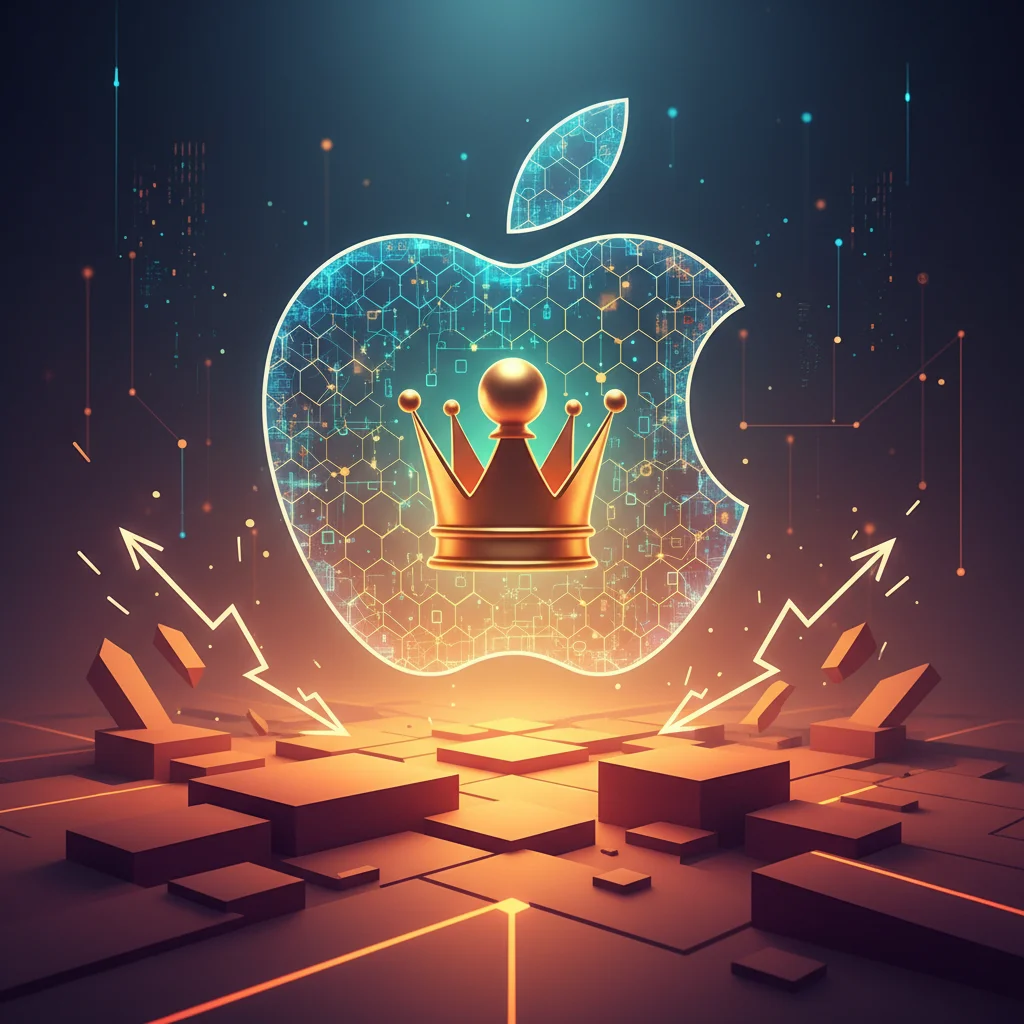
But don’t mistake Apple’s quiet for inaction. While its rivals are caught in a costly war of attrition, Apple is executing a brilliant counter-move—a strategy not of confrontation, but of coronation. Instead of building its own AI army from the ground up, Apple is positioning itself to be the ultimate kingmaker, the indispensable platform where the real AI war will be fought. It’s a classic Apple play, and it might just be the most intelligent move in the entire AI race.
The AI Arms Race: A Battle of Billions and Brute Force
To understand Apple’s strategy, you first have to appreciate the sheer scale of the conflict it’s choosing to sidestep. The current approach to building leading-edge artificial intelligence is a game of massive capital expenditure. It’s about who can acquire the most NVIDIA H100 chips, who can build the most efficient cloud infrastructure, and who can afford the astronomical energy and talent costs required to train and run these complex models.
Microsoft has famously invested over $13 billion into OpenAI, integrating its technology deep into Azure and its suite of products. Google has been a pioneer in machine learning for over a decade, with its DeepMind and Brain divisions now united to push its Gemini models forward. Even Amazon and Meta are spending fortunes to ensure they aren’t left behind. This is a battle of infrastructure, a contest of raw computational power where victory is measured in petaflops and parameter counts.
This approach, however, is fraught with risk. The technological landscape is shifting so rapidly that today’s leading model could be obsolete in six months. A multi-billion dollar investment in a specific type of hardware or model architecture could become a very expensive paperweight overnight. It’s a high-risk, high-reward strategy that Apple, with its famously meticulous and margin-focused approach, is wisely choosing to avoid.
Apple’s Counter-Play: The Platform is the Power
Apple isn’t ignoring AI. In fact, it has been embedding machine learning into its products for years, powering everything from computational photography to on-device voice recognition. Its strategy for this new generative AI era is a masterful extension of its core business philosophy: control the ecosystem, own the user, and let others compete to provide services within your “walled garden.”
The company is pursuing a two-pronged approach:
- On-Device AI: Apple is focusing its internal efforts on creating smaller, highly efficient AI models that can run directly on the iPhone, iPad, and Mac. This plays directly to its brand strengths of privacy and security. By processing data locally, Apple can offer powerful AI features without sending your personal information to the cloud, a critical differentiator in an age of increasing data privacy concerns. This focus on local processing also has major implications for cybersecurity and user trust.
- Strategic Partnerships: For the heavy-duty, cloud-based tasks that require massive models—like complex reasoning or advanced content creation—Apple is turning to partners. The company is reportedly in talks to license Google’s Gemini models for integration into iOS 18. Reports also suggest similar conversations have occurred with OpenAI. This is the kingmaker move. As the Financial Times notes, this allows Apple to avoid the “multibillion-dollar deal to secure Gemini models reflects cautious approach to infrastructure spending.”
By doing this, Apple transforms the AI arms race from a threat into an opportunity. It forces the AI giants to court *them*, not the other way around. Google and OpenAI need access to Apple’s 2 billion active devices far more than Apple needs any single one of their models. Apple gets to integrate best-in-class technology into its products without bearing the colossal R&D and infrastructure costs, while simultaneously stoking competition between its potential partners. America's AI Edge Is on the Brink: A Microsoft Scientist's Dire Warning About Gutting University Research
A Tale of Three Strategies: The AI Landscape
The different approaches to the AI race can be complex. Here’s a simplified breakdown of how the key players are positioning themselves:
| Company | Core AI Strategy | Key Assets | Primary Risk |
|---|---|---|---|
| Apple | Platform & Partnership (Kingmaker) | 2B+ active devices, user loyalty, brand trust, on-device hardware/software integration | Being perceived as a laggard; over-reliance on partners who become competitors |
| Microsoft/OpenAI | Vertical Integration & Enterprise Focus | Azure cloud infrastructure, massive enterprise customer base (Office 365), early-mover advantage with OpenAI | High R&D/infrastructure costs; potential antitrust scrutiny; heavy dependence on OpenAI’s trajectory |
| Deep R&D & Data Dominance | Decades of AI research, vast datasets from Search/Android, in-house chip design (TPUs) | Organizational inertia; threat to core search business; pressure to keep pace with nimbler rivals |
Why This Matters for Developers, Startups, and the Future of Software
Apple’s kingmaker strategy isn’t just a corporate chess move; it has profound implications for the entire tech ecosystem, from individual developers to high-growth startups.
For Developers and Programming
An ecosystem where Apple provides secure, on-device machine learning APIs (Core ML) while also offering hooks into powerful third-party cloud models is a dream scenario. Developers can create a new class of hybrid applications. Imagine an app that uses on-device AI for instant, private tasks like summarizing your emails, but can call on a powerful model like Gemini for complex creative work. This creates a flexible and powerful environment for innovation in software development, reducing the need for every developer to become an expert in large-scale AI deployment.
For Startups and SaaS
The AI arms race can feel intimidating for startups. How can you possibly compete with a company spending $10 billion a quarter on infrastructure? Apple’s approach levels the playing field. By commoditizing access to powerful large language models through a common platform (iOS), Apple allows startups to focus on what they do best: building unique applications and user experiences. A new wave of SaaS (Software as a Service) companies can emerge, building specialized AI-powered tools on top of the foundational models Apple chooses to integrate. This fosters an ecosystem of automation and niche solutions rather than a monolithic, centralized AI world. The Taxman Cometh… With an API: Why a UK Tax Change Is a Gold Rush for AI and SaaS Startups
For Consumers
For the average user, this strategy could deliver the best of all worlds: powerful, context-aware AI features that feel seamlessly integrated into the devices they already love, combined with a strong commitment to privacy for their personal data. The competition between Google, OpenAI, and others to be Apple’s partner of choice will only drive the quality of these AI models higher, with the end-user as the ultimate beneficiary.
The Throne is More Powerful Than the Army
While the commentariat and markets have been wringing their hands about Apple being “behind” in AI, they may be missing the point entirely. Apple isn’t behind; it’s simply refusing to fight on its rivals’ terms. It is leveraging its unassailable position as the world’s premier consumer electronics platform to dictate the rules of engagement.
The company that builds the best AI model may win a major battle, but the company that controls the distribution to two billion high-value customers will win the war. By choosing to be the kingmaker, Apple is sidestepping the bloody, expensive fight for technological supremacy and instead building the throne from which the next era of computing will be ruled. Others are building the engines of artificial intelligence; Apple is building the kingdom. The Stablecoin Revolution Isn't About Crypto—It's About Smarter Software
The real question isn’t whether Apple can build a competitor to GPT-4 or Gemini. The real question is: does it even need to?