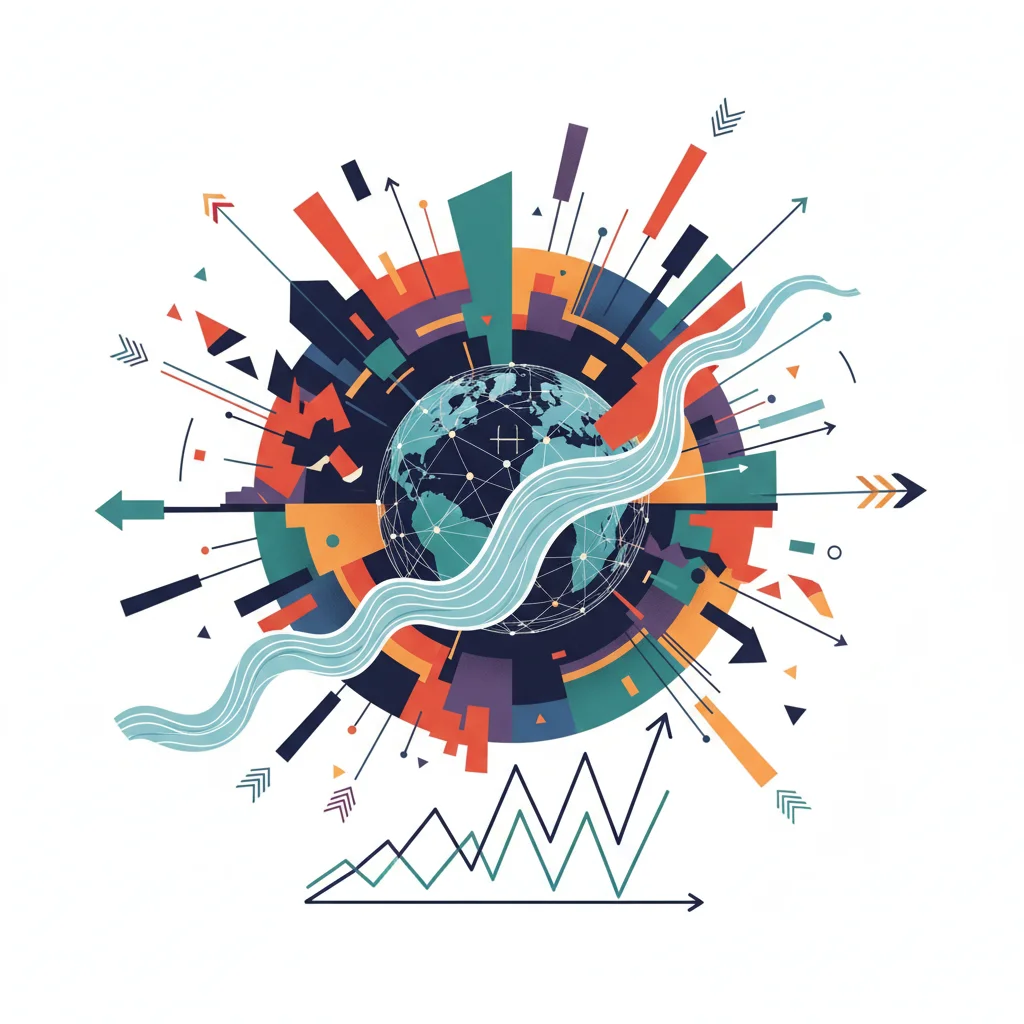
The Unseen Market Movers: How Geopolitical Instability and Human Migration Are Redefining the Global Economy
In our hyper-connected world, the traditional boundaries between news headlines and financial ledgers have all but disappeared. An isolated event on one continent can send shockwaves through the stock market on another. While seasoned investors keep a close watch on interest rates and corporate earnings, a new class of powerful, often unpredictable, market movers is demanding attention: geopolitical instability and the subsequent patterns of human migration. These are not just humanitarian issues; they are potent economic forces with profound implications for investing, banking, and the future of global finance.
Events that may seem distant, such as the recent incident in Minneapolis involving a Venezuelan immigrant and a federal agent (source), are symptoms of larger, global trends. Political and economic turmoil in nations like Venezuela has triggered one of the largest displacement crises in the world. Understanding the financial and economic consequences of these macro-level shifts is no longer optional for business leaders and finance professionals—it’s essential for navigating the complexities of the modern economy.
The Macroeconomic Ripple Effect of National Crises
When a nation experiences severe political or economic instability, the first and most immediate impact is on its own domestic economics. Consider the case of a country undergoing hyperinflation and political unrest. The sequence of events often follows a predictable, devastating pattern:
- Currency Devaluation: National currencies lose value at an alarming rate, eroding savings and destroying wealth for citizens and domestic businesses.
- Capital Flight: Investors, both domestic and foreign, rush to move their assets out of the country to safer havens. This exodus of capital starves the local economy of the funds needed for growth and stability.
- Brain Drain: The most skilled and educated workers are often the first to leave, seeking stability and opportunity elsewhere. This “brain drain” cripples the nation’s long-term potential for recovery and innovation.
- Supply Chain Disruption: A country in crisis can no longer function as a reliable partner in global supply chains. For nations that are key producers of commodities—like oil, in Venezuela’s case—this disruption can cause global price shocks, affecting everything from transportation costs to consumer goods prices worldwide.
These internal collapses do not occur in a vacuum. They create ripples that travel across the globe, impacting international trading relationships, foreign direct investment (FDI) flows, and the risk calculus for multinational corporations. A company with operations or suppliers in an unstable region faces immense operational and financial risks, which in turn affects its stock valuation and the confidence of investors.
From Brinkmanship to Boardroom: Decoding the Trump-Petro Détente and Its Impact on Global Markets
Human Migration: An Economic Force Multiplier
The most visible consequence of geopolitical instability is human migration. People move in search of safety, stability, and economic opportunity. This movement of people is a powerful economic force that fundamentally alters the economies of both the countries they leave and the countries they enter.
For host countries, immigration presents a complex economic equation. On one hand, it can bring an influx of labor, filling critical gaps in the workforce, particularly in aging economies. Immigrants are also consumers, taxpayers, and entrepreneurs who can drive economic growth. According to an analysis by the OECD, immigrants contribute significantly to labor market flexibility and economic dynamism (source). On the other hand, a sudden, large-scale influx can strain public services like healthcare, education, and housing, creating social and political challenges that require careful policy management.
To illustrate the varying economic landscapes, consider the following comparison of migrant populations and their estimated economic contributions in several key developed nations.
| Host Country | Immigrant Population (% of Total) | Estimated Net Fiscal Contribution (per immigrant) | Key Sectors of Impact |
|---|---|---|---|
| United States | ~13.7% | Positive (Varies by education/skill level) | Technology, Healthcare, Agriculture, Construction |
| Germany | ~15.3% | Positive (long-term projection) | Manufacturing, Engineering, Social Care |
| Canada | ~21.5% | Strongly Positive (Points-based system) | Skilled Trades, IT, Finance |
| United Kingdom | ~14.0% | Net Positive (especially for non-EU migrants) | Financial Services, NHS, Academia |
Note: Data is illustrative and compiled from various economic studies and national statistics. Net fiscal contribution can be complex to calculate and varies widely based on methodology and timeframes.
The Role of Fintech and Blockchain in a World on the Move
As these global shifts accelerate, traditional financial systems are often too slow, expensive, or inaccessible to meet the needs of displaced populations. This is where financial technology (fintech) and blockchain are emerging as transformative solutions.
Reimagining Remittances and Banking
For decades, the remittance industry—money sent by migrants to their families back home—has been plagued by high fees and slow transfer times. Fintech startups are disrupting this space with mobile-first platforms that offer faster, cheaper, and more transparent cross-border payments. This isn’t just a matter of convenience; it’s a lifeline that injects billions of dollars directly into developing economies, often more than official development aid (source). By reducing transaction costs, fintech ensures more money reaches the families who need it most, boosting local consumption and economic stability.
Blockchain for Financial Identity
One of the biggest challenges for refugees and displaced persons is the lack of official identification, which locks them out of the formal banking system. Blockchain technology offers a potential solution by creating decentralized, self-sovereign digital identities. An individual could have a secure, portable, and verifiable record of their existence, credentials, and financial history that isn’t dependent on any single government. This could unlock access to bank accounts, credit, and employment, effectively bringing millions of “unbanked” people into the global economy.
The Rubio Doctrine: How One Senator's Venezuelan Gamble is Reshaping Global Finance and Investment
Implications for Investors and Business Leaders
Navigating this new landscape requires a more holistic approach to risk assessment and strategy. For today’s investor and business leader, the key takeaways are clear:
- Geopolitical Risk is a Portfolio Risk: Your portfolio is not immune to global politics. Diversification should not only be across asset classes but also across geopolitical environments. Understanding the stability of the regions where you invest or operate is paramount.
- Demographics are Destiny: Migration patterns are reshaping labor markets, consumer bases, and urban centers. Businesses that understand and adapt to these demographic shifts will be the winners of tomorrow. This could mean developing products for new cultural groups or investing in regions experiencing population growth through immigration.
- Technology is the Great Enabler: The rise of fintech and blockchain is not a peripheral trend. These technologies are providing the financial infrastructure for a more mobile and interconnected global population. Investing in this technological layer can be a powerful long-term strategy, as it addresses fundamental needs in a growing global market.
The world is in a state of flux. The forces of political instability and human migration are powerful, complex, and deeply intertwined with the global economy. By looking beyond the daily fluctuations of the stock market and understanding these profound structural shifts, investors and leaders can not only mitigate risk but also identify the defining opportunities of the 21st century.
Ultimately, the story of modern finance is a human story. The movement of capital follows the movement of people, and the search for stability and opportunity is a universal economic driver. Recognizing this connection is the first step toward building a more resilient and insightful investment philosophy for the turbulent years ahead.

Related Posts
The Price of Protection: How Trump’s Transactional Foreign Policy is Reshaping the Global Economy
The Greenland Gambit: Trump’s Tariff Threat Ignites a New Era of Geopolitical Economics