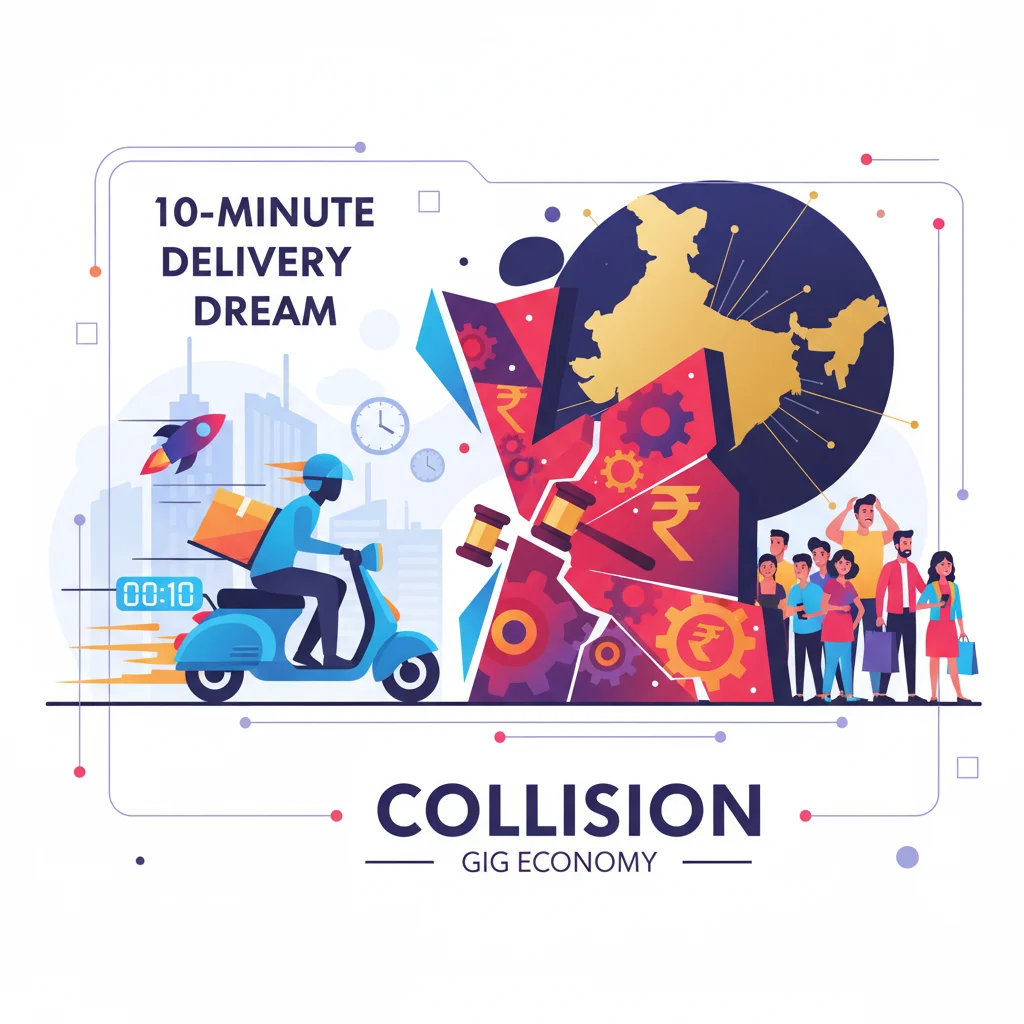
The 10-Minute Delivery Dream Collides with Reality: India’s Regulatory Wake-Up Call for the Gig Economy
In the bustling metropolises of India, a new consumer expectation has taken hold with astonishing speed: the 10-minute delivery. Need groceries for dinner? A late-night snack? A forgotten ingredient? Companies like Zomato’s Blinkit, Swiggy’s Instamart, and the unicorn startup Zepto promised a solution that felt like magic, delivered to your doorstep in less time than it takes to watch a YouTube video. This “quick commerce” or “q-commerce” revolution, fueled by billions in venture capital and sophisticated logistical networks, seemed to represent the pinnacle of consumer convenience.
However, a simmering undercurrent of concern has finally boiled over. The relentless pressure to meet these ultra-fast deadlines has raised serious questions about the human cost of convenience. Now, the Indian government has stepped in, delivering a stark message to these fast-growing companies: stop promising 10-minute service. This directive, as reported by the Financial Times, is more than just a slap on the wrist; it’s a potential inflection point for the entire gig economy, with profound implications for its business models, the future of work, and the landscape of tech investing in emerging markets.
The Blitzscaling of Convenience: How We Got Here
The rise of q-commerce wasn’t gradual; it was a land grab executed at lightning speed. The business model is predicated on a network of “dark stores”—small, strategically located warehouses stocked with a limited range of high-demand items. When an order is placed, an algorithm instantly directs a nearby gig worker to pick, pack, and race to the customer’s location. The entire operation is a marvel of modern financial technology and logistics, optimizing for a single metric: speed.
For investors, this model was intoxicating. It represented a massive total addressable market (TAM) and fit perfectly into the “blitzscaling” playbook: pour capital into aggressive expansion and customer acquisition to achieve market dominance, and worry about profitability later. This strategy lit up the private finance markets and even propelled companies like Zomato onto the public stock market, with its acquisition of Blinkit being a major bet on the q-commerce future. The promise was simple: capture the user, make your service indispensable, and eventually, the unit economics will work themselves out. But this relentless pursuit of growth ignored a critical variable: the well-being of the very people making the magic happen.
The Hidden Ledger: The True Cost of 10-Minute Delivery
Behind the seamless app interface and the cheerful delivery icons lies a high-pressure reality for millions of gig workers. To meet a 10-minute target, every second counts. This translates into riders navigating congested city streets at high speeds, often disregarding traffic rules and personal safety. Reports and social media have been rife with accounts of the immense stress placed on these workers, who are often paid per delivery and lack the social safety nets of traditional employment.
The core issue is a misalignment of incentives. While companies publicly state they don’t penalize riders for delays, the entire system is algorithmically designed to reward speed. This creates a de facto environment where workers feel compelled to take risks. The Indian government’s intervention stems directly from these concerns, citing the “untenable” pressure that has raised alarms about worker safety across an industry that employs millions (source). This isn’t just a social issue; it’s a fundamental flaw in the business model that exposes companies to significant regulatory and reputational risk—a factor that any serious analysis of the company’s stock market valuation must consider.
To understand the complex web of incentives and consequences, it’s helpful to break down the impact on each key stakeholder.
| Stakeholder | Pros (The Upside) | Cons (The Downside) |
|---|---|---|
| Investors | Rapid market share growth, potential for high returns on investment, disruptive business model. | High cash burn, uncertain path to profitability, significant regulatory and ESG risk. |
| Companies | Strong competitive differentiator, high customer acquisition and retention, market leadership. | Negative public perception, high operational costs, potential for government crackdown, legal liability. |
| Consumers | Unprecedented convenience, time-saving, on-demand access to goods. | Potential for higher prices long-term, ethical concerns about worker welfare. |
| Gig Workers | Flexible work opportunities, potential for income in a struggling job market. | High-pressure environment, significant safety risks, lack of benefits and job security, income volatility. |
| Society & Government | Job creation in the gig economy, innovation in logistics. | Increased road accidents, erosion of labor standards, strain on urban infrastructure. |
Rethinking the Equation: From Speed to Sustainability
The government’s directive forces a fundamental rethink of the value proposition. If speed is no longer the sole king, what will differentiate the winners from the losers? The focus must now shift to perfecting the underlying economics of the business. This includes:
- Optimizing Unit Economics: With a slightly longer delivery window (e.g., 20-30 minutes), companies can batch orders more effectively, optimize delivery routes, and reduce the cost per delivery. This is the path to profitability that the stock market has been desperately waiting to see.
- Enhancing Worker Welfare: Investing in better safety gear, proper training, and even insurance can reduce attrition and improve service quality. This addresses the “S” in ESG (Environmental, Social, and Governance) investing, an increasingly critical factor for institutional finance.
- Technological Innovation Beyond Speed: The incredible fintech and logistics platforms built for 10-minute delivery can be repurposed. They can be used to improve inventory management, reduce food waste, and offer personalized promotions. There’s even speculative talk about how blockchain could one day be used to create more transparent and fair smart contracts for gig workers, ensuring timely and accurate payouts directly tied to service level agreements that prioritize safety over speed.
This regulatory push is a clear signal to the market. The era of unchecked blitzscaling in the Indian gig economy is facing its first major test. Companies that adapt by building more resilient and ethical business models will likely thrive. Those that fail to see this as a fundamental shift in the operating environment may find their access to capital—both private and public—dwindling. As one official noted, the expectation for such speed has created “unnecessary pressure on the workers” (source), and the market is now being forced to correct for this externality.
From Brinkmanship to Boardroom: Decoding the Trump-Petro Détente and Its Impact on Global Markets
The Global Ripple Effect: A Lesson for the World’s Gig Economies
While this development is specific to India, its implications are global. Gig economy platforms in markets from New York to London have faced similar criticisms regarding worker rights and safety. India’s proactive stance could serve as a blueprint for other regulators watching the “dark store” model proliferate in their own cities.
For global investors, this is a crucial case study in regulatory risk within emerging markets. The allure of a billion-plus consumer market comes with the reality of a dynamic and increasingly assertive regulatory landscape. The future of investing in such sectors will require a more nuanced approach that goes beyond top-line growth projections and incorporates a deep understanding of local labor laws, political sentiment, and social dynamics. The principles of sound economics—where value creation is sustainable and considers all stakeholder costs—are making a powerful comeback.
The traditional pillars of the financial world, from commercial banking to venture capital, are all stakeholders in this evolving narrative. They provide the capital that fuels these platforms, and they will ultimately share in the rewards or the risks of the business models they choose to back. The systems of digital trading and payments that form the backbone of this financial technology are neutral; it is the business logic layered on top that is now under scrutiny.
Conclusion: The End of an Era, The Beginning of an Opportunity
The Indian government’s move to curb 10-minute delivery promises is not the death knell for quick commerce. Instead, it is a forced maturation. It marks the end of a frenetic, capital-fueled sprint and the beginning of a more measured marathon. The industry must now evolve from a pure-play speed-and-convenience proposition to a more holistic and sustainable model of retail logistics.
For business leaders, the lesson is clear: growth that comes at a high social cost carries an implicit, and potentially explosive, risk. For investors, the takeaway is a reinforcement of due diligence that must extend beyond the financials to the operational and ethical soundness of a business. And for consumers, it’s a gentle reminder that true convenience cannot be divorced from the well-being of those who provide it. The 10-minute delivery dream may be over, but the quest to build a better, more sustainable on-demand economy has just begun.
The Rubio Doctrine: How One Senator's Venezuelan Gamble is Reshaping Global Finance and Investment