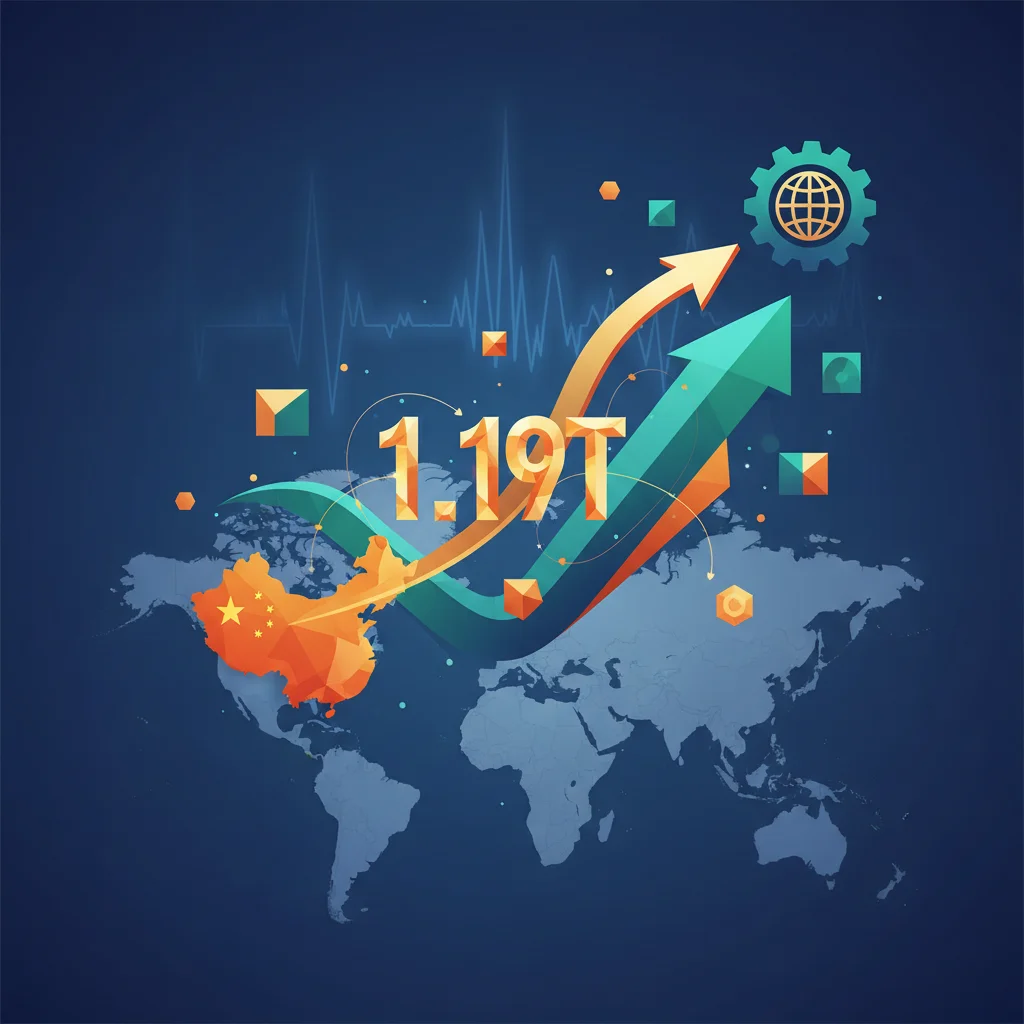
The $1.19 Trillion Signal: How China’s Record Trade Surplus is Rewriting the Rules of the Global Economy
In the world of global finance and economics, numbers often tell a story. But rarely does a single figure carry the weight, complexity, and geopolitical significance of this one: $1.19 trillion. This is the staggering size of China’s trade surplus for the most recent reporting year, an all-time record that defies years of Western tariffs, predictions of economic decoupling, and narratives of a looming collapse. Announced by Beijing, this figure isn’t just a data point; it’s a powerful signal of resilience, strategic adaptation, and a fundamental reshaping of global trade flows.
For years, the prevailing wisdom, particularly in Western financial circles, was that the tariffs imposed during the Trump administration would cripple China’s export-driven economy. The goal was to rebalance trade and encourage a reshoring of manufacturing. Yet, the reality on the ground has painted a dramatically different picture. Instead of contracting, China’s trade engine has roared to life, finding new avenues for growth and cementing its position as the world’s factory floor. This development has profound implications for everything from international relations and supply chain management to your personal investing portfolio and the future of the global economy.
This post will dissect this monumental economic event. We will go beyond the headline number to understand the strategic pivots that made it possible, analyze the ripple effects across the global stock market, and explore what this means for investors, business leaders, and anyone interested in the future of international finance.
The Anatomy of a Record-Shattering Surplus
First, let’s clarify what a trade surplus means. In simple terms, a country runs a trade surplus when the value of the goods and services it exports is greater than the value of the goods and services it imports. A surplus of nearly $1.2 trillion indicates an immense global demand for Chinese products and a significant inflow of foreign currency into the country.
This record wasn’t an overnight phenomenon. It’s the culmination of a multi-year trend that accelerated despite global headwinds like the pandemic and geopolitical tensions. To put this into perspective, let’s look at the recent trajectory of China’s trade balance.
Below is a simplified view of China’s annual trade surplus in goods, illustrating the powerful upward trend:
| Year | Approximate Trade Surplus (in USD) | Key Context |
|---|---|---|
| 2018 | $351 billion | US-China trade war begins, initial tariffs imposed. |
| 2020 | $535 billion | Global pandemic disrupts supply chains; China’s factories recover first. |
| 2022 | $877 billion | Post-pandemic demand surge for goods. |
| Latest Figure | $1.19 trillion | Record high achieved through strategic trade diversification. |
The key driver of this growth is a strategic shift in both what China exports and where it exports. While traditional exports like electronics and textiles remain important, the real story is the explosive growth of the “new three”: electric vehicles (EVs), lithium-ion batteries, and solar panels. These high-tech, green-energy products have found eager markets worldwide, positioning China as a dominant player in the technologies of the future. This move up the value chain is a core component of Beijing’s long-term economic strategy.
The Great Pivot: How Diversification Defeated Tariffs
The most crucial element behind this record surplus is China’s successful trade diversification away from the United States. While the US remains a significant trading partner, it is no longer the gravitational center of China’s export universe. Beijing has systematically cultivated deeper trade relationships with other regions, most notably the Association of Southeast Asian Nations (ASEAN).
For the past several years, ASEAN has overtaken both the European Union and the United States to become China’s largest trading partner. This pivot is not accidental. It’s the result of deliberate policy choices, including massive infrastructure investments through the Belt and Road Initiative (BRI) and the implementation of trade agreements like the Regional Comprehensive Economic Partnership (RCEP), the world’s largest free trade bloc. According to official data from China’s customs agency, trade with ASEAN countries has shown remarkable resilience and growth, creating a powerful, integrated regional supply chain.
This strategic reorientation is a masterclass in geopolitical and economic maneuvering. By reducing its reliance on the US market, China has insulated itself from the direct impact of tariffs and political pressures from Washington. This has created a more resilient and distributed export model.
UK's Digital ID Revolution: A Game-Changer for Finance, Fintech, and the Economy
To visualize this shift, consider the change in China’s top trading partners over the last decade:
| Rank (circa 2014) | Trading Partner | Rank (Present Day) | Trading Partner |
|---|---|---|---|
| 1 | European Union | 1 | ASEAN |
| 2 | United States | 2 | European Union |
| 3 | ASEAN | 3 | United States |
| 4 | Japan | 4 | Japan |
This table clearly shows ASEAN’s ascent, a direct result of China’s strategic focus on its regional neighborhood. This isn’t just about finding new customers; it’s about building a co-dependent economic ecosystem where Chinese financial technology and manufacturing prowess are deeply integrated with the labor and resources of Southeast Asia.
Implications for Global Investors and Financial Markets
A macroeconomic shift of this magnitude creates waves across the entire financial landscape. For investors and business leaders, ignoring these developments is not an option. Here’s a breakdown of the key implications:
1. Stock Market and Sector Analysis
The success of China’s “new three” exports has direct consequences for the stock market. Chinese companies in the EV, battery, and renewable energy sectors (e.g., BYD, CATL) have become global powerhouses. However, this also means increased competition for their Western counterparts (e.g., Tesla, European automakers). Investors must now factor in this intensified competitive landscape when evaluating stocks in these sectors. Furthermore, companies within the ASEAN bloc that are part of China’s supply chain may present new investing opportunities.
2. The Future of Trading and Supply Chains
The era of hyper-efficient, single-source supply chains is over. The US-China trade war and the pandemic exposed their fragility. The new paradigm is “China+1,” where companies maintain a presence in China while diversifying production to other countries, often in Southeast Asia or Latin America. This trend reinforces the growth of ASEAN as a manufacturing hub and creates opportunities in logistics, infrastructure, and technology in those regions. This complex global dance of trading and manufacturing is the new normal.
3. Currency, Banking, and the Rise of FinTech
A massive trade surplus floods China with US dollars and other foreign currencies. This gives the People’s Bank of China (PBOC) enormous leverage to manage the value of the Yuan and maintain stability in its financial system. In the long run, it strengthens Beijing’s hand in its quest to promote the Yuan as a global reserve currency, chipping away at the dominance of the US dollar. This process is being accelerated by innovations in financial technology. China is actively promoting cross-border payment systems that bypass the traditional SWIFT network, often settling trade in Yuan. While still in its infancy, the exploration of central bank digital currencies (CBDCs) and the use of blockchain for trade finance could further disrupt the Western-dominated global banking infrastructure. A recent report from the Bank for International Settlements (BIS) highlights the significant progress and potential of these new technologies in reshaping cross-border payments.
Trump’s Venezuelan Oil Gambit: A Stock Market Fantasy or a Future Geopolitical Shift?
The Road Ahead: Contrarian Views and Hidden Challenges
While the $1.19 trillion figure is impressive, it’s essential to maintain a balanced perspective. The path forward for China’s economy is not without significant obstacles.
- Geopolitical Backlash: China’s export success, particularly in green tech, is already triggering a response. The European Union has launched an anti-subsidy investigation into Chinese EVs, which could result in new tariffs. The US is also likely to increase pressure. China’s trade strategy may have outmaneuvered the last round of tariffs, but a new, more coordinated wave of protectionism from the West is a real possibility.
- The Domestic Conundrum: As mentioned in the editor’s note, China’s long-term stability depends on rebalancing its economy toward domestic consumption. The current model, which relies on state-led investment and massive exports, is facing diminishing returns and creating trade frictions. The deep-seated issues in the property sector remain a major drag on consumer wealth and confidence.
- Debt and Demographics: China faces significant long-term structural challenges, including high levels of local government debt and a rapidly aging population. These factors could constrain future growth and limit the government’s ability to respond to economic shocks.
The Cuban Gambit: Is Venezuela the Key to Unlocking a New Economic Era?
These challenges paint a more nuanced picture than the headline surplus figure suggests. China’s economic model has proven to be remarkably adaptive, but it is now entering a new phase where the old playbook may no longer be sufficient.
Conclusion: A New Chapter in Global Economics
China’s record $1.19 trillion trade surplus is far more than a statistic. It is a testament to a deliberate and largely successful strategy of economic diversification in the face of immense external pressure. It signifies a multipolar global trading system where regional blocs like ASEAN are gaining prominence, challenging the post-Cold War, US-centric order.
For investors and business leaders, the key takeaway is the urgent need to update their mental maps of the world. The dynamics of economics are shifting in real-time. Success in the coming decade will require a deep understanding of these new trade corridors, the technological competition at their core, and the geopolitical currents that shape them. The $1.19 trillion signal is clear: the world of finance and trade is not what it was five years ago, and it will not be the same five years from now.

Related Posts
Powering the Future: Unpacking the UK’s Record Offshore Wind Deal and What It Means for Your Portfolio

Beyond the Tariffs: Decoding China’s Trillion-Dollar Trade Triumph and What It Means for Your Portfolio