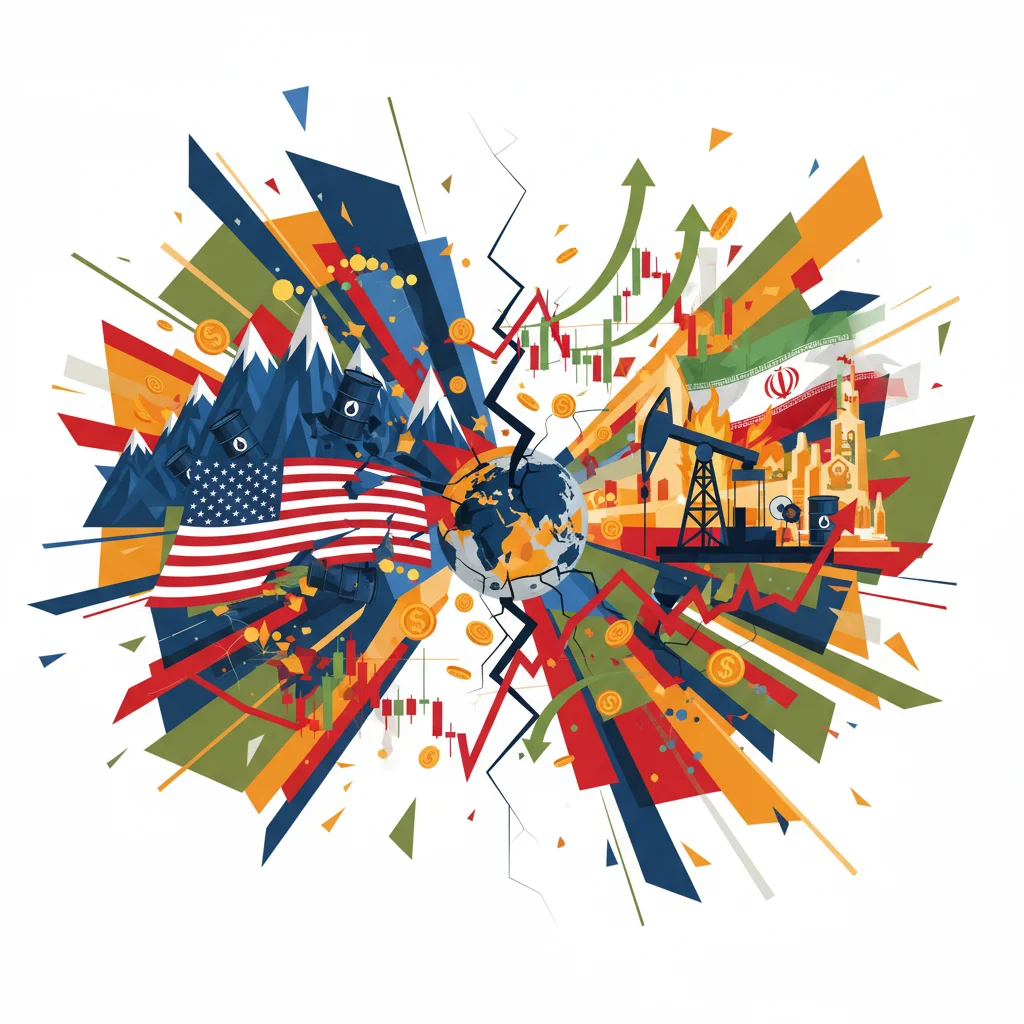
Geopolitical Tremors: How US-Iran Tensions Could Reshape Your Investment Portfolio
In the world of finance, headlines are more than just news; they are data points that can signal seismic shifts in the global economy. A recent stark warning from the US president to Iran, as reported by the Financial Times, is one such headline. While the political rhetoric captures the world’s attention, the underlying question for investors, business leaders, and finance professionals is far more pragmatic: What does this mean for the markets, the economy, and my portfolio?
Geopolitical events, particularly those emanating from the historically volatile Middle East, are not isolated dramas. They are powerful catalysts that inject uncertainty and volatility into the global stock market, commodity prices, and the broader economic landscape. Understanding the potential ripple effects is not just an academic exercise in economics; it’s a critical component of prudent investing and strategic financial planning.
The Flashpoint: Understanding the Economic Stakes
The latest escalation in rhetoric, with the US president set to meet top aides about potential intervention, serves as a potent reminder of the fragile stability in the Persian Gulf. This region is not just a collection of nations; it’s the nerve center of the global energy supply. At the heart of this geopolitical chessboard lies the Strait of Hormuz, a narrow waterway through which approximately 20-30% of the world’s total crude oil and other petroleum liquids consumption passes on any given day, according to the U.S. Energy Information Administration.
Any disruption, or even the threat of disruption, to this critical chokepoint can send shockwaves through the global economy. The immediate and most visible impact is on oil prices. A “geopolitical risk premium” is quickly priced into every barrel of oil, reflecting the market’s anxiety. This isn’t theoretical; it’s a well-documented pattern. Higher energy costs act as a tax on the global economy, squeezing corporate profit margins (especially in transportation, manufacturing, and aviation) and reducing consumers’ discretionary income, which can dampen overall economic growth.
To put this in perspective, let’s examine how past conflicts in the region have impacted oil prices. The data clearly shows that geopolitical instability is a powerful bullish catalyst for crude.
Below is a table illustrating the impact of significant Middle Eastern geopolitical events on Brent Crude oil prices:
| Geopolitical Event | Year | Approximate Oil Price Impact |
|---|---|---|
| Iranian Revolution | 1979 | Prices more than doubled |
| Iran-Iraq War | 1980 | Prices spiked to then-record highs |
| Iraq’s Invasion of Kuwait (First Gulf War) | 1990 | Prices more than doubled in two months |
| U.S. Invasion of Iraq | 2003 | Initial spike followed by a sustained climb |
Note: Price impacts are approximate and influenced by various other economic factors of the time.
This historical precedent underscores why the stock market often reacts negatively to such news. The trifecta of higher oil prices, heightened uncertainty, and the potential for wider conflict spooks investors, leading to sell-offs and a flight to safety. The VIX, often called the “fear index,” typically spikes, reflecting the increased cost of hedging against market downturns.
Beyond the Headlines: The Economic Toll and Investment Signals in the UK's New Road Safety Overhaul
Navigating the Volatility: A Strategic Framework for Investors
An uncertain environment demands a strategic, not a reactive, approach to finance and investing. For business leaders and investors, this means stress-testing portfolios and supply chains, and considering hedges against potential downside risks.
1. Portfolio Diversification and Hedging
This is the first line of defense. A well-diversified portfolio can mitigate losses in one area with gains in another.
- Safe-Haven Assets: In times of turmoil, capital flows towards assets perceived as safe. This includes U.S. Treasury bonds, the Swiss Franc, the Japanese Yen, and historically, gold. Gold often performs well during periods of geopolitical and economic uncertainty as it’s seen as a store of value outside of any single currency or government.
- Sector-Specific Plays: Not all sectors suffer. Defense and cybersecurity stocks often see a surge in interest as nations increase military and digital defense spending. Similarly, energy stocks can benefit from higher oil and gas prices, though they also carry the risk of operational disruptions in the conflict zone.
- Cash is a Position: Holding a slightly higher allocation of cash can provide both a buffer against market downturns and the liquidity to capitalize on buying opportunities when asset prices are depressed.
2. The Evolving Role of Financial Technology (Fintech)
The modern financial landscape offers tools that were unavailable during past crises. The rise of financial technology, or fintech, has democratized access to sophisticated investing and risk management tools.
- Robo-Advisors: These platforms can automatically rebalance portfolios based on pre-set risk tolerances, helping to remove emotion from the decision-making process during volatile periods.
- Real-Time Data and Analytics: Modern trading platforms provide investors with instant access to news, data, and analytical tools, allowing for more informed decisions. This level of information helps level the playing field between institutional and retail investors.
The integration of technology into the banking and finance sectors means that the speed at which information is priced into the market is faster than ever. This can amplify short-term volatility but also leads to quicker price discovery.
The £4 Million Ghost Prison: A Stark Lesson in Asset Mismanagement and Public Finance
3. The Blockchain and Decentralized Finance Angle
One of the more forward-looking, and admittedly speculative, considerations is the role of blockchain and cryptocurrencies. Geopolitical conflicts often involve economic sanctions, which can isolate nations from the global banking system. As a report from the Council on Foreign Relations details, sanctions are a powerful tool of foreign policy. In response, there is a growing, albeit controversial, interest in using decentralized financial systems built on blockchain to circumvent such restrictions. While still a nascent and highly volatile space, sustained geopolitical instability could accelerate research and development into non-state-controlled financial rails, presenting a long-term disruptive challenge to traditional banking and international finance.
The Broader Economic Horizon
Beyond the immediate market reactions, a prolonged conflict or period of heightened tension could have deeper, more structural impacts on the global economy. It could exacerbate inflationary pressures, disrupt global supply chains already fragile from the recent pandemic, and damage consumer and business confidence, potentially delaying capital investment and hiring.
Central banks would find themselves in a difficult position. The standard response to an economic slowdown is to lower interest rates, but a conflict-driven oil price spike is inflationary. This creates a stagflationary risk—a toxic combination of stagnant growth and high inflation—that severely limits the policy tools available to organizations like the Federal Reserve and the ECB. The field of economics offers no easy answers for this scenario, making it a significant tail risk for the global outlook.
The Investor's Crossword: Decoding the Clues of Today's Complex Economy
Conclusion: From Headline Risk to Strategic Opportunity
The warning from the White House to Iran is far more than a political soundbite. It is a critical data point that investors and business leaders must integrate into their risk management and strategic planning. The potential for disruption in the energy markets, a spike in stock market volatility, and a blow to the global economy are all significant and plausible outcomes.
However, for the prepared investor, volatility is not just a risk; it is also an opportunity. By understanding the historical context, employing strategic diversification, leveraging modern financial technology, and maintaining a long-term perspective, it is possible to navigate these turbulent waters effectively. The ultimate goal is not to predict the future but to build a financial foundation that is resilient enough to withstand the inevitable shocks of our complex and interconnected world.

Related Posts

Beyond Pura Vida: Unpacking the Investment Risk of an Assassination Plot in Costa Rica

The New Guard: Why David Gross’s Solo Leadership at Bain Capital Signals a New Era for Private Equity
