Fed Under Fire: Unpacking the “Unprecedented” Criminal Probe into Jerome Powell
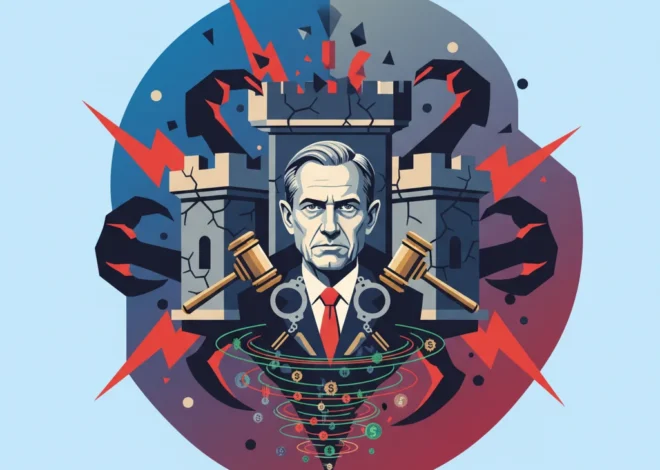
In a move that has sent shockwaves through the global financial system, the U.S. Department of Justice has reportedly opened a criminal investigation into Federal Reserve Chair Jerome Powell. The news, first broken by the BBC, centers on allegations of political pressure and the Fed’s staunch refusal to alter its monetary policy course despite demands from former President Donald Trump. Powell himself has labeled the probe “unprecedented,” a term that barely scratches the surface of this extraordinary confrontation between the executive branch and the nation’s independent central bank.
This development is more than just a political headline; it strikes at the very heart of the American economy and the trust that underpins the global financial order. For investors, business leaders, and everyday citizens, the implications are profound, raising critical questions about the future of central banking, the stability of the stock market, and the integrity of U.S. economic institutions. In this comprehensive analysis, we will delve into the historical context of Federal Reserve independence, dissect the potential market fallout, and explore what this crisis means for the future of finance.
The Core of the Conflict: Monetary Policy Meets Political Will
The Federal Reserve operates under a dual mandate legislated by Congress: to promote maximum employment and maintain stable prices. To achieve this, its primary tool is the federal funds rate, the interest rate at which banks lend to each other overnight. By raising rates, the Fed can cool an overheating economy and fight inflation; by lowering them, it can stimulate growth and investing. The effectiveness of this mechanism hinges on one crucial principle: independence from short-term political influence.
The current probe appears to stem directly from this friction. The investigation is reportedly examining the period during which former President Trump publicly and repeatedly demanded that Chair Powell lower interest rates to boost the stock market and supercharge economic growth ahead of key political timelines. Powell and the Federal Open Market Committee (FOMC) resisted, citing their mandate to control inflation and maintain long-term economic stability. According to the initial report, Powell’s refusal to bow to these demands is now at the center of the DOJ’s inquiry (source). While the exact legal pretext for a criminal probe remains unclear, critics suggest it represents a dangerous politicization of the central bank’s functions.
Historically, presidents have understood the necessity of respecting the Fed’s autonomy, even when its decisions were politically inconvenient. The pressure exerted by the Nixon administration on then-Fed Chair Arthur Burns in the 1970s is often cited as a cautionary tale, contributing to the runaway inflation that plagued the subsequent decade of American economics. This latest move, however, escalates that pressure from public criticism to the realm of a criminal investigation, a threshold never before crossed in the Fed’s 110-year history.
The Deal That Saved the Olympics: A Masterclass in Financial Innovation
Why Central Bank Independence Matters
To grasp the gravity of this situation, it’s essential to understand why central bank independence is a cornerstone of modern economics. When a government can simply print money or force its central bank to keep interest rates artificially low, it often leads to hyperinflation, currency collapse, and economic ruin. Investors lose faith in the currency, savings are wiped out, and the entire financial system becomes unstable.
An independent central bank acts as a check on the short-term incentives of politicians. It can make the unpopular but necessary decisions—like raising interest rates to fight inflation—that a government facing an election might avoid. This credibility is the bedrock of a stable currency and a predictable environment for business and investing. A 2021 study by the Bank for International Settlements (BIS) reaffirmed that “a higher degree of central bank independence is associated with lower and more stable inflation” (source). The current probe threatens to shatter this long-held consensus, potentially signaling to the world that U.S. monetary policy is now subject to political whim.
Potential Market Scenarios and Investor Impact
The immediate reaction in financial markets would likely be a dramatic “risk-off” event. Uncertainty is the enemy of stable markets, and an investigation into the leader of the world’s most powerful central bank is the ultimate uncertainty. We can anticipate several cascading effects across different asset classes. Below is a table outlining potential scenarios based on how this crisis unfolds.
| Scenario | Potential Market Impact | Implications for Investors |
|---|---|---|
| Quick Resolution: Probe is dropped quickly, seen as political posturing. | Short-term volatility followed by a relief rally. The S&P 500 may dip 3-5% before recovering. | A potential “buy the dip” opportunity for long-term investors, but heightened awareness of political risk is necessary. |
| Protracted Investigation: The probe continues for months, creating a cloud of uncertainty. | Sustained market volatility. Increased demand for safe-haven assets (Gold, U.S. Treasury bonds, Swiss Franc). The dollar may weaken. | Portfolio diversification becomes critical. Hedging strategies and exposure to non-USD assets could prove prudent. Trading volumes will likely spike. |
| Worst Case: Powell resigns or is removed; a politically compliant chair is installed. | A severe market downturn (15-20%+ correction). A crisis of confidence in the U.S. dollar and a potential credit rating downgrade. | Capital preservation becomes the primary goal. A flight to quality assets and potentially alternative stores of value like certain cryptocurrencies could accelerate. |
For the average investor, the key takeaway is that political risk has now been injected directly into monetary policy calculations. The “Fed put”—the implicit belief that the central bank will always step in to support markets—is now in question. Every future interest rate decision will be scrutinized through a political lens, making market forecasting and trading infinitely more complex.
Beyond the Acronym: Why 'TACO' is a Multibillion-Dollar Word in Global Finance
The Global Ripple Effect
The U.S. Federal Reserve is not just America’s central bank; it is, in effect, the world’s central bank. Its decisions on interest rates and quantitative easing influence the flow of capital across the entire globe. A crisis of confidence in the Fed is therefore a global crisis.
International trading partners and foreign central banks, which hold trillions of dollars in U.S. debt, will be watching these developments with extreme concern. A perception that the Fed is no longer a reliable, independent actor could lead them to diversify their reserves away from the dollar. This would have profound consequences, potentially leading to higher borrowing costs for the U.S. government and a long-term decline in American economic influence. Emerging markets, often heavily indebted in dollars, would be particularly vulnerable to the currency volatility this crisis could unleash. The stability of the entire international banking system is predicated on a stable and predictable Fed.
A senior fellow at a prominent economic think tank stated anonymously that “we are sailing in uncharted waters. The institutional credibility of the Federal Reserve, built over decades, can be dismantled in a matter of months” (source). This sentiment captures the fear pervading the highest echelons of global finance.
Framing Your Financial Future: Lessons in Strategic Investing from Architectural Design
Conclusion: A Dangerous Precedent
The criminal probe into Jerome Powell is far more than a political drama. It is a fundamental challenge to the post-war economic order that has been built on the principle of independent, technocratic central banking. By crossing this line, the Department of Justice risks inflicting permanent damage on the institution most responsible for the stability of the U.S. economy.
For investors, the path forward requires a new level of vigilance. The interplay between politics and economics has reached a critical and dangerous juncture. Whether this “unprecedented” probe fizzles out as a political stunt or marks the beginning of a new, unstable era for American finance remains to be seen. But one thing is certain: the rules of the game have changed, and the shockwaves will be felt for years to come.