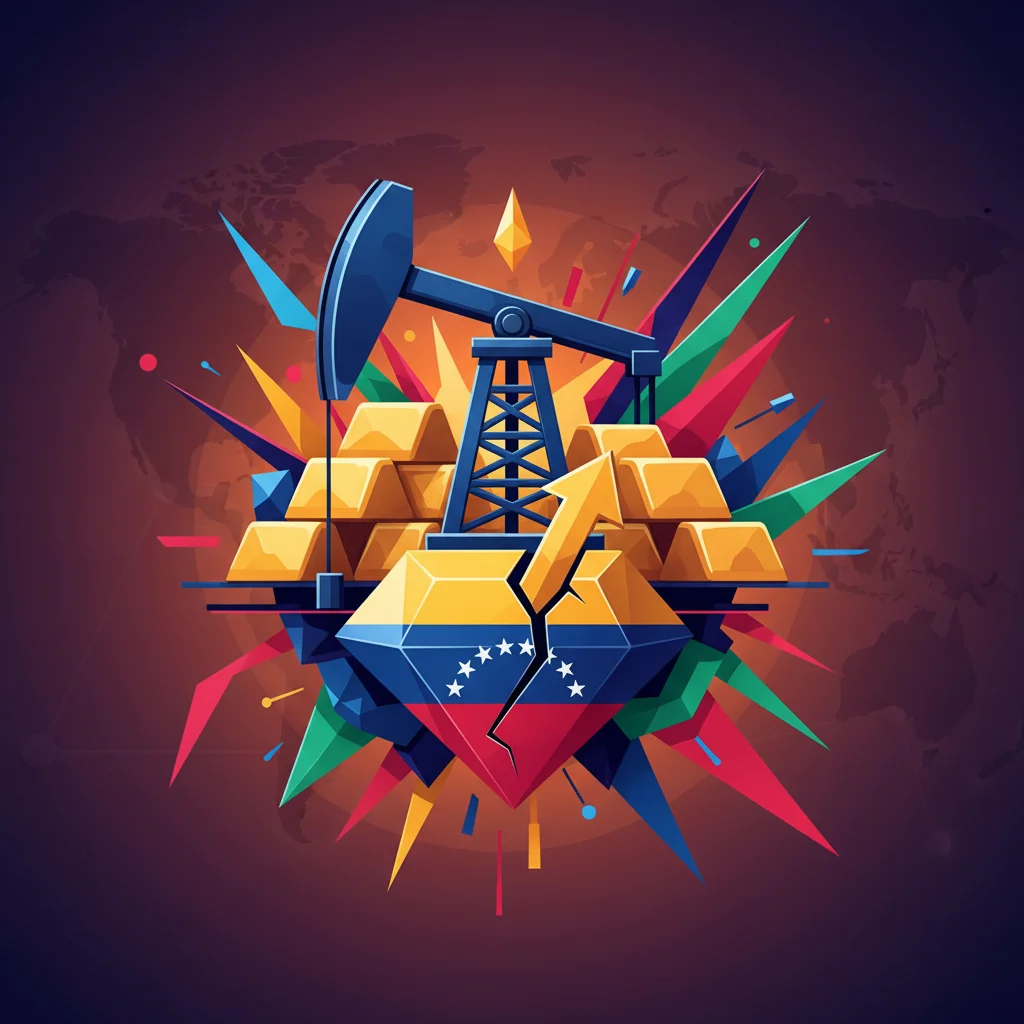
The Venezuelan Oil Gambit: A High-Stakes Bet on a Post-Maduro Economy
In the high-stakes world of geopolitics and global finance, few assets are as coveted or as politically charged as Venezuela’s oil reserves—the largest proven reserves on the planet. For years, this immense wealth has been locked away from Western markets, trapped by economic collapse and a web of stringent U.S. sanctions. Now, whispers from the inner circles of a potential future Trump administration suggest a dramatic policy pivot could be on the horizon, one that could unlock this vast potential but is fraught with unprecedented risk.
According to recent remarks by Scott Bessent, a hedge fund manager and influential adviser to Donald Trump, the U.S. could move to ease sanctions on Venezuela, but only under one critical condition: the ousting of President Nicolás Maduro. The strategy, as outlined by Bessent, aims to “convince sceptical US oil companies to invest in the Latin American nation” in the event of a regime change. This potential shift represents a monumental ‘what if’ scenario for the global economy, energy markets, and daring investors. It begs the question: Is this a credible path toward rebuilding a failed state, or a geopolitical fantasy with dangerous implications for the world of investing?
This post will delve into the complex dynamics at play, exploring the history of Venezuela’s economic downfall, the impact of U.S. sanctions, and the monumental challenges and opportunities that a post-Maduro investment landscape would present.
From Oil Titan to Economic Ruin: The Venezuelan Collapse
To understand the gravity of the current situation, one must look back at Venezuela’s not-so-distant past. As a founding member of OPEC, Venezuela was once a titan of the global energy market, a prosperous nation fueled by petrodollars. Its state-owned oil company, Petróleos de Venezuela, S.A. (PDVSA), was a sophisticated and highly productive enterprise. However, years of political mismanagement, systemic corruption, and the nationalization of private assets under Hugo Chávez and his successor, Nicolás Maduro, sent the nation’s economy into a catastrophic tailspin.
The results have been devastating. Hyperinflation has rendered the national currency worthless, leading to a widespread humanitarian crisis. The nation’s critical infrastructure, particularly in the oil sector, has crumbled from neglect and a lack of investment. Oil production, the lifeblood of the economy, has plummeted from over 3 million barrels per day in the late 1990s to a fraction of that today. According to OPEC data, Venezuela’s crude oil production averaged just 808,000 barrels per day in April 2024, a stark illustration of the industry’s decay (source: OPEC).
Below is a snapshot of the decline in Venezuela’s oil output, a key factor in its economic crisis.
| Year | Average Crude Oil Production (in thousands of barrels per day) | Key Events & Context |
|---|---|---|
| 2013 | 2,356 | Nicolás Maduro assumes presidency after Hugo Chávez’s death. |
| 2015 | 2,357 | Opposition wins parliamentary majority; political tensions escalate. |
| 2017 | 1,911 | Trump administration imposes first major financial sanctions, targeting PDVSA. |
| 2019 | 796 | U.S. imposes sweeping sanctions on PDVSA, recognizing Juan Guaidó as interim president. |
| 2021 | 554 | Production hits multi-decade lows amid sanctions and infrastructure decay. |
| 2023 | 749 | Slight recovery after U.S. temporarily eases some sanctions via General License 44. |
Data sourced from OPEC Monthly Oil Market Reports.
This collapse set the stage for a dramatic escalation in U.S. foreign policy, culminating in a “maximum pressure” campaign designed to force political change.
The ROI of Warmth: A Financial Analyst's Guide to Mastering Winter Energy Costs
The Sanctions Web and the Skeptical Investor
Beginning significantly in 2017, the United States implemented a series of escalating sanctions targeting the Maduro regime, its officials, and its primary source of revenue: PDVSA. The objective was clear: to cripple the government’s financial capabilities and catalyze a transition to democracy. These measures effectively cut Venezuela off from the U.S. banking system, prohibited trading in its government bonds, and severely restricted its ability to export oil.
While the sanctions have undeniably squeezed the Maduro regime, they have not achieved their primary political goal. Instead, they have pushed Venezuela further into the arms of U.S. adversaries like Russia, China, and Iran, who have provided economic lifelines in exchange for discounted oil and strategic influence. This has created a complex geopolitical stalemate, leaving U.S. and international oil companies on the sidelines, watching as the country’s vast resources remain largely untapped.
This is the context for the skepticism Bessent alluded to. Even if sanctions were lifted tomorrow, major oil companies like ExxonMobil and Chevron would face a daunting list of challenges:
- Political Instability: A post-Maduro transition would likely be volatile. There is no guarantee of a stable, pro-business government or the establishment of the rule of law.
- Dilapidated Infrastructure: Revitalizing Venezuela’s crumbling oil fields, pipelines, and refineries would require tens, if not hundreds, of billions of dollars in new investing and years of work.
- Legal and Financial Chaos: Venezuela is in default on over $60 billion of international bonds (source: Reuters). Any new government would face a mountain of creditor claims, creating a legal minefield for new investors.
- Human Capital Flight: Years of crisis have led to a mass exodus of skilled engineers, geologists, and technicians from PDVSA, creating a significant labor shortage.
The Global Ripple Effect: Reshaping the Energy Landscape
If this long-shot scenario were to materialize, the implications would extend far beyond Venezuela’s borders, sending shockwaves through the global energy and financial markets.
Impact on Oil Markets
A gradual return of 2-3 million barrels per day of Venezuelan crude to the market would be a seismic event. It could significantly impact global oil prices, potentially acting as a counterbalance to production cuts by the OPEC+ alliance. For oil-consuming nations, this would be welcome news, offering relief from inflationary pressures. For oil-producing nations, it would introduce a major new competitor, potentially triggering a re-calibration of global supply strategies. The intricate dance of global oil economics would have a new, powerful partner on the floor.
A Bonanza for Distressed Debt Traders?
The world of high-risk finance would be laser-focused on Venezuela’s defaulted government and PDVSA bonds. These bonds currently trade for pennies on the dollar, reflecting the near-zero probability of repayment under the current regime. A pro-market government backed by U.S. investment would ignite a speculative frenzy, as the prospect of a massive debt restructuring—similar to what has been seen in countries like Argentina—would come into view. This would be a career-defining trading opportunity for distressed debt funds and a monumental task for the international banking and legal communities.
Beyond the Balance Sheet: What Pet Food Banks Reveal About the True Health of Our Economy
The Path Forward: Navigating Uncharted Territory
For investors, business leaders, and finance professionals, the potential reopening of Venezuela is a topic that must be monitored with both immense interest and extreme caution. The idea of accessing the world’s largest oil reserves is tantalizing, but the operational, political, and legal hurdles are colossal.
Any company considering entering a post-sanctions Venezuela would need a robust strategy for navigating political risk, a deep understanding of the local landscape, and an ironclad legal framework to protect their investments. They would also face intense scrutiny over ESG (Environmental, Social, and Governance) concerns, given the environmental degradation and human rights issues that have plagued the country.
The role of fintech and modern financial technology cannot be overstated in a potential rebuilding effort. Establishing a stable and trustworthy financial system from the ashes of the old one would be paramount. This could involve everything from mobile banking solutions for a population that has lost faith in traditional institutions to sophisticated blockchain-based platforms for managing state assets and ensuring transparency.
Beyond the Pitch Deck: 5 Critical Red Flags in the .7 Trillion Private Credit Market
Ultimately, the future of Venezuela’s economy and its place in the world remains deeply uncertain. The comments from Trump’s camp offer a glimpse into one possible, albeit highly conditional, future. It is a future where the overthrow of a dictator could unlock a wave of Western investment, transforming a failed state and reshaping global energy dynamics. However, it is a path littered with obstacles. For now, the world of international finance and investing can only watch, wait, and weigh the extraordinary risks against the potentially historic rewards.

Related Posts
The Venezuelan Wildcard: How a Geopolitical Shift Could Fuel a Bonanza for Indian Oil Refiners
Maersk’s Green Gambit: Why a Pivot to Ethanol Could Reshape Global Trade and Sideline Beijing