AI vs. Shoplifters: Inside the High-Tech Battle for the Future of Retail
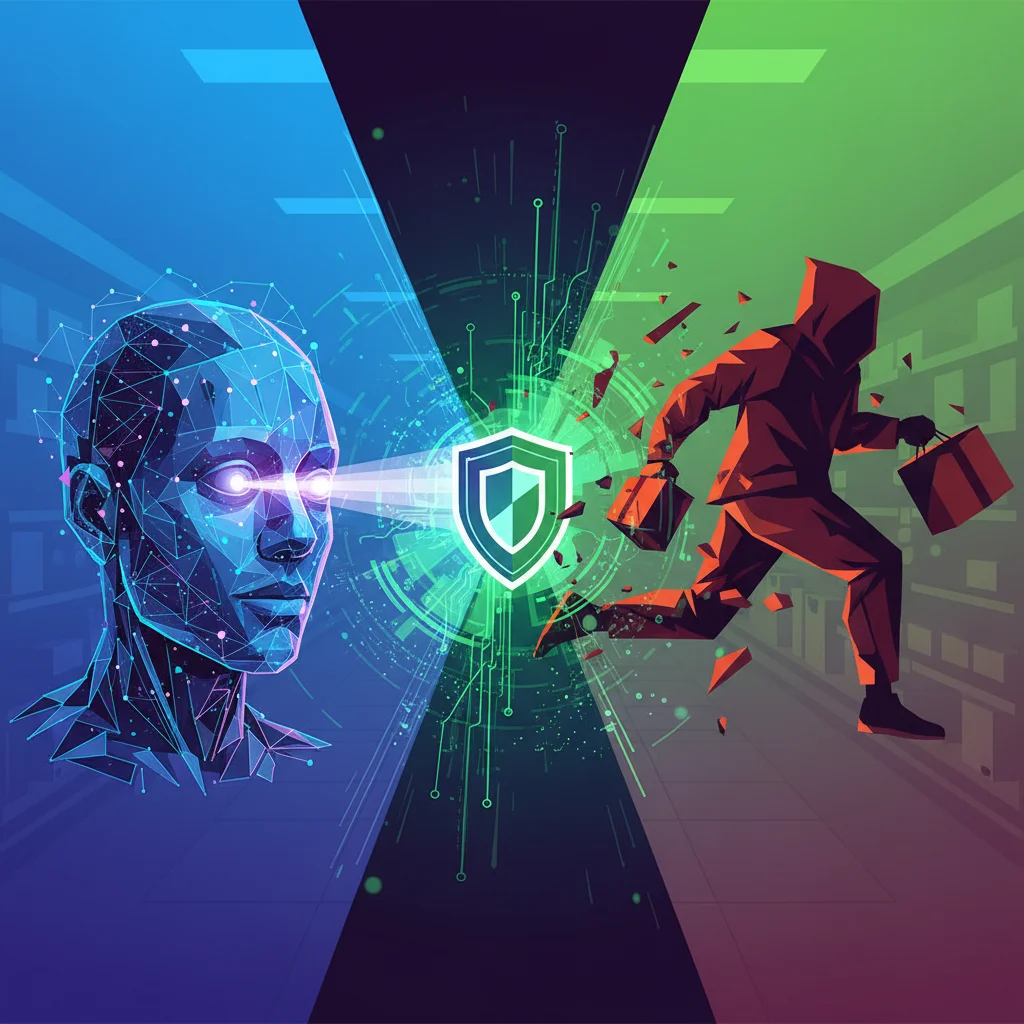
Walk into any major store today, and you’re being watched. That’s not new. But what’s watching you is undergoing a radical transformation. The grainy CCTV footage reviewed by a tired security guard is being replaced by a network of smart cameras powered by sophisticated artificial intelligence. As a recent BBC report demonstrated, retailers are deploying everything from AI-driven body scans to facial recognition to combat a problem that costs the industry billions: shoplifting.
This isn’t just a futuristic concept; it’s a rapidly growing reality. Facing unprecedented levels of organized retail crime and casual theft, businesses are turning to tech startups and established players for a digital solution. But as this new wave of automation sweeps through the retail landscape, it brings with it a complex web of technological prowess, ethical dilemmas, and profound questions about the future of public spaces. We’re not just talking about catching thieves; we’re talking about a fundamental shift in the relationship between retailers, customers, and the very act of shopping.
In this deep dive, we’ll unpack the technology behind this trend, explore the powerful benefits driving its adoption, and confront the serious ethical and privacy concerns that come with it. For developers, entrepreneurs, and tech professionals, this is more than just a security trend—it’s a case study in the real-world application and societal impact of modern AI and machine learning.
The Multi-Billion Dollar Problem Fueling AI Adoption
To understand why retailers are so eager to embrace this technology, you have to understand the scale of the problem they’re facing. Retail “shrink”—the industry term for inventory loss due to theft, fraud, or error—is a staggering issue. In 2022 alone, retail shrink accounted for $112.1 billion in losses in the U.S., up from $93.9 billion the previous year. This isn’t just a line item on a balance sheet; it leads to higher prices for consumers, store closures, and even risks to employee safety.
Traditional loss prevention methods are struggling to keep up. Security tags can be removed, human guards can’t be everywhere at once, and manually reviewing hours of camera footage is inefficient to the point of being useless. The rise of organized retail crime (ORC), where groups systematically loot stores, has pushed these legacy systems to their breaking point. Retailers need a solution that is scalable, proactive, and intelligent. They need a system that can see everything, identify potential threats in real-time, and learn from every interaction. This is where artificial intelligence enters the picture.
Under the Hood: How AI Anti-Shoplifting Software Works
The term “AI security” is broad, but it generally refers to a suite of technologies built on computer vision, a field of AI that trains computers to interpret and understand the visual world. These systems are typically delivered via a SaaS (Software as a Service) model, allowing retailers to integrate advanced capabilities into their existing camera infrastructure through the cloud. Let’s break down the core components.
1. AI-Powered Behavioral Analysis
The most common application is AI software that analyzes live video feeds to detect suspicious behavior. The underlying machine learning models are trained on thousands of hours of footage to recognize patterns that often precede theft. This isn’t about identifying a “criminal look”; it’s about spotting specific actions and sequences, such as:
- Shelf-sweeping: A person quickly clearing a large section of a shelf into a bag or cart.
- Concealment: An individual placing an item inside their jacket, a stroller, or a personal bag.
- Unusual loitering: Someone spending an abnormal amount of time in a low-traffic area, particularly near high-value goods.
- Gait and posture analysis: Detecting unusual movements or body language that correlate with theft attempts.
When the system detects a high-probability event, it can automatically alert store staff or security personnel in real-time, allowing for immediate intervention. The programming behind this involves complex neural networks that can process multiple video streams simultaneously, making it a powerful tool for large-scale operations.
Human vs. Machine: Why Marriott and Hilton are Betting on Loyalty to Beat the AI Travel Agent
2. Facial Recognition Technology
This is perhaps the most controversial piece of the puzzle. Facial recognition systems work by creating a unique digital map, or “faceprint,” of an individual. Retailers can use this in two ways:
- Identifying Known Offenders: The system can scan faces of incoming shoppers and compare them against a database of previously identified shoplifters or members of ORC groups. If a match is found, an alert is sent.
- Investigative Tool: After a theft has occurred, footage can be analyzed to identify a suspect, whose faceprint can then be used to find other instances of them in the store’s video history.
The cybersecurity implications here are enormous. The creation and storage of these biometric databases represent a significant security risk and a major privacy concern, leading many jurisdictions to regulate or ban its use by private companies.
3. AI Body Scans and Object Detection
As seen in the BBC report, some companies are pushing the boundaries with more advanced scanning. This can include technology that analyzes a person’s outline to detect unusual bulges that could indicate a concealed item. Similarly, advanced object detection can track high-value items from the moment they are picked up off the shelf until they are scanned at checkout. If an item “disappears” along the way, the system can flag the event for review. This level of granular tracking represents the ultimate goal of loss prevention: a fully automated, self-monitoring retail environment.
To better understand these different approaches, here’s a comparison of their strengths and weaknesses:
| Technology | How It Works | Pros | Cons & Risks |
|---|---|---|---|
| AI Behavioral Analysis | ML models analyze video streams for suspicious actions (e.g., concealment, shelf-sweeping). | Proactive; less invasive than facial recognition; focuses on actions, not identity. | Risk of false positives; potential for algorithmic bias in what’s deemed “suspicious.” |
| Facial Recognition | Creates a biometric “faceprint” and matches it against a database of known offenders. | Highly effective at identifying repeat offenders; can deter organized crime. | Major privacy concerns; data security risks; high potential for bias and misidentification. |
| AI Body & Object Scans | Analyzes body outlines for concealed items or tracks individual products through the store. | Highly precise; can reduce checkout friction (e.g., “just walk out” tech). | Extremely invasive; technically complex and expensive; high public resistance. |
The Unseen Costs: Navigating the Ethical and Technical Minefield
While the benefits for retailers are clear, the widespread deployment of AI surveillance is fraught with challenges that developers, businesses, and the public must address. The promise of perfect security comes with a hefty price tag, and it’s not just a financial one.
The Specter of Algorithmic Bias
An AI model is only as good as the data it’s trained on. If the training data predominantly features images of people from certain demographics committing theft, the algorithm may learn to associate those demographics with suspicious behavior. This can lead to a disastrous feedback loop where certain groups of people are disproportionately flagged, searched, or accused, regardless of their actions. A study from the ACLU famously showed a facial recognition system falsely matching 28 members of Congress with mugshots, with a disproportionate number of errors for people of color. For a technology deployed in stores, this kind of bias isn’t just a bug; it’s a social catastrophe waiting to happen.
Beyond the Firewall: Why a Spy Chief’s Warning is a Wake-Up Call for Every Developer and Startup
Privacy in the Age of Pervasive Monitoring
The collection of behavioral and biometric data on a mass scale raises profound privacy questions. Who owns this data? How is it secured against breaches? Can it be sold to third parties or shared with law enforcement without a warrant? Regulations like GDPR in Europe and CCPA in California are beginning to address these issues, but technology is often moving faster than legislation. The creation of massive, privately-held databases of our faces and movements is a step toward a world with little to no anonymity, a concept that should give everyone pause.
The Problem of False Positives
As the BBC reporter’s test often shows with new tech, no AI system is perfect. A false positive—where the system incorrectly flags an innocent person—can have devastating consequences. Being publicly accused of theft is a humiliating and traumatic experience. How do retailers handle these errors? What is the process for appeal? An over-reliance on automation without robust human oversight can lead to situations where the computer says “guilty,” and the human is left to prove their innocence against an infallible-seeming machine. This is a critical user experience and legal liability issue for any company deploying this tech.
Your Barista Is Not Your AI Training Data: The Hidden Tech Cost of a Viral Video
The Future is Now: What’s Next for Retail AI?
Despite the challenges, the momentum behind AI in retail is undeniable. The market for AI in retail is projected to grow to over $20 billion by 2027, and security is a major driver of that growth. We are likely to see several key trends emerge:
- Integrated Systems: Security AI won’t exist in a silo. It will be integrated with inventory management, customer analytics, and marketing platforms. The same cameras that spot a shoplifter could also identify a VIP customer or analyze which store displays are most effective.
- “Just Walk Out” Expansion: Technologies pioneered by Amazon Go, where AI and sensors eliminate the checkout process entirely, will become more common. This is the ultimate form of AI-driven loss prevention, as the entire store becomes a monitored, transactional system.
- A Focus on Ethics and Transparency: As public awareness and regulatory scrutiny grow, successful startups and tech providers will be those who prioritize transparency, fairness, and data privacy. “Ethical AI” will become a key selling point and a competitive differentiator.
The battle between shoplifters and store owners is as old as retail itself. But now, one side has a powerful new weapon: artificial intelligence. This technology offers an unprecedented opportunity to curb losses and create safer shopping environments. However, it also forces us to confront difficult questions about bias, privacy, and the kind of world we want to live in. For the entrepreneurs building these systems, the developers writing the code, and the businesses deploying them, the challenge is to harness the power of this innovation responsibly. The future of retail may be automated, but our values shouldn’t be.