From Paralysis to Possibility: How AI is Rebuilding the Bridge Between Mind and Body
On New Year’s Eve 2023, a single, powerful wave changed Dan Richards’ life forever. The 37-year-old from Swansea was enjoying a day at the beach when a freak accident resulted in a severe spinal cord injury, leaving him paralysed. In an instant, the connection between his brain and his body was severed. Yet, in the face of this immense challenge, Dan holds onto a powerful hope, one that isn’t rooted in miracles, but in code, data, and algorithms. He believes that artificial intelligence could one day help him walk again.
Dan’s story is not just a personal tragedy; it’s a profound testament to human resilience and a powerful signal of where technology is headed. We are standing at the threshold of a new era where artificial intelligence is no longer just a tool for business automation or a fun chatbot. It’s becoming a transformative force in medicine, poised to repair what was once considered irreparable. For developers, entrepreneurs, and tech leaders, this represents one of the most meaningful and complex frontiers of innovation: using software to restore human function.
This isn’t science fiction. This is the tangible future being built today by startups and researchers around the world. Let’s explore the incredible technology that gives hope to people like Dan and uncover the immense opportunities it presents for the tech community.
The Broken Circuit: Understanding Spinal Cord Injury
To appreciate the solution, we must first understand the problem. A spinal cord injury (SCI) is like a catastrophic network outage in the body’s most critical communication system. The brain can still formulate commands—”move my leg”—but the electrical signals carrying that message are blocked by the damaged section of the spinal cord. The muscles are healthy, the brain is willing, but the pathway is broken.
For decades, the medical approach has focused on managing the symptoms and painstaking physical therapy to strengthen any remaining neural connections. But what if we could bypass the damage entirely? What if we could create a digital bridge to reconnect the brain directly to the limbs? This is precisely where AI and machine learning enter the picture.
Building the Digital Bridge: The Role of Brain-Computer Interfaces (BCIs)
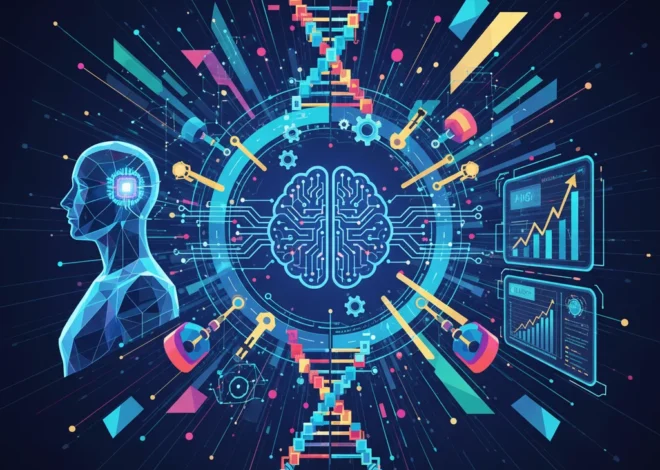
The cornerstone of this technological revolution is the Brain-Computer Interface (BCI). A BCI is a system that acquires brain signals, analyzes them, and translates them into commands that are relayed to an output device. In essence, it reads your mind—or more accurately, your intent to move.
Here’s how it works:
- Signal Acquisition: Tiny, high-fidelity sensors (either implanted or worn on the scalp) detect the faint electrical signals produced by neurons firing in the brain’s motor cortex, the region responsible for planning and executing movements.
- Signal Processing & Decoding: This is where the magic of machine learning happens. The raw brain signals are incredibly noisy and complex. A sophisticated software algorithm, often running on a powerful processor or even leveraging the cloud for heavy computation, filters this noise and learns to recognize the specific neural patterns associated with the *intention* to perform a specific movement (e.g., “I want to take a step with my right foot”).
- Command Output: Once the AI decodes the intent, it sends a command to an external device. This could be a robotic exoskeleton, a prosthetic limb, or a system that directly stimulates the muscles.
The learning process is a two-way street. The user learns to produce clearer brain signals, and the AI model continuously refines its ability to interpret them, creating a symbiotic relationship between human and machine. This level of sophisticated pattern recognition and real-time adaptation would be impossible without modern AI techniques.
AI's Shadow Bank: The 0 Billion Secret Fueling the Tech Revolution
The AI-Powered Toolkit for Neuro-Rehabilitation
BCIs are just one piece of a larger ecosystem of AI-driven technologies aimed at restoring mobility. These tools are being developed by innovative startups and research labs, often delivered as integrated hardware and SaaS (Software as a Service) platforms. Below is a look at some of the key technologies that could play a role in Dan’s future recovery.
| Technology | How AI is Applied | Potential Impact |
|---|---|---|
| BCI-Controlled Exoskeletons | Machine learning algorithms translate the user’s intended movements from brain signals into precise motor commands for a wearable robotic suit. | Enables over-ground walking and re-establishes the brain-body feedback loop, potentially promoting neural plasticity and recovery. |
| Functional Electrical Stimulation (FES) | AI-powered automation precisely times and modulates electrical pulses sent to electrodes on the skin, activating paralysed muscles in a natural sequence to create movement like walking or grasping. | Restores direct muscle function, prevents atrophy, and can be combined with BCIs to create a “digital spinal cord.” |
| AI-Powered Physical Therapy | Computer vision algorithms running on a tablet or computer monitor a patient’s exercises, providing real-time corrective feedback and tracking progress with data-driven precision. | Makes high-quality therapy more accessible and engaging, while providing clinicians with rich data to personalize treatment plans. |
| Spinal Cord Stimulation | AI algorithms optimize the patterns of electrical stimulation applied to the spinal cord below the injury site, “waking up” dormant neural circuits and enabling voluntary movement when combined with intent from the brain. Recent studies have shown this can help patients walk again. | Can restore voluntary control over previously paralysed muscles, representing a major breakthrough in SCI treatment. |
These systems generate and process immense volumes of data—from raw neural signals to kinematic motion data. This reliance on big data makes scalable cloud infrastructure a non-negotiable component of the neurotech stack, enabling both real-time processing for the user and large-scale analysis for researchers.
The Neurotech Frontier: Opportunities and Challenges
The convergence of AI, neuroscience, and robotics has ignited a vibrant ecosystem of neurotechnology startups. Companies like Neuralink, Synchron, and Onward are attracting billions in investment, signaling a massive market opportunity. For entrepreneurs and developers, this field is ripe with potential.
However, the path is fraught with unique challenges. Beyond the immense technical complexity, the most significant hurdle is cybersecurity. A BCI is the most intimate piece of technology imaginable, directly connecting a person’s brain to a digital network. A security breach could have devastating consequences, ranging from data theft (of neural data) to the malicious manipulation of a person’s movements. Building secure, encrypted, and resilient systems isn’t just a feature; it’s a fundamental ethical and safety requirement. According to a 2023 report, the healthcare industry continues to be a prime target for cyberattacks, making robust security paramount for any connected medical device.
The Final Episode: How AI and Cloud Tech Are Writing the End of Broadcast TV
Furthermore, the regulatory landscape is complex. Gaining approval from bodies like the FDA is a long and expensive process that requires rigorous testing and validation. Startups need not only brilliant engineers but also experts in regulatory affairs and clinical trials to succeed.
The Road Ahead: From Hope to Reality
So, will artificial intelligence help Dan Richards walk again? The answer is a resounding “it’s possible.” The foundational technologies exist, and progress is accelerating at an incredible pace. Just a decade ago, the idea of a “digital bridge” was theoretical. Today, it is being actively tested in clinical trials with human participants.
The journey from a paralysing wave to taking a first, AI-assisted step is a marathon, not a sprint. It will require the combined efforts of researchers, clinicians, engineers, and entrepreneurs. It will demand breakthroughs in battery life, processing power, and the long-term biocompatibility of implants. And it will require a robust ethical framework to guide its development.
The New Digital Iron Curtain? US Visa Denials Over Social Media Spark Tech Outcry
Dan Richards’ story is a powerful reminder of the ultimate purpose of technology. It’s not just about optimizing supply chains or increasing engagement metrics. It’s about restoring hope, enabling potential, and fundamentally improving the human condition. For the tech community, the challenge is clear: to build the tools, the software, and the platforms that can turn a story of paralysis into a story of possibility.