The 50/50 Gamble: What the Eurostar Breakdown Reveals About Our Brittle Global Economy
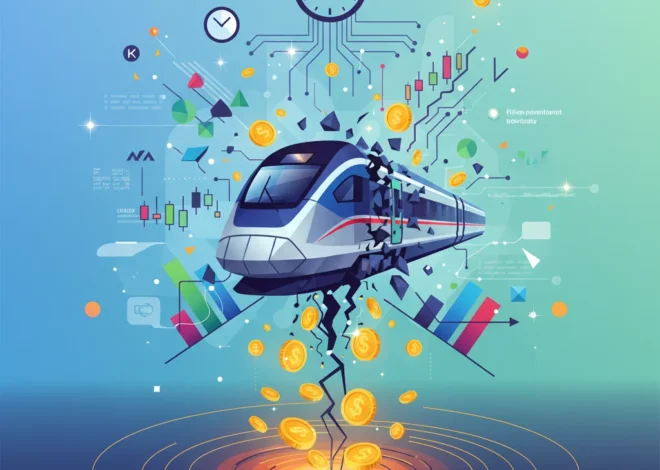
Imagine being suspended in limbo, somewhere under the English Channel. Your destination, Paris, is tantalizingly close, yet your starting point, London, remains a distinct possibility. This was the surreal reality for hundreds of Eurostar passengers recently, one of whom reported staff giving them a stark assessment: a “50% chance we go to Paris, 50% chance we go back to London.” While the immediate story is one of travel chaos and profound customer frustration, the incident is far more than an operational hiccup. It’s a flashing red warning light on the dashboard of our global economy.
For investors, finance professionals, and business leaders, this event serves as a powerful case study in operational risk, the fragility of critical infrastructure, and the cascading financial consequences of a single point of failure. The stalled train wasn’t just an inconvenience; it was a momentary seizure in a vital economic artery connecting the UK and continental Europe. It forces us to ask uncomfortable questions about how we value resilience, fund infrastructure, and leverage technology to prevent such high-stakes gambles. This single event touches upon the core principles of modern economics, the stability of the stock market, and the urgent need for innovation in financial technology.
The Anatomy of a Systemic Failure
At its surface, the Eurostar incident was a technical problem—a power supply issue on the line in France. However, the true failure was systemic. The inability to quickly resolve the issue, the communication breakdown that left passengers in the dark for hours, and the eventual stranding of people overnight reveal a lack of resilience. In the world of finance and investing, this is known as operational risk—the risk of loss resulting from inadequate or failed internal processes, people, and systems, or from external events.
The direct costs are easily calculated: refunds, compensation vouchers, hotel accommodations, and overtime for staff. But the indirect costs are far more significant and harder to quantify. Brand damage is immense; Eurostar’s reputation as a reliable, high-speed alternative to air travel took a substantial hit. For a premium service, reliability is the core value proposition. The “50/50” quote, now immortalized in news reports, will linger in the minds of potential business and leisure travelers, potentially impacting future revenue streams. Investors in Getlink (the operator of the Channel Tunnel) and the national railway companies that own Eurostar (including SNCF and SNCB) must now factor this heightened perception of risk into their valuations.
The H-1B Overhaul: How a New Visa Rule Will Reshape the US Economy and Your Investment Strategy
The Economic Ripple Effect: When a Train Stops, So Does Commerce
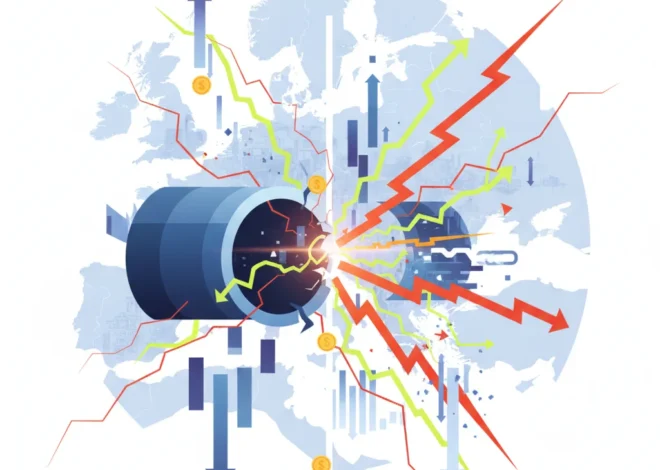
The Channel Tunnel is not merely a passenger route; it is a cornerstone of UK-European commerce. Annually, it facilitates the movement of millions of passengers and a significant portion of trade. According to a 2022 report from Ernst & Young, the trade flowing through the Channel Tunnel represents 26% of all trade in goods between the UK and the EU, valued at approximately €140 billion (£120 billion). When that artery is clogged, even for a day, the economic repercussions are immediate.
This incident exposes the vulnerability of our “just-in-time” economy. Businesses rely on predictable, efficient logistics to manage inventory, fulfill orders, and maintain production schedules. A delay of several hours can disrupt supply chains, leading to manufacturing downtime, missed delivery windows for retailers, and spoilage of perishable goods. These disruptions don’t just affect large corporations; they hit small and medium-sized enterprises (SMEs) that lack the financial cushion to absorb such shocks. This is a practical, visceral lesson in economics: infrastructure reliability is a direct input into economic productivity.
The Investment Dilemma: The High Cost of Inaction
Maintaining and upgrading a marvel of 20th-century engineering like the Channel Tunnel is a monumental financial undertaking. This brings us to a central challenge in modern finance and public policy: the infrastructure investment gap. The World Bank estimates a global infrastructure spending need of $94 trillion by 2040, with a projected shortfall of $15 trillion. This gap represents a massive risk but also a significant opportunity for investors.
Funding for such projects typically comes from a mix of public and private sources, each with its own set of advantages and disadvantages. Below is a simplified breakdown of the common models for funding critical infrastructure.
| Funding Model | Pros | Cons |
|---|---|---|
| Public Funding (Taxation/Bonds) | Serves public interest; lower cost of capital; long-term perspective. | Subject to political cycles; potential for inefficiency; strains public finances. |
| Private Investment (e.g., Private Equity) | Drives efficiency and innovation; access to large capital pools; faster execution. | Focus on short-to-medium term ROI; may lead to higher user fees; risk of underinvestment in non-profitable areas. |
| Public-Private Partnerships (PPPs) | Blends public oversight with private sector efficiency; shares risk. | Complex contractual arrangements; potential for disputes; can be more expensive over the long term if poorly structured. |
For those in the investing world, infrastructure is an increasingly attractive asset class, offering stable, long-term returns that are often inflation-linked. However, the Eurostar incident highlights the need for a more sophisticated approach to due diligence. Investors must look beyond financial projections and scrutinize operational resilience, maintenance schedules, and technology adoption strategies. The most profitable infrastructure asset is worthless when it’s not working.
The Murdoch Succession: A New King, a Divided Kingdom, and the Future of a Media Empire
Can Technology Provide a Lifeline?
While the problem is physical, many of the most promising solutions lie in the digital realm. This is where financial technology, blockchain, and data analytics can transform how we manage and interact with critical infrastructure, turning a reactive model into a proactive one.
Financial Technology (Fintech): The passenger experience during the delay was a masterclass in what not to do. Imagine a fintech-driven alternative. Upon a confirmed delay of over 60 minutes, a smart contract could automatically trigger compensation payments directly to passengers’ digital wallets or linked banking accounts. Integrated travel insurance, purchased at the point of sale, could be processed instantly via an app, eliminating paperwork and call center queues. This application of financial technology wouldn’t fix the train, but it would mitigate the reputational damage and demonstrate a customer-centric approach that is currently lacking.
Blockchain: Beyond payments, blockchain offers a revolutionary approach to maintenance and supply chain logistics. A distributed, immutable ledger could be used to track every component, every maintenance check, and every staff certification across the entire Eurostar and Getlink ecosystem. This creates a “golden record” of truth that is transparent and auditable. According to a report by PwC, blockchain can significantly reduce errors and fraud in logistics, which is directly applicable here. If a failure occurs, investigators could instantly trace the service history of the faulty component, ensuring accountability and preventing future recurrences. This level of transparency would be invaluable for regulators and investors assessing the operational health of the company.
AI and Predictive Analytics: The ultimate goal is to prevent failures before they happen. By deploying sensors across the network—on tracks, power lines, and the trains themselves—operators can collect vast amounts of data. AI algorithms can then analyze this data to detect subtle anomalies and predict potential failures with a high degree of accuracy. This shifts the maintenance model from a fixed schedule to a predictive, needs-based approach, optimizing resource allocation and dramatically increasing reliability.
Actionable Insights for Leaders and Investors
The saga of the stranded Eurostar train is a microcosm of a larger economic truth: in a deeply interconnected world, resilience is a competitive advantage. For business leaders and finance professionals, the lessons are clear:
- Re-evaluate Risk Models: Standard financial models often fail to adequately price in the risk of aging infrastructure. Investors should demand greater transparency on maintenance spending and resilience strategies from transport and logistics companies.
- Invest in the “Boring” Stuff: The stock market loves growth and innovation, but this event proves that consistent, reliable operations are the foundation upon which all growth is built. Allocating capital to robust maintenance and system upgrades is not a cost center; it’s an investment in the core viability of the business.
- Embrace Technology as a Solution: Leaders should actively explore how fintech, AI, and even blockchain can be applied to de-risk their operations, improve customer experience, and create more resilient systems. This isn’t about technology for technology’s sake; it’s about solving real-world problems that have significant financial implications.
Hong Kong's Legal Crossroads: Decoding the Economic Stakes of the Jimmy Lai Trial
Ultimately, the passengers stuck in the Channel Tunnel were not just travelers; they were unwitting participants in a real-world stress test of a critical piece of our economic machinery. The “50/50” chance they were given reflects a gamble we are all taking by underinvesting in the foundational systems that underpin our economy. The choice now is whether we continue to roll the dice or make the strategic investments in maintenance, technology, and resilience that will ensure the journey forward is not left to chance.