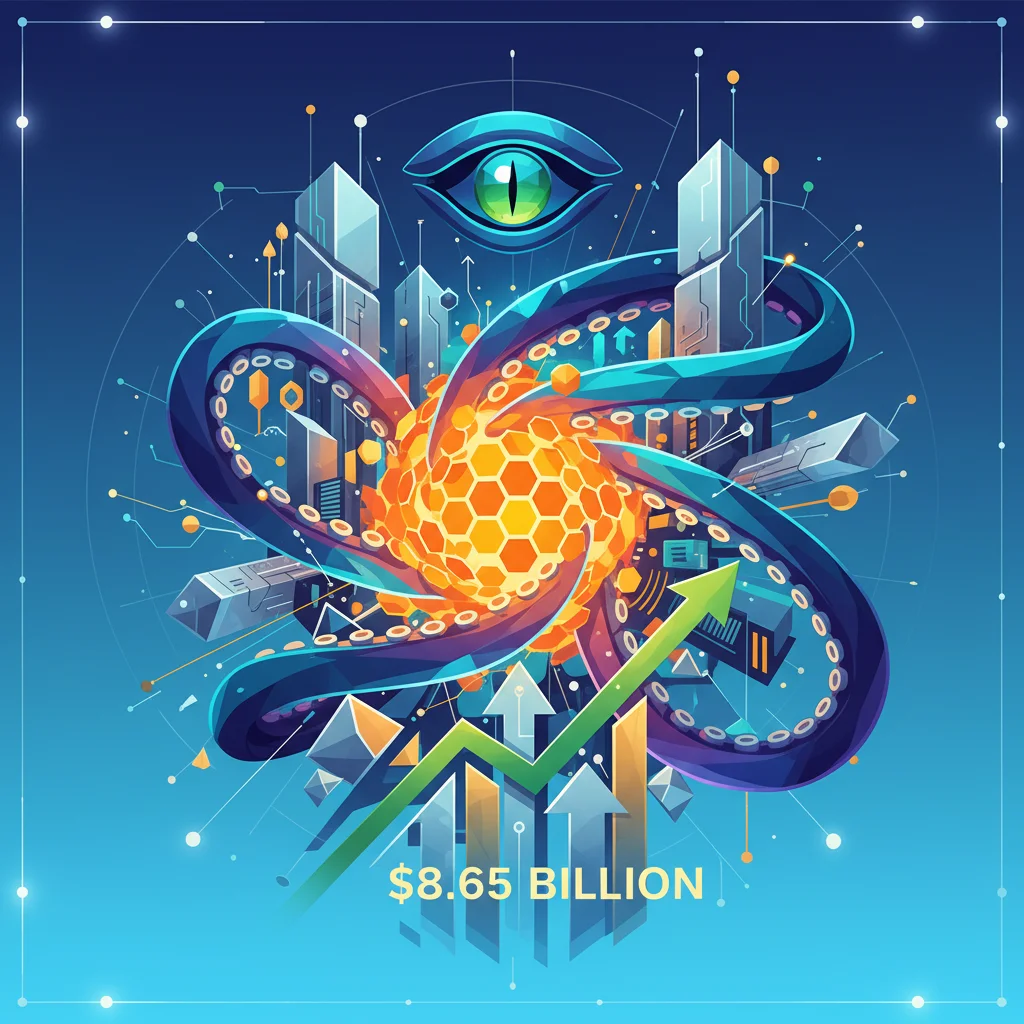
Unleashing the Kraken: How an Energy Firm Built an $8.65 Billion Tech Titan
In the world of tech, we’re used to hearing about staggering valuations for social media apps, fintech disruptors, and AI-native startups. But what about an energy company? It’s not every day that a utility provider makes waves in the software world, but Octopus Energy isn’t your average utility. The UK-based energy disruptor has just announced a deal that firmly plants its flag in the territory of tech unicorns and titans.
Octopus Energy is set to sell a stake in its proprietary technology arm, Kraken, in a deal that values the software platform at a colossal $8.65 billion. A consortium of heavyweight investors, including D1 Capital Partners, Fidelity, and the Ontario Teachers’ Pension Plan, are purchasing $1 billion in equity, signaling a massive vote of confidence in a platform that most people have never even heard of. So, what exactly is this tech behemoth hiding within an energy company, and why is it worth more than many established software giants?
From Energy Supplier to Software Powerhouse
To understand Kraken, you first need to understand Octopus Energy. Launched in 2016, Octopus burst onto the UK’s staid energy scene with a focus on customer service, fair pricing, and 100% renewable electricity. While their green credentials and quirky branding won over customers, their real secret weapon was being built in the background: a piece of software designed to run an energy company from the ground up.
Most traditional energy suppliers are hobbled by legacy systems—clunky, disparate software suites cobbled together over decades. These systems are inefficient, expensive to maintain, and notoriously poor at customer service. Octopus decided to build its own solution, and the result was Kraken.
What is Kraken? The Operating System for the Energy Transition
Think of Kraken not as an app, but as a comprehensive, end-to-end operating system for energy utilities. It’s a cloud-native, SaaS (Software as a Service) platform that handles everything an energy supplier needs to do. Built on modern cloud architecture, it’s designed for scalability, efficiency, and the complexities of a modern, green energy grid.
Kraken’s power lies in its deep integration of data, automation, and customer experience. It’s the digital backbone that allows Octopus and its licensees to operate with a fraction of the overhead of their competitors. Here’s a breakdown of what the platform manages:
This table illustrates the comprehensive nature of the Kraken platform, moving far beyond simple billing to become a central nervous system for modern utilities.
| Core Functionality | Description & Impact |
|---|---|
| Customer Relationship Management (CRM) | A unified view of every customer, enabling support agents to resolve issues in a single interaction, drastically cutting call times and improving satisfaction. |
| Billing & Payments | Highly automated and flexible billing engine that can handle complex tariffs, smart meter data, and new energy products like vehicle-to-grid charging. |
| Grid Management & Optimization | Uses artificial intelligence and machine learning to balance energy supply and demand in real-time, integrating renewables like wind and solar seamlessly. |
| Asset Management | Manages the lifecycle of energy assets, from solar panel installations to electric vehicle chargers, optimizing their performance and maintenance schedules. |
| Operational Automation | Automates routine tasks like meter readings, customer onboarding, and compliance reporting, freeing up human agents for more complex work. |
By leveraging advanced AI and machine learning algorithms, Kraken can forecast energy demand with incredible accuracy. This allows utilities to purchase energy more cheaply, manage grid stability during peaks and troughs, and pass those savings on to consumers. This isn’t just a better user interface; it’s a fundamental re-architecture of how an energy business operates.
The Broken Algorithm of Democracy: Why Public Figures Can't Quit a Failing Platform
Deconstructing the $8.65 Billion Valuation: Why is it Worth So Much?
An $8.65 billion valuation is staggering, especially for a unit that was born inside a utility company. The key is that investors aren’t just betting on Octopus Energy; they’re betting on Kraken becoming the standard global platform for the energy transition. The list of investors, which includes seasoned tech and infrastructure players like D1 Capital Partners and Fidelity, validates this vision.
Here’s why the valuation makes sense:
- A Massive, Underserved Market: The global energy sector is a multi-trillion-dollar industry desperately in need of digital transformation. Every utility in the world faces the same challenges of aging infrastructure, rising customer expectations, and the shift to renewables. Kraken provides a ready-made solution.
- Proven Product-Market Fit: This isn’t a speculative startup. Kraken is battle-tested technology that powers Octopus Energy’s own successful retail operations and is already licensed to other major energy players around the world, including E.ON and Origin Energy.
- The Power of Vertical SaaS: Kraken is a prime example of Vertical SaaS—software built for the deep, specific needs of a single industry. These platforms are incredibly “sticky” because they become embedded in the core operations of their clients, leading to high retention and predictable, recurring revenue.
- Enabling the Green Transition: The shift to renewable energy is messy. Solar and wind are intermittent, and the rise of electric vehicles creates new patterns of demand. A smart, AI-driven platform like Kraken is essential for managing this complexity, making it a critical piece of infrastructure for a sustainable future.
Lessons for Developers, Entrepreneurs, and Startups
The story of Kraken is a masterclass in modern business and technology strategy. For the tech professionals and entrepreneurs in our audience, there are several powerful takeaways:
- Solve “Boring” Problems: While everyone else was building the next social media app, Octopus was tackling the deeply complex and “boring” world of utility billing and grid management. The biggest opportunities often lie in overlooked, legacy industries ripe for technological innovation.
- Build a Moat with Technology: Octopus didn’t just use technology; it built a core technological asset that is now more valuable than its primary business. By owning the full software stack, they created a powerful competitive advantage that is nearly impossible for rivals to replicate.
- The Platform Play is Powerful: Instead of just using Kraken internally, Octopus licensed it to competitors. This transformed a cost center (IT development) into a massive, high-margin revenue stream. Thinking of your internal tools as potential SaaS products can unlock enormous value.
The AI Impersonators: How Fake TikTok Ads Expose a Critical Cybersecurity Blind Spot
For developers and those skilled in programming, this highlights the growing demand for talent in industrial and infrastructure tech. The challenges of building a platform like Kraken—one that requires high reliability, massive scalability, and sophisticated AI—are immense and require top-tier engineering talent. The intersection of physical infrastructure and cutting-edge software is where many of the next great tech careers will be forged.
As the world grapples with the energy transition, the need for intelligent, automated, and scalable software has never been greater. The Kraken platform is not just a success story for Octopus Energy; it’s a beacon showing the way forward. It demonstrates that with the right vision, a company can transform a legacy industry from the inside out, creating immense value and building the foundational technology for a cleaner, smarter future.
The Fusion-Powered Meme Stock: Decoding the Wild Merger of Trump Media and a Nuclear Energy Moonshot
The Future is Electrified… and Software-Defined
The $1 billion investment and the eye-watering $8.65 billion valuation are more than just financial headlines. They are a declaration that the future of energy is inextricably linked with the future of software. The transition to a green economy won’t be won with turbines and solar panels alone; it will be orchestrated, optimized, and managed by sophisticated, AI-powered platforms like Kraken.
Octopus Energy has not only built a successful energy company but has also unleashed a technology titan that is poised to become the digital backbone of the global energy grid. For startups, investors, and tech professionals, the message is clear: some of the biggest waves of innovation are yet to come, and they might just rise from the most unexpected depths.

Related Posts
Beyond the Console Wars: Was Valve’s Steam Machine a Failed Experiment or a Prophecy for Gaming’s Future?
The $4 Billion Handshake: Why SoftBank’s AI Data Center Deal is the Real Foundation of the AI Revolution