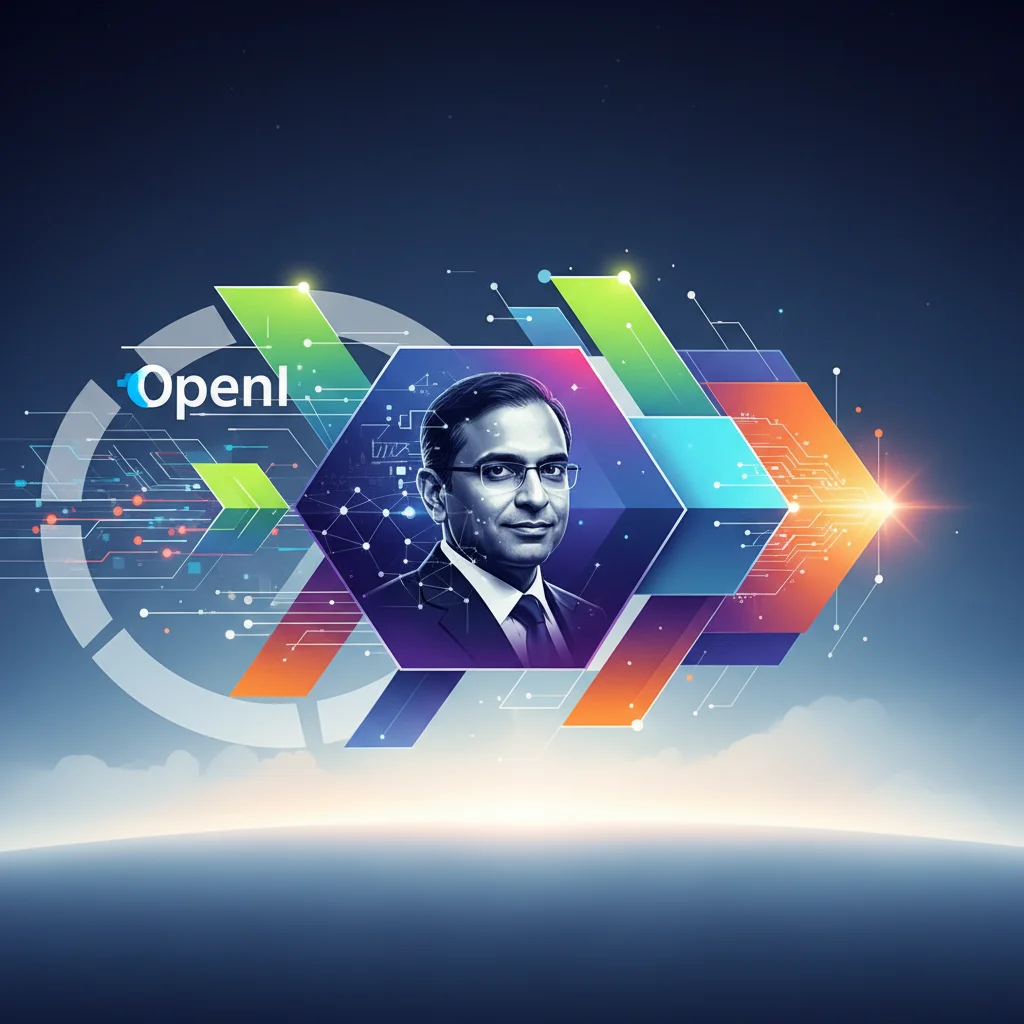
Beyond OpenAI: Inside Satya Nadella’s Bold New Blueprint for Microsoft’s AI Future
In the high-stakes world of artificial intelligence, standing still is the same as moving backward. Microsoft CEO Satya Nadella knows this better than anyone, and his latest move isn’t just a step—it’s a seismic shift. In a blockbuster announcement that sent ripples across the tech industry, Microsoft has hired Mustafa Suleyman, the co-founder of both Google’s DeepMind and the AI powerhouse Inflection AI, to lead a new, consolidated consumer AI division called Microsoft AI. This isn’t your typical executive shuffle; it’s a declaration of intent. Microsoft is officially building its own AI empire, one designed to exist alongside—and perhaps one day rival—its multi-billion dollar partner, OpenAI.
For years, Microsoft’s AI strategy has been inextricably linked to OpenAI. The partnership gave Microsoft a massive head start, integrating GPT models into everything from Bing to its Azure cloud platform. But the drama surrounding Sam Altman’s brief ousting last year was a glaring red flag, exposing the vulnerability of relying so heavily on a single, external partner. Nadella’s new strategy is a masterclass in risk mitigation and forward-thinking leadership. He’s not abandoning the OpenAI alliance, but he is building a powerful, parallel AI track inside Microsoft’s own walls. Let’s break down what this overhaul means for Microsoft, the future of AI development, and everyone from developers to entrepreneurs.
The New Architect: Who is Mustafa Suleyman?
To understand the magnitude of this move, you first have to understand who Mustafa Suleyman is. He isn’t just another tech executive; he’s AI royalty. Suleyman was a core part of the trio that founded DeepMind, the legendary British AI lab that Google acquired in 2014 for over $500 million. At DeepMind, he was instrumental in applying its cutting-edge research to real-world products.
After leaving Google, he co-founded Inflection AI, a startup that quickly joined the elite ranks of AI model builders, raising an astonishing $1.3 billion and developing “Pi,” a conversational AI known for its emotional intelligence. Bringing Suleyman into Microsoft, along with Inflection’s co-founder Karén Simonyan and a large portion of their team, is a strategic coup. Nadella hasn’t just hired a manager; he’s acquired a visionary with a proven track record of building both foundational AI models and the teams that create them. This move injects a potent dose of entrepreneurial, research-driven DNA directly into the heart of the software giant.
The Fusion-Powered Meme Stock: Decoding the Wild Merger of Trump Media and a Nuclear Energy Moonshot
Deconstructing the “Acqui-Hire” on Steroids
The way Microsoft brought the Inflection AI team on board is as innovative as the technology itself. This wasn’t a standard multi-billion dollar acquisition. Instead, Microsoft is reportedly paying Inflection AI a licensing fee of around $650 million to use its models while hiring the majority of its 70-person staff. This “acqui-hire” on an unprecedented scale is a brilliant maneuver for several reasons.
Below is a comparison of how this unique deal stacks up against a traditional corporate acquisition:
| Aspect | Traditional M&A (Mergers & Acquisitions) | Microsoft’s Inflection AI Deal |
|---|---|---|
| Speed & Agility | Slow, bogged down by months of due diligence, shareholder votes, and legal processes. | Extremely fast. Microsoft gets the world-class talent and IP it wants almost immediately. |
| Regulatory Scrutiny | Large tech acquisitions face intense antitrust investigations from regulators in the US and EU. | By avoiding a formal acquisition, Microsoft sidesteps a lengthy and potentially deal-killing regulatory review. |
| Integration Complexity | Merging corporate cultures, legacy software, and operational processes is a massive, often painful, undertaking. | Simpler integration. The new team forms a distinct unit (Microsoft AI) under Suleyman, reducing initial friction. |
| Cost & Risk | High upfront cost and risk. If the acquisition fails to deliver, it’s a massive write-down. | Lower direct cost than a full acquisition of a multi-billion dollar company. The focus is on talent and licensing, not acquiring the entire corporate shell. |
This approach highlights a key trend in the `innovation` race: speed and talent are the most valuable currencies. For `startups` with elite teams, it also opens up a new kind of exit strategy that prioritizes the team’s future and impact over a simple sale.
The OpenAI Dilemma: Why Microsoft Needed an Insurance Policy
To truly grasp the “why” behind this reorganization, we have to look at Microsoft’s complex relationship with OpenAI. With a reported investment of over $13 billion, Microsoft is OpenAI’s most important partner. This alliance has been wildly successful, catapulting Microsoft to the forefront of the generative AI revolution. However, it also created a strategic dependency.
The OpenAI board’s shocking (and temporary) firing of CEO Sam Altman in November 2023 was a wake-up call for Redmond. For a few frantic days, the future of the world’s leading AI company was uncertain. Microsoft, for all its investment, had no board seat and no direct control over the situation. This episode starkly illustrated the risk of tethering a core part of its future to an external entity, no matter how close the partnership. Nadella’s creation of the Microsoft AI division is a direct response to this vulnerability. It’s an insurance policy written in the language of talent and organizational structure. It ensures that Microsoft’s AI destiny remains firmly in its own hands.
A New Power Center: The Structure of Microsoft AI
The new division, simply named Microsoft AI, will report directly to Satya Nadella, signaling its immense strategic importance. It’s not being buried within the existing Azure or Windows organizations. This new unit will become the gravitational center for all of Microsoft’s consumer-facing AI efforts, including:
- Copilot: Microsoft’s flagship AI assistant, which is being integrated across the entire product suite.
- Bing: The AI-powered search engine that represents Microsoft’s primary challenge to Google’s dominance.
- Edge: The web browser that serves as a key delivery vehicle for Copilot and Bing features.
By unifying these products under Suleyman’s leadership, Microsoft is breaking down internal silos and creating a cohesive team with a singular mission: to build and deploy best-in-class consumer AI experiences. This centralization is designed to accelerate development, improve product integration, and enable faster responses to a rapidly evolving market. It’s a move straight from the playbook of agile `startups`, applied at the scale of a trillion-dollar corporation.
The Broken Algorithm of Democracy: Why Public Figures Can't Quit a Failing Platform
Implications for the Wider Tech Ecosystem
This restructuring isn’t just an internal Microsoft affair; it has far-reaching consequences for the entire technology landscape.
For Developers and Tech Professionals
The creation of a second major AI hub at Microsoft could be a boon for the developer community. It signals a potential diversification of AI models and platforms. While the OpenAI APIs on Azure will remain critical, we may see a new family of Microsoft-native models emerge from Suleyman’s team. This could lead to new tools, different `programming` paradigms, and more choice for developers building AI-powered `software` and `SaaS` applications. The intense competition for talent also means that skills in `machine learning`, model training, and AI ethics are more valuable than ever.
For Startups and Entrepreneurs
The Inflection AI deal is a testament to the fact that a small, focused team can create world-changing technology. It also demonstrates that Big Tech is willing to pay a massive premium for top-tier talent, even outside the confines of a traditional acquisition. For entrepreneurs, this reinforces the value of building a deeply skilled team. Furthermore, as Microsoft doubles down on its AI platforms, it will create new opportunities for `startups` to build applications and services on top of its ecosystem, from `automation` tools to specialized AI agents.
For the Competition
The message to Google, Amazon, and other competitors is clear: Microsoft is not taking its foot off the gas. By bringing in a DeepMind co-founder, Nadella is making a direct play for the talent and prestige that has long been associated with Google’s AI efforts. This move will undoubtedly escalate the war for AI talent and force competitors to re-evaluate their own strategies. The pressure is on to not only innovate in `machine learning` research but also to effectively translate that research into compelling consumer products—something Suleyman is now tasked with doing at Microsoft scale.
The Dawn of a New AI Era at Microsoft
Satya Nadella’s overhaul is more than just a leadership change; it’s a fundamental reshaping of Microsoft’s AI strategy for the next decade. By creating a powerful, independent AI division under one of the industry’s most respected leaders, he is future-proofing the company. He is ensuring that Microsoft is not just a customer of the AI revolution but one of its primary architects.
The partnership with OpenAI kickstarted Microsoft’s AI journey, but the creation of Microsoft AI under Mustafa Suleyman marks the beginning of its next, more independent chapter. The race for AI supremacy is a marathon, not a sprint, and Microsoft has just revealed it has been training a second world-class runner all along, ready to set a blistering new pace.
The New Trojan Horse: How Amazon Used AI to Block 1,800 North Korean Spies from Your Cloud