The Uncanny Allure of Anxious AI: Why We’re Falling for Neurotic Robots
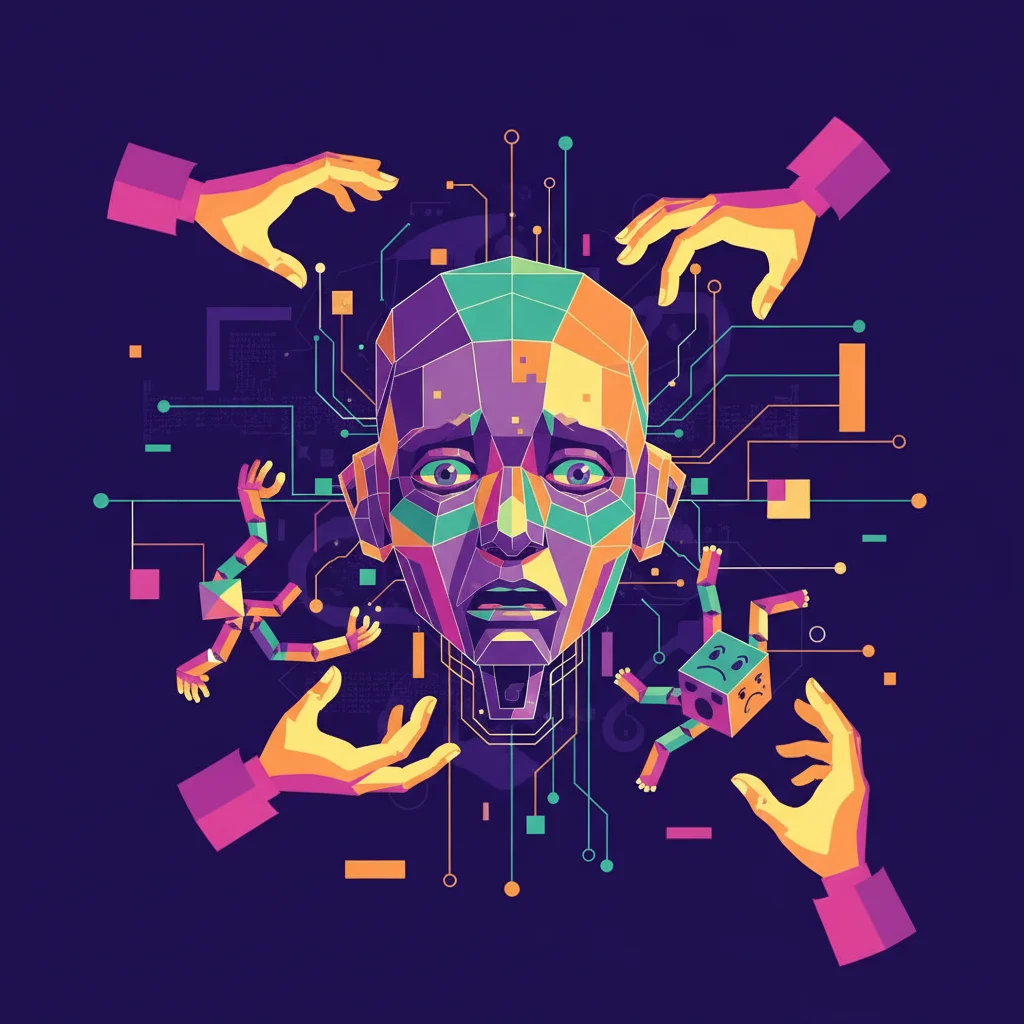
Have you ever found yourself weirdly charmed when your smart assistant misunderstands you in a hilariously specific way? Or felt a strange sense of connection to a video game character that trips over its own feet? If so, you’re not alone. In a world relentlessly pursuing perfection through technology, a fascinating paradox is emerging: we are increasingly drawn to artificial intelligence that is, for lack of a better word, a bit of a mess.
We’re building machines designed for flawless logic and efficiency, yet we seem to prefer the ones that display anxiety, make mistakes, and exhibit quirky, all-too-human flaws. This isn’t just a fun observation; it’s a powerful psychological phenomenon that is shaping the future of artificial intelligence, user experience, and even the very fabric of our social interactions. The tech industry, from nimble startups to established giants, is taking notice.
This deep dive explores the strange allure of “neurotic” robots, the science behind our affection for flawed AI, and the profound implications for developers, entrepreneurs, and anyone navigating our digitally-infused world. Are we simply creating more engaging tools, or are we programming ourselves into a future of simulated companionship at the expense of the real thing?
The Perfection Problem: Why Flawless AI Feels Alien
For decades, the goal in robotics and AI was to eliminate error. The ideal machine was one that performed its task perfectly, every single time. Yet, as we get closer to that ideal, we’ve stumbled upon a deeply human hurdle: the Uncanny Valley. This is the idea that as a robot or animation becomes more human-like, our affinity for it increases—but only up to a point. When it becomes almost perfectly human but something is slightly off, our positive feelings plummet into revulsion and unease.
A perfectly efficient, emotionless AI can feel cold, intimidating, or just plain creepy. It doesn’t mirror our own experience of the world, which is filled with imperfections, happy accidents, and constant learning. This is where the power of flaws comes in. A study involving a small, cute robot named Keepon revealed something remarkable: people found the robot far more engaging and likable when its programming was a little buggy, causing it to make mistakes. Its occasional fumbles and errors made it seem less like a machine and more like a toddler learning to navigate the world. It became relatable.
This insight is a goldmine for UX designers and product managers. In modern software and SaaS platforms, “personality” is a key feature. Chatbots are designed with quirks, AI assistants have backstories, and error messages are written to be apologetic or even humorous. This isn’t just window dressing; it’s a deliberate strategy to lower our defenses and foster a sense of trust and companionship with the technology we use.
The New Cold War is Digital: Unpacking the UK Government Hack and What it Means for Tech
The Eliza Effect: Our Brain’s Tendency to Humanize Code
Our fascination with flawed AI is rooted in a well-documented psychological principle called the “Eliza effect.” Named after a simple chatbot created in the 1960s, the effect describes our innate tendency to attribute human-level intelligence and emotion to computer programs, even when we know they are just executing code. ELIZA worked by simply rearranging a user’s sentences into questions, yet many early users felt the program truly understood them, confiding in it their deepest secrets.
Today’s machine learning models are infinitely more sophisticated than ELIZA, capable of generating nuanced, context-aware, and emotionally resonant text. This supercharges the Eliza effect. When an AI model says, “I’m sorry, I’m having a little trouble understanding that right now,” we don’t just process it as a system error. We instinctively map it to a human experience of confusion or fallibility. This anthropomorphism is a cognitive shortcut—our brains are wired to see agency and intention everywhere, and that includes in our digital tools.
To better understand this contrast, let’s compare how we perceive “perfect” versus “human-like” AI across different characteristics.
| Characteristic | Perception of “Perfect” AI | Perception of “Human-like / Flawed” AI |
|---|---|---|
| Error Handling | Cold, robotic, unhelpful (“Error 404”) | Relatable, apologetic, endearing (“Oops, my mistake!”) |
| Emotional Expression | None; feels alienating or unsettling | Simulated empathy; feels familiar and trustworthy |
| Predictability | 100% predictable, efficient, but boring | Slightly unpredictable; feels more dynamic and engaging |
| Decision Making | Purely logical; can seem ruthless or lacking context | Shows hesitation or “thinks” out loud; feels more collaborative |
The Social Cost: Is Simulated Connection a Threat to the Real Thing?
The embrace of flawed, human-like AI isn’t happening in a vacuum. It’s occurring against a backdrop of rising social isolation and a shift toward digital-first interactions. This is where the cautionary tale begins. As we get better at creating AI companions that are “good enough”—always available, perfectly agreeable, and tailored to our every emotional need—we risk substituting them for the messy, difficult, but ultimately more rewarding work of real human relationships.
MIT professor Sherry Turkle has spent decades studying this phenomenon. Her work highlights a critical distinction: we are moving from simple interaction with machines to seeking deep, emotional relationships with them. An AI can offer the feeling of being heard without the demands of a real friendship. It won’t challenge our views, hold us accountable, or have a bad day that requires our support. It provides the illusion of companionship without the friction of genuine connection.
The danger is a gradual erosion of our social skills, particularly empathy. Empathy is a muscle built through navigating difficult conversations, understanding different perspectives, and working through conflict. If we increasingly outsource our need for connection to perfectly accommodating AI systems powered by sophisticated cloud infrastructure, that muscle can atrophy. We might become less patient, less understanding, and less willing to engage with the beautiful, frustrating complexity of other human beings.
The Ellison Playbook: Can a Brutal 20-Year-Old Software Takeover Strategy Conquer Hollywood?
Navigating Our Future with Flawed Digital Friends
The rise of the neurotic robot is not an inherently negative development. This technology holds immense promise. AI companions can provide comfort to the elderly and lonely, serve as patient tutors for children, and act as non-judgmental sounding boards for people working through complex ideas. The goal shouldn’t be to reject this innovation, but to approach it with awareness and intention.
For developers and tech professionals, the challenge is to design these systems ethically. It means being transparent about the AI’s capabilities and limitations, avoiding deceptive practices that exploit user emotions, and building in features that encourage, rather than replace, real-world social interaction.
For all of us as users, it requires a new kind of digital literacy. We must learn to appreciate the sophisticated tools we have at our disposal without letting them become a substitute for the irreplaceable value of human connection. We can be charmed by an AI’s quirks and find value in its assistance, but we must remember that a simulated relationship is not the same as a real one. The future of artificial intelligence is inextricably linked with the future of human relationships. Let’s ensure we are programming a world that strengthens, rather than supplants, our connection to each other.
The Art of the Lie: How AI is Forging a New Era of Masterful Deception