Powering the Dragon’s Brain: The Nuclear Secret Behind China’s AI Investment Boom
In the global race for artificial intelligence supremacy, the conversation is dominated by silicon. We track every move by NVIDIA, dissect the computational power of the latest GPUs, and analyze the complex supply chains that produce the world’s most advanced semiconductors. But as a thought-provoking letter to the Financial Times recently highlighted, we may be focusing on the brain while ignoring the heart that pumps its lifeblood: energy.
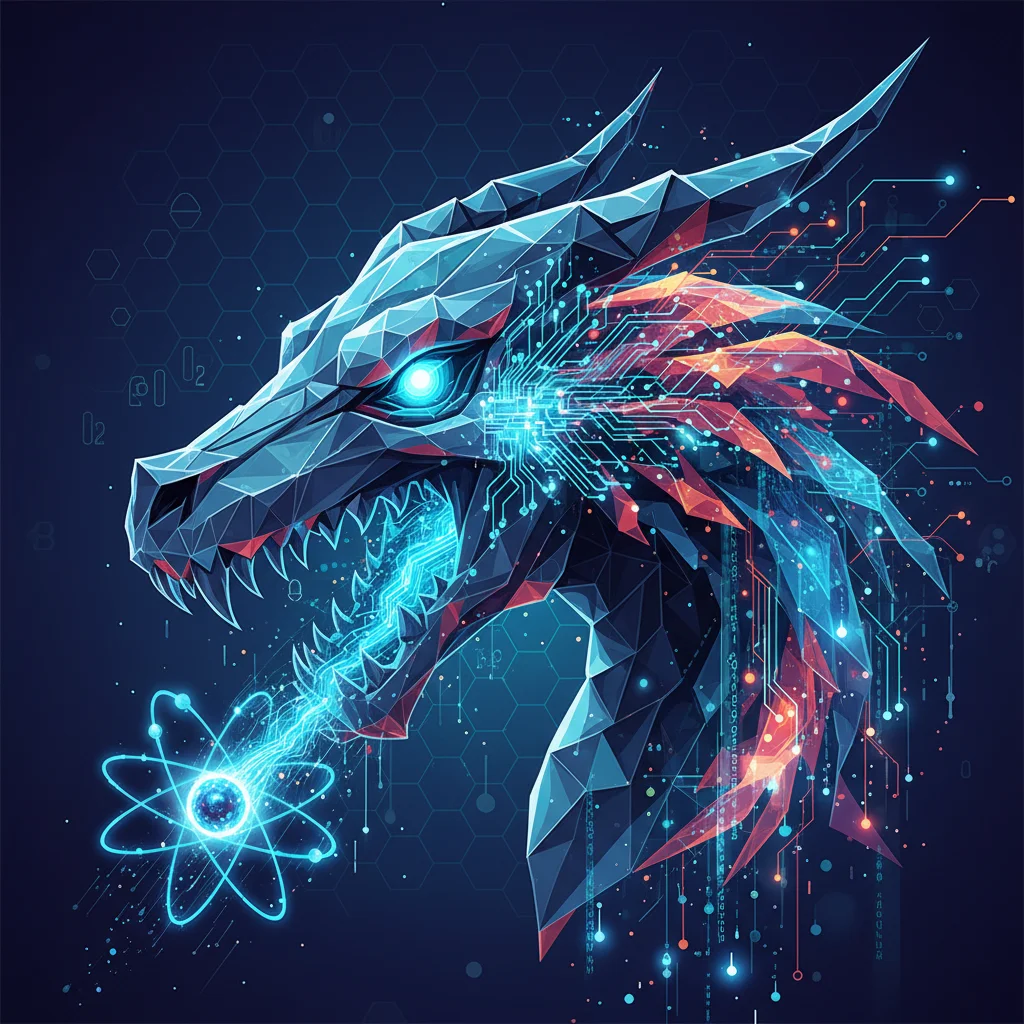
The staggering energy demand of AI is the industry’s elephant in the room. While the West grapples with aging power grids and the intermittency of renewables, China is executing a multi-decade, trillion-dollar strategy that directly links its energy security to its technological ambitions. The secret weapon? An unprecedented expansion of nuclear power.
This isn’t merely an energy policy; it’s a foundational pillar of China’s economic and geopolitical strategy. For investors, finance professionals, and business leaders, understanding this AI-energy nexus is crucial. It reveals a new dimension of the tech race, one where long-term investment opportunities and risks in the global economy are being forged not just in fabrication plants, but in the core of nuclear reactors.
The Insatiable Appetite: AI’s Energy Crisis
The computational power required to train and run large language models (LLMs) is astronomical. A single training run for a model like GPT-3 consumes an estimated 1,287 megawatt-hours (MWh) of electricity, enough to power over 120 U.S. homes for a full year (source). As models become more complex and their applications more widespread, this demand is set to explode.
According to the International Energy Agency (IEA), electricity consumption from data centers, AI, and cryptocurrencies could double by 2026, reaching over 1,000 terawatt-hours (TWh). To put that in perspective, that’s roughly equivalent to the entire electricity consumption of Japan (source). This creates a monumental challenge. How can a nation support the exponential growth of its digital infrastructure without destabilizing its power grid or abandoning its climate commitments? This is a question of pure economics, where the cost and reliability of energy become a primary constraint on technological progress.
For nations betting their future on AI leadership, securing a vast, reliable, and preferably low-carbon source of power is not an option—it’s a prerequisite for competition.
The Growth Paradox: Is Poverty a Cause or a Consequence of Economic Stagnation?
China’s Grand Strategy: Fusing Atoms and AI
China has made no secret of its ambition to become the world’s leading AI power by 2030. This goal is a cornerstone of its long-term industrial and economic planning. Simultaneously, Beijing is undertaking the most ambitious nuclear power construction program in human history. To view these two initiatives as separate is to miss the strategic genius of the plan.
While the rest of the world has been hesitant about nuclear energy since the Fukushima incident in 2011, China has accelerated its build-out. The country currently has 25 reactors under construction, more than the rest of the world combined. Its goal is to surpass the United States as the world’s largest producer of nuclear power by 2030.
The following table illustrates the sheer scale of China’s commitment compared to other major economic blocs. The data underscores a clear divergence in long-term energy strategy.
| Region/Country | Reactors in Operation | Reactors Under Construction | Total Capacity (Operating, GWe) |
|---|---|---|---|
| China | 55 | 25 | 53.2 |
| United States | 94 | 0 | 96.6 |
| European Union | 100 | 3 | 99.1 |
| India | 23 | 8 | 7.5 |
Data sourced from the World Nuclear Association as of late 2023/early 2024. Numbers may fluctuate slightly.
This massive investment in nuclear isn’t just about powering cities; it’s about providing the stable, high-density, 24/7 “baseload” power that sprawling data centers and AI computing clusters demand. It is a direct enabler of the country’s burgeoning financial technology and digital infrastructure.
Why Nuclear is the Perfect Partner for AI
The synergy between nuclear energy and artificial intelligence stems from fundamental characteristics that other power sources lack. For the high-stakes world of AI development, where uptime is paramount, these advantages are decisive.
1. Unmatched Reliability (Baseload Power): AI data centers cannot tolerate power fluctuations. They operate around the clock at maximum capacity. Nuclear power plants boast the highest capacity factor of any energy source, often running for over 90% of the time. This provides the constant, unwavering stream of electricity that is non-negotiable for critical digital infrastructure.
2. Incredible Energy Density: A typical 1-gigawatt nuclear facility requires just over one square mile of land. To generate the same amount of power, a wind farm would need over 360 times that area, and a solar plant would need about 75 times the area. In a country where land is a precious commodity, this density is a massive strategic advantage for powering energy-hungry tech hubs.
3. Low-Carbon Stability: Nuclear power is a zero-emission energy source. This allows China to pursue its goal of AI supremacy while simultaneously working towards its carbon neutrality targets. This dual-benefit is critical for its international standing and long-term economic sustainability.
Here’s a simplified comparison of key energy sources for powering large-scale infrastructure:
| Energy Source | Capacity Factor (%) | Land Use (Acres/GWh/yr) | Carbon Emissions (gCO2eq/kWh) |
|---|---|---|---|
| Nuclear | ~92% | ~1.3 | ~12 |
| Solar (Utility Scale) | ~25% | ~4.4 | ~48 |
| Wind (Onshore) | ~35% | ~70.0 | ~11 |
| Natural Gas | ~57% | ~12.5 | ~490 |
Note: Figures are illustrative averages and can vary based on technology and location.
Beyond the Spark: Uncovering the True Origins of Financial Fire
The Financial and Investment Horizon
This strategic convergence of nuclear power and AI opens up a new frontier for investing and financial analysis. It forces a broader perspective on the AI revolution, moving beyond software and hardware to the fundamental inputs of energy and raw materials.
Investment Opportunities:
- Uranium and the Nuclear Fuel Cycle: As China’s reactor fleet grows, so will its demand for uranium. This has clear implications for uranium mining companies and the entire nuclear fuel supply chain. Astute investors are already analyzing the long-term supply/demand dynamics in this often-overlooked commodity market.
- Nuclear Engineering and Technology: While much of China’s nuclear industry is state-controlled, a complex ecosystem of international and domestic companies provides specialized components, safety systems, and engineering expertise. These firms represent a “picks and shovels” play on this macro trend.
- Grid Modernization and Energy Storage: A grid powered by massive nuclear plants and supplemented by renewables requires sophisticated management. This creates opportunities for companies specializing in smart grid technology, high-voltage transmission, and large-scale energy storage solutions.
Risks and Market Dynamics:
The strategy is not without risks. Public perception of nuclear safety remains a significant hurdle globally. Furthermore, the immense capital costs and long construction timelines for nuclear plants require stable, long-term finance, often heavily reliant on state-owned banking and government backing. This introduces geopolitical risk and a different set of financial metrics compared to conventional tech investments.
This energy strategy will also have ripple effects on global commodity trading. Increased nuclear reliance could reduce China’s voracious appetite for liquefied natural gas (LNG) and coal over the long term, reshaping global energy flows and pricing.
The future of fintech and even blockchain could play a role in this sector, potentially being used to create more transparent and efficient financing mechanisms for these mega-projects or to track nuclear materials and carbon credits with immutable ledgers.
Flawed Models, Hidden Growth? Debunking the Brexit 'Doppelgänger' Narrative
Conclusion: The Power Behind the Throne
The global race for AI leadership is a marathon, not a sprint. While the world remains captivated by the latest chip designs and software models, China is quietly building the engine that will power its ambitions for the next half-century. Its massive investment in nuclear energy is a calculated, strategic move to provide the clean, reliable, and abundant power that its AI-driven future will demand.
For those in the world of finance, investment, and business, the message is clear: to understand the future of AI, you must look beyond the data center and towards the power plant. The future of the global economy and technological leadership may not be written in code, but in the quiet, immense power of the atom.