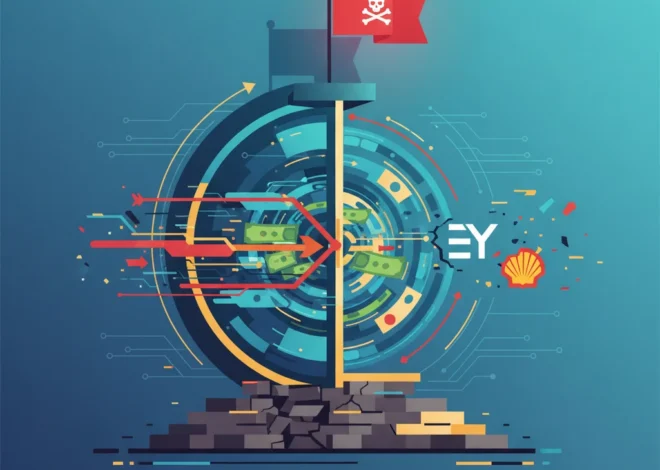
Audit Overhaul: Is the SEC Loosening the Leash on Corporate Watchdogs?
The Silent Foundation of the Stock Market is Shifting
For any investor, from the seasoned professional managing a billion-dollar fund to the individual planning for retirement, confidence is the currency of the realm. Confidence that the numbers are real, the reports are accurate, and the system is fair. This confidence rests on a silent, often-overlooked foundation: the corporate audit. For two decades, this foundation has been policed by a vigilant watchdog, born from the ashes of scandal. But now, the rules of engagement may be changing.
Whispers from the world of high-stakes accounting suggest a significant overhaul is on the horizon. Major accounting groups are anticipating a shift in how U.S. regulators inspect their work. The core of the issue, as reported by the Financial Times, is a long-simmering frustration among auditing firms that regulators have become hyper-focused on finding minor, often inconsequential, infractions. The proposed solution? Fewer, but potentially more meaningful, inspections.
This isn’t just a bureaucratic shuffle; it’s a potential paradigm shift in corporate oversight that could have profound implications for the entire financial ecosystem. It touches everything from the integrity of the stock market to the stability of our economy. The central question every investor, finance professional, and business leader should be asking is: Is this a smart evolution toward efficiency, or a dangerous step back toward the very environment that made such oversight necessary in the first place?
A Brief History Lesson: Why We Have the PCAOB
To understand the gravity of this potential change, we must rewind to the early 2000s. The corporate world was rocked by colossal accounting scandals at companies like Enron and WorldCom. These weren’t simple errors; they were sophisticated frauds that wiped out billions in shareholder value, destroyed pensions, and shattered public trust in corporate America. The fallout revealed a critical weakness: the auditing profession was essentially policing itself, with disastrous results.
In response, Congress passed the landmark Sarbanes-Oxley Act of 2002 (SOX). A key creation of SOX was the Public Company Accounting Oversight Board (PCAOB), a powerful, independent regulator tasked with overseeing the audits of public companies. Its mission was clear: protect investors and the public interest by promoting informative, accurate, and independent audit reports. A central tool in the PCAOB’s arsenal has been its inspection program, where it rigorously reviews the work of registered accounting firms.
For twenty years, these inspections have been famously meticulous, dissecting audit workpapers and challenging auditors’ judgments. This intense scrutiny was designed to restore discipline and accountability. However, critics argue the pendulum has swung too far, creating a “gotcha” culture that stifles professional judgment and focuses on procedural minutiae over the big picture of financial health. According to industry insiders, the PCAOB has been criticized for “playing ‘gotcha’ with audit firms over minor issues that do not result in a company having to restate its accounts” (source).
Europe's Trillion-Dollar Battery Dilemma: Why Local Content is the New Gold Standard
From Quantity to Quality: The Proposed New Philosophy
The overhaul being discussed represents a move away from a volume-based approach to a more risk-based, qualitative one. Instead of casting a wide net to catch every small fish, the focus would shift to hunting for sharks—the systemic risks and material misstatements that can actually harm investors. This potential change reflects a fundamental debate in the world of regulation and economics: where is the point of diminishing returns for compliance?
To better understand this proposed evolution, let’s compare the current approach with the potential new model.
| Aspect of Inspection | Current Approach (Post-SOX) | Proposed Future Approach |
|---|---|---|
| Primary Focus | Comprehensive procedural compliance; detection of any and all deficiencies, regardless of materiality. | Systemic risks, quality control systems, and issues with a high probability of leading to material misstatement. |
| Frequency & Scope | High frequency; broad scope covering a wide range of audits annually for large firms. | Potentially lower frequency but deeper, more targeted dives into high-risk areas or firms. |
| Regulator-Auditor Dynamic | Often perceived as adversarial, with a focus on identifying and publicizing faults. | Aimed at being more collaborative, with a focus on remediation and improving overall audit quality. |
| Desired Outcome | A “clean” inspection report with zero deficiencies, leading to a “check-the-box” mentality. | Robust audit processes that demonstrate strong professional skepticism and judgment on critical matters. |
The Two-Sided Coin: Implications for Investors and the Market
For anyone involved in investing or trading, this regulatory shift presents both potential opportunities and significant risks. The ultimate impact on market integrity and investor protection is far from certain.
The Bull Case: A More Efficient and Effective System
Proponents of the change argue that it will lead to a healthier auditing ecosystem. By freeing auditors from the fear of being penalized for trivial issues, they can dedicate more resources and intellectual capital to what truly matters: assessing complex transactions, challenging management’s assumptions, and identifying potential for large-scale fraud. This could lead to higher *quality* audits, even with fewer inspections. For publicly traded companies, a more efficient audit process could translate into lower compliance costs, which could, in theory, flow through to the bottom line and benefit shareholders.
The Bear Case: A Return to Complacency
The downside risk is substantial. A reduction in the perceived threat of a rigorous inspection could lead to a gradual erosion of discipline within audit firms. Without the constant pressure to maintain pristine workpapers, standards could slip. This creates an environment where small errors go unchecked and a culture of laxity can take root. For investors, this increases the “information risk”—the risk that the financial statements they rely on are not a true and fair representation of the company’s performance. A single high-profile accounting failure resulting from this new approach could do immense damage to investor confidence, impacting the entire stock market.
The Dragon Takes a Breath: Why China's Stock Market Rally Is Facing a Harsh Economic Reality
The Broader Context: Technology, Globalization, and the Audit of Tomorrow
This debate isn’t happening in a vacuum. The world of finance and auditing is being reshaped by powerful external forces, particularly technology.
The advent of AI, machine learning, and advanced data analytics is revolutionizing how audits are conducted. These fintech tools can analyze 100% of a company’s transactions, not just a sample, making it possible to automate the detection of the very minor infractions that currently bog down inspections. This technological leap could be a catalyst for the proposed regulatory shift, allowing human inspectors to focus on areas requiring judgment, skepticism, and expertise, while technology handles the procedural checks.
Furthermore, technologies like blockchain promise a future of immutable, transparent ledgers, which could fundamentally alter the nature of auditing itself. If every transaction is verifiable and transparent on a distributed ledger, the audit process might shift from backward-looking verification to real-time assurance.
From a global perspective, the U.S. regulatory environment is often seen as the gold standard for rigor. The PCAOB’s approach, while demanding, has been a model for other nations seeking to bolster their own systems of corporate governance. A significant change in the U.S. could have ripple effects, influencing how regulators in Europe and Asia approach their own oversight of the banking and corporate sectors. For instance, the UK’s Financial Reporting Council (FRC) has been undergoing its own transformation into a more powerful body, the Audit, Reporting and Governance Authority (ARGA), with a strong focus on improving audit quality after several high-profile corporate collapses (source). How the SEC and PCAOB navigate this change will be watched closely around the world.
The "Merry Christmas Baby" Portfolio: Timeless Lessons on Investing, Economics, and Enduring Value
Conclusion: A Call for Vigilant Optimism
The potential overhaul of the PCAOB’s inspection process is more than an inside-baseball story for accountants. It is a critical development that strikes at the heart of our financial system’s integrity. The move from a culture of “fault-finding” to one focused on “risk-mitigation” is, in principle, a positive evolution. It acknowledges the complexity of the modern business world and seeks to align regulatory resources with the greatest threats.
However, history has taught us a painful lesson about the dangers of insufficient oversight. As regulators recalibrate their approach, investors and corporate boards must heighten their own scrutiny. This means asking tougher questions of audit committees, demanding greater transparency from management, and never taking the quality and independence of a corporate audit for granted.
The goal is to find the perfect balance between rigor and efficiency—a system that is sharp enough to prevent the next major scandal but smart enough not to waste its energy on trivialities. Achieving that balance is one of the most important challenges facing our financial markets today.

Related Posts

The Billion-Dollar Potato: Inside the Family Feud Threatening the McCain Foods Dynasty

The Price of Prestige: Unpacking the Financial Risk in Luxury’s ‘Made in Italy’ Scandal