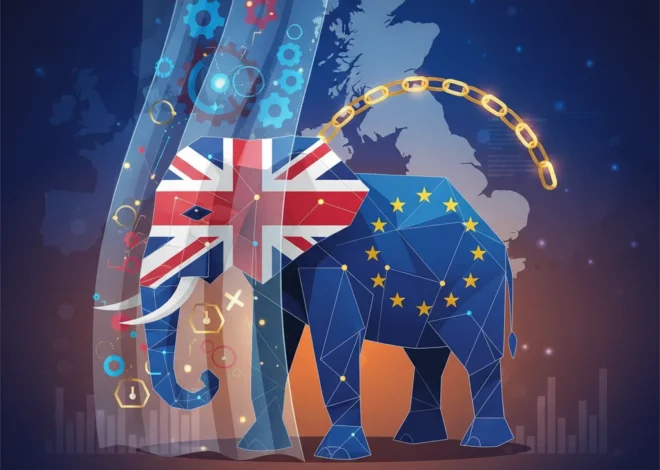
The Great Pharma Migration: Why Europe is Losing Billions in Investment to the US
The High-Stakes Battle for Global Pharmaceutical Dominance
In the intricate world of global finance and economics, few sectors carry the weight of the pharmaceutical industry. It’s a realm where innovation directly translates to human health, and investment decisions, measured in the billions, can reshape national economies. Today, a seismic shift is underway. Europe, long a powerhouse of pharmaceutical research and development, is watching with growing alarm as its homegrown giants and foreign investors redirect massive capital flows towards the United States. This isn’t a random fluctuation in the market; it’s a calculated response to a powerful combination of American incentives and European inertia.
The core of this transatlantic tug-of-war is the US Inflation Reduction Act (IRA), a piece of legislation that, despite its name, is proving to be one of the most significant industrial policies in recent history. While EU officials have managed to secure temporary tariff truces with the US, the underlying current of investment is flowing west. This exodus poses a critical threat to Europe’s economic competitiveness, its technological sovereignty, and the future of its healthcare innovation. For investors, business leaders, and anyone with a stake in the global economy, understanding this dynamic is crucial. We are witnessing a high-stakes competition that will define the next decade of healthcare, finance, and international trade.
The American Magnet: How the Inflation Reduction Act Changed the Game
To understand why billions of euros are being rerouted across the Atlantic, one must look at the immense gravitational pull of the US Inflation Reduction Act (IRA). Enacted in 2022, the IRA is a sweeping package of energy, climate, and healthcare reforms, but its true power lies in the massive financial incentives it offers for domestic production. For the pharmaceutical and biotech sectors, it’s a game-changer.
The act provides substantial tax credits, grants, and subsidies for companies that manufacture drugs and their components on US soil. This isn’t just about encouraging R&D; it’s a strategic move to re-shore critical supply chains and bolster the American industrial base. The message to global corporations is simple and powerful: build here, hire here, and you will be rewarded. The sheer scale of the incentives has made the financial calculus for new investments undeniable. As one executive noted, the IRA has created an environment where “the business case for investing in the US has become overwhelmingly strong (source).”
This policy has had an immediate and dramatic effect. For example, Japanese drugmaker Daiichi Sankyo is reportedly planning a €1.2bn investment in a US facility, a decision that underscores the global appeal of the IRA’s provisions. The US market, already the world’s largest and most profitable for pharmaceuticals, now also offers unparalleled government support, creating a nearly irresistible combination for capital-intensive projects.
The Dragon Takes a Breath: Why China's Stock Market Rally Is Facing a Harsh Economic Reality
Europe’s Conundrum: A Fragmented and Hesitant Response
While the US has rolled out the red carpet, Europe’s response has been characterized by complexity and fragmentation. The EU, a union of 27 member states, inherently struggles to match the speed and scale of a single federal government. Instead of a unified, powerful counter-offer, pharmaceutical companies face a patchwork of national pricing controls, varying regulatory landscapes, and a more cautious approach to industrial subsidies.
The case of Novo Nordisk, the Danish pharmaceutical giant behind the blockbuster weight-loss drugs Ozempic and Wegovy, is a stark illustration of this dilemma. The company chose to invest €2.1bn in a new manufacturing plant in Chartres, France, a welcome announcement for Europe. However, this was dwarfed by its simultaneous decision to pour more than double that amount—$6bn—into expanding its facilities in Denmark, with a significant portion of the output destined for the lucrative US market. This signals that even Europe’s champions are placing their biggest bets with an eye on American demand and logistics.
To visualize the disparity, consider the key factors influencing a major investment decision in the pharmaceutical sector:
| Investment Factor | United States (Post-IRA) | European Union |
|---|---|---|
| Government Incentives | Large-scale, direct tax credits and subsidies for domestic manufacturing. | More limited, often project-based funding; constrained by EU state-aid rules. |
| Market Structure | Single, unified market with high drug prices and massive demand. | Fragmented market with 27 different pricing and reimbursement systems. |
| Regulatory Environment | Streamlined FDA approval process, seen as a global gold standard. | Complex EMA process, with additional national-level hurdles for market access. |
| Energy Costs | Generally lower and more stable energy prices. | Higher and more volatile energy costs, impacting manufacturing expenses. |
| Political Certainty | Bipartisan support for re-shoring critical industries. | Complex political negotiations among member states can slow down policy response. |
The Geopolitical Dimension and the Specter of Protectionism
The situation is further complicated by the volatile geopolitical landscape. The potential for a second Trump presidency looms large, bringing with it the threat of renewed tariff wars. While a recent EU-US deal on steel and aluminum has temporarily eased tensions, it’s a fragile peace. The “America First” doctrine, which prioritizes domestic industry through protectionist measures, is a powerful political force that transcends any single administration.
This uncertainty has a chilling effect on long-term investment planning. Corporations crave predictability. The risk of sudden tariffs or other trade barriers makes building complex, cross-border supply chains a dangerous gamble. Consequently, many are choosing to de-risk by co-locating production within the major markets they serve. For a global industry like pharmaceuticals, this means building in the US to serve the US, and building in Europe to serve Europe. Given the US market’s superior profitability, the investment choice becomes painfully clear.
This trend impacts the entire financial ecosystem. It affects `stock market` valuations of European vs. American pharma companies, alters `trading` patterns for commodities used in drug manufacturing, and forces a re-evaluation of risk within investment portfolios. The global `economy` is shifting from a model of hyper-efficient global supply chains to one of regional, resilient, and politically fortified production hubs.
The "Merry Christmas Baby" Portfolio: Timeless Lessons on Investing, Economics, and Enduring Value
Can Technology and Fintech Offer Europe a Lifeline?
While competing with the US on subsidies may be a losing battle, Europe can still pivot to its traditional strengths: innovation and technological prowess. This is where modern `financial technology` could play a transformative role. The European biotech scene is vibrant but often struggles with a funding gap compared to its US counterpart. `Fintech` platforms and alternative `investing` models could democratize access to capital for promising startups, allowing them to scale without having to relocate to the US for funding.
Furthermore, technologies like `blockchain` offer a path to creating more efficient and secure systems, which could become a competitive advantage. Imagine a pan-European `blockchain`-based system for tracking pharmaceuticals from factory to pharmacy, eliminating counterfeits and streamlining logistics. Or using distributed ledger technology to manage clinical trial data securely across multiple countries, speeding up the R&D process. By investing in this digital infrastructure, Europe could create an ecosystem that is not just cheaper, but smarter and more secure—a powerful value proposition that goes beyond simple subsidies.
This requires a shift in thinking from traditional `banking` and venture capital towards embracing new forms of `financial technology` to fuel the next wave of healthcare innovation.
Economic Titans Clash: Wolf and Krugman on Power, Plutocracy, and the Future of Your Portfolio
Actionable Insights for Investors and Leaders
Navigating this new landscape requires a strategic and informed approach. Here are the key takeaways:
- For Investors: Re-assess your portfolio’s geographic exposure in the healthcare sector. Companies with significant manufacturing and R&D footprints in the US may be better positioned to capitalize on the IRA. Watch for European policy responses; any credible, large-scale EU initiative could create buying opportunities in undervalued European pharma and biotech stocks.
- For Business Leaders: Supply chain resilience is no longer a buzzword; it’s a strategic imperative. Evaluate the risks of a transatlantic supply chain and consider regionalizing production. Explore opportunities to leverage technology to reduce costs and increase efficiency to remain competitive.
- For Policymakers: The time for incrementalism is over. Europe needs a bold, unified, and rapid response. This means simplifying regulations, creating a true single market for pharmaceuticals, and launching a strategic investment fund that can compete on a global scale. The future of a key European industry depends on it.
Conclusion: A Defining Moment for Europe
The race to attract and retain pharmaceutical investment is far more than a niche industrial concern. It is a defining test of Europe’s economic future. The continent stands at a crossroads, facing a determined American competitor armed with a powerful financial arsenal. The temporary tariff deals have bought time, but they have not solved the fundamental problem: the momentum of capital is flowing westward.
Without a swift, unified, and ambitious counter-strategy, Europe risks ceding its leadership in a critical 21st-century industry. The challenge is immense, but so is the opportunity. By embracing technological innovation, streamlining its fragmented markets, and committing to a bold industrial vision, Europe can still fight to secure its place as a global leader in the future of health and medicine. The next moves made in Brussels, Berlin, and Paris will echo for decades, shaping the global `economy` and the very health of its citizens.

Related Posts
The Silent Crash: How Japan’s Demographic Crisis Will Reshape the Global Economy

The New Center of the World: Why Jakarta’s Rise as the Largest Megacity is a Game-Changer for Global Finance