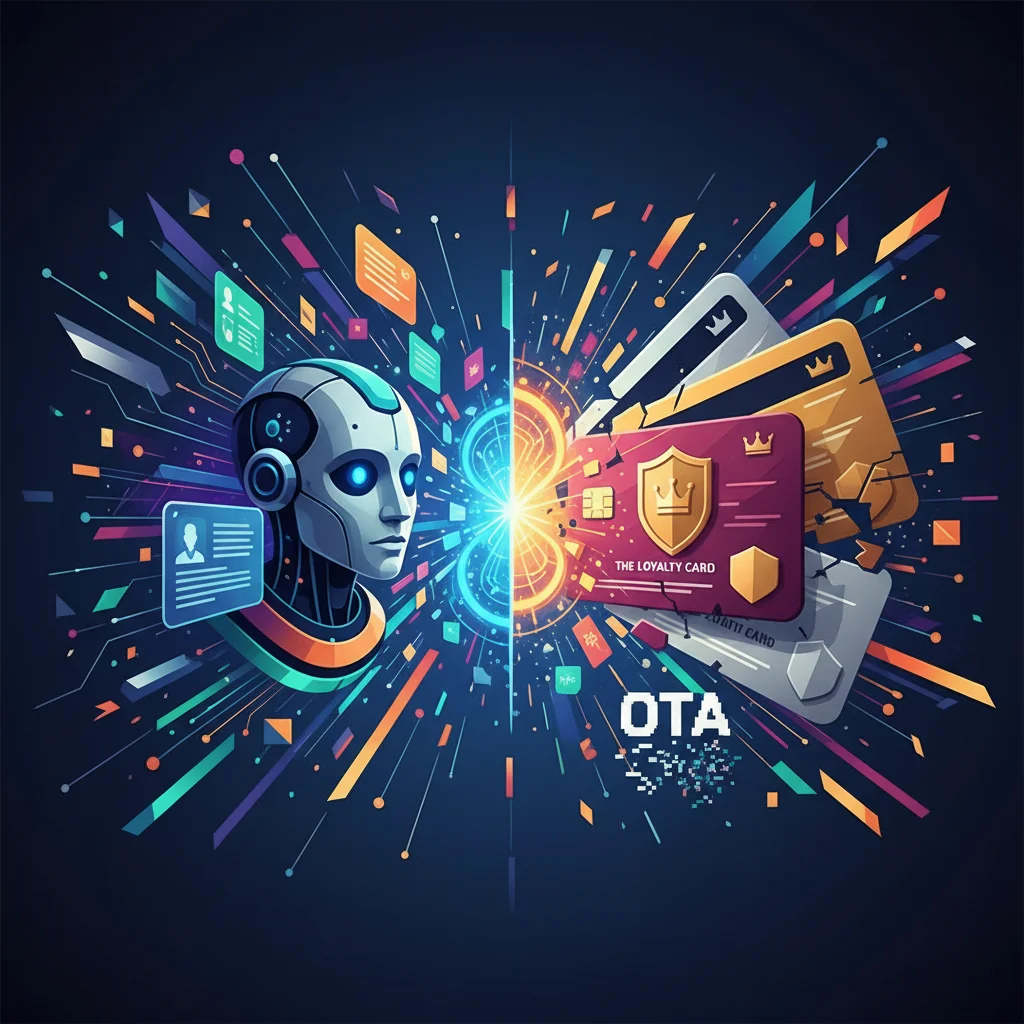
The AI Concierge vs. The Loyalty Card: Inside the High-Tech Battle for Your Next Hotel Stay
Remember booking a hotel a couple of decades ago? You’d call a travel agent or maybe even the hotel directly. Then came the internet, and with it, a revolution led by Online Travel Agents (OTAs) like Expedia and Booking.com. They offered choice, convenience, and comparison shopping on a scale never seen before. For a while, it seemed like they had won the travel game.
But the game is changing again. A new, more powerful player has entered the arena: artificial intelligence. We’re not just talking about simple chatbots. We’re talking about sophisticated AI agents that can plan your entire, multi-stop vacation—from flights to hotels to dinner reservations—with a single conversational prompt. This new wave of automation represents an existential threat to the traditional hotel business model, potentially making the hotel itself just another commodity in an AI-optimized itinerary.</
Faced with this digital pincer movement—the established OTAs on one side and the emerging AI agents on the other—global hotel giants like Marriott and Hilton are refusing to go down without a fight. They’re not just competing on price or room size. They’re waging a sophisticated, high-tech war on a different front: your loyalty. They are doubling down on their loyalty programs, transforming them from simple point-collecting schemes into complex, data-driven ecosystems designed to own the customer relationship directly. This is the story of how old-school hospitality is betting its future on cutting-edge software, cloud computing, and the power of a personal touch.
The First Wave: How OTAs Reshaped the Battlefield
To understand the current battle, we need to look at the last one. Before the internet, hotels owned their customer relationships. You booked with them, you stayed with them, you were loyal to them. The rise of OTAs shattered that direct connection. Suddenly, hotels were paying hefty commissions—often 15 to 25 percent of the booking value—to these powerful middlemen for leads.
While OTAs brought in volume, they eroded profits and, more importantly, they put a wall between the hotel and its guest. The customer was loyal to Expedia’s low prices, not to a specific hotel brand. In response, hotels built massive loyalty programs as their primary weapon. And they are enormous. Marriott Bonvoy boasts over 203 million members, while Hilton Honors is close behind with 180 million. These programs became the key to encouraging “direct bookings,” the holy grail of hotel revenue where they keep 100% of the sale and, crucially, all the customer data.
This strategy has been a quiet success. For years, these programs have been the economic engine of the big hotel chains, incentivizing repeat business and creating a powerful defensive moat. But that moat is now being tested by the disruptive tsunami of generative AI.
The New Challenger: Your Personal AI Travel Agent
Imagine this: You tell an AI, “Plan a 10-day anniversary trip to Italy for my partner and me in May. We love history, good food, and boutique hotels. Our budget is $8,000.” The AI doesn’t just give you a list of links. It curates a complete itinerary, booking flights with the best connections, reserving rooms at highly-rated independent hotels that fit your vibe, scheduling museum tickets to avoid lines, and even making dinner reservations at restaurants known for the specific cuisine you love. It does this by scouring the entire internet, unconstrained by brand allegiance.
This isn’t science fiction. Companies like Google and Expedia are heavily investing in this technology. This new generation of AI, powered by advanced machine learning models, threatens to disintermediate hotels in a way that makes OTAs look tame. If an AI can find a better, cheaper, more unique experience outside the Marriott or Hilton ecosystem, it will. Brand loyalty becomes a secondary consideration to a perfectly optimized, personalized trip.
This is where the battle lines are drawn. Can a hotel’s promise of “loyalty perks” compete with an AI’s promise of “perfection”?
Decoding the Matrix: What Blackstone, AI Risk, and Crypto Politics Reveal About Our Future
The Counter-Offensive: Loyalty as a Data-Driven Platform
The hotel giants’ response is to evolve. They are transforming their loyalty programs from a simple transaction—points for stays—into a deeply integrated experience platform. The goal is to make booking direct so valuable, so personalized, and so seamless that you wouldn’t even think of using an outside agent, human or AI.
This isn’t just about offering a members-only rate. It’s a fundamental shift in strategy, powered by immense investment in technology. Here’s a look at how the old model of loyalty compares to the new, data-driven approach:
| Feature | “Old School” Loyalty Program | “New” Data-Driven Ecosystem |
|---|---|---|
| Core Value | Earn & Burn Points | Personalized Experience & Access |
| Technology | Basic CRM Database | Integrated Cloud & SaaS Platform, AI/ML Analytics |
| Offers | Generic, mass-emailed promotions | Hyper-personalized offers based on past behavior and preferences |
| Perks | Free Wi-Fi, potential room upgrade | Keyless entry via app, pre-arrival room customization, exclusive access to concerts or events |
| Customer Interaction | Check-in desk, email newsletter | 24/7 via a sophisticated mobile app with chat, recommendations, and services |
Marriott, for example, is leveraging its colossal dataset from its 203 million members to create what it calls a “holistic view of the customer.” This means the software knows if you prefer a high floor, what kind of wine you ordered from room service on your last trip, and that you always use the gym. The next time you book, the app might proactively offer a room next to the fitness center or a discount on your favorite wine. This level of personalization is something an external AI agent, which lacks this deep historical data, simply cannot replicate.
However, this strategy carries immense risk. Centralizing the data of over 200 million high-value travelers creates a tantalizing target for cybercriminals. A significant data breach could instantly shatter the trust that these programs are built on. This makes robust cybersecurity not just an IT issue, but a core pillar of their business strategy. For developers and startups, this creates a huge opportunity. The hospitality industry is hungry for innovation in areas like secure data architecture, hyper-personalization engines, and novel guest experience technologies. The legacy systems won’t cut it anymore; the future of hospitality will be built on modern, secure, and intelligent code.
The Tech Stack Behind the Digital Concierge
This transformation from a hotel company into a tech-driven hospitality platform requires a formidable technology stack. This isn’t just about a slicker website; it’s a complete re-architecting of their digital infrastructure.
- Cloud Infrastructure: Managing real-time data for hundreds of millions of members, thousands of properties, and millions of daily bookings is impossible without the scalability and reliability of the cloud. This backend is the engine that powers the entire ecosystem.
- AI and Machine Learning: Beyond the generative AI of their competitors, hotels are using predictive analytics to an incredible degree. Machine learning models forecast demand, set dynamic member-only pricing, segment customers for targeted marketing, and even predict which perks a specific guest is most likely to value.
- SaaS Integration: No company builds everything in-house. Hotels are masters of integrating a complex web of specialized SaaS (Software as a Service) solutions for everything from customer relationship management (CRM) and property management systems (PMS) to marketing automation and analytics.
- Mobile-First Programming: The hotel app is the new front desk. This requires continuous innovation and top-tier programming talent. Features like mobile check-in, keyless entry, in-app chat with the concierge, and integrated controls for room lighting and temperature are becoming standard. The app is the primary vehicle for delivering the personalized, seamless experience that forms the core of their strategy.
The New Tech Whales: Why Consulting Giants Are Buying Up Startups
Two Competing Visions for the Future of Travel
Ultimately, two distinct futures for travel planning are emerging. The one you choose will depend on what you value most: ultimate choice or curated convenience.
As one industry analyst noted, hotels are trying to “build a walled garden that is so attractive that customers do not want to leave.” (source) The success of this strategy will determine who truly owns the customer relationship in the coming decade.
| Aspect | The AI Aggregator Future | The Hotel Platform Future |
|---|---|---|
| Primary Goal | Find the objectively optimal trip based on all available data. | Provide a seamless, trusted, and personalized experience within a brand ecosystem. |
| Key Technology | Generative AI, Large Language Models | Predictive Analytics, Cloud Infrastructure, Mobile Apps |
| Driver of Choice | Price, reviews, convenience, unique attributes | Brand trust, earned status, personalized perks, ease of use |
| Customer Loyalty | Loyalty is to the AI assistant and its ability to deliver results. | Loyalty is to the hotel brand and its ecosystem of benefits. |
Beyond the Ban: How TikTok's New Deal Rewrites the Rules for AI, Cloud, and Global Tech
Conclusion: The Battle for Your Next Booking
The quiet war heating up between hotel loyalty programs and AI travel agents is more than just a business story; it’s a glimpse into the future of how we interact with technology and brands. It’s a high-stakes competition where massive datasets, sophisticated AI, and scalable software are the weapons of choice. The winner won’t just get your next booking—they’ll win your data, your trust, and your long-term loyalty.
For travelers, this competition is a net positive, leading to better technology, more personalized service, and more valuable rewards. But it also forces a choice. Will you hand over the keys to an all-knowing AI, trusting it to build the perfect trip from a universe of options? Or will you check into a branded digital ecosystem, trading some choice for the comfort of being known and the promise of a curated, frictionless experience? The answer will define the next era of travel.

Related Posts
Human vs. Machine: Why Marriott and Hilton are Betting on Loyalty to Beat the AI Travel Agent
The Subscription Bubble is Bursting: What the Streaming Wars Teach Startups About SaaS, AI, and Survival