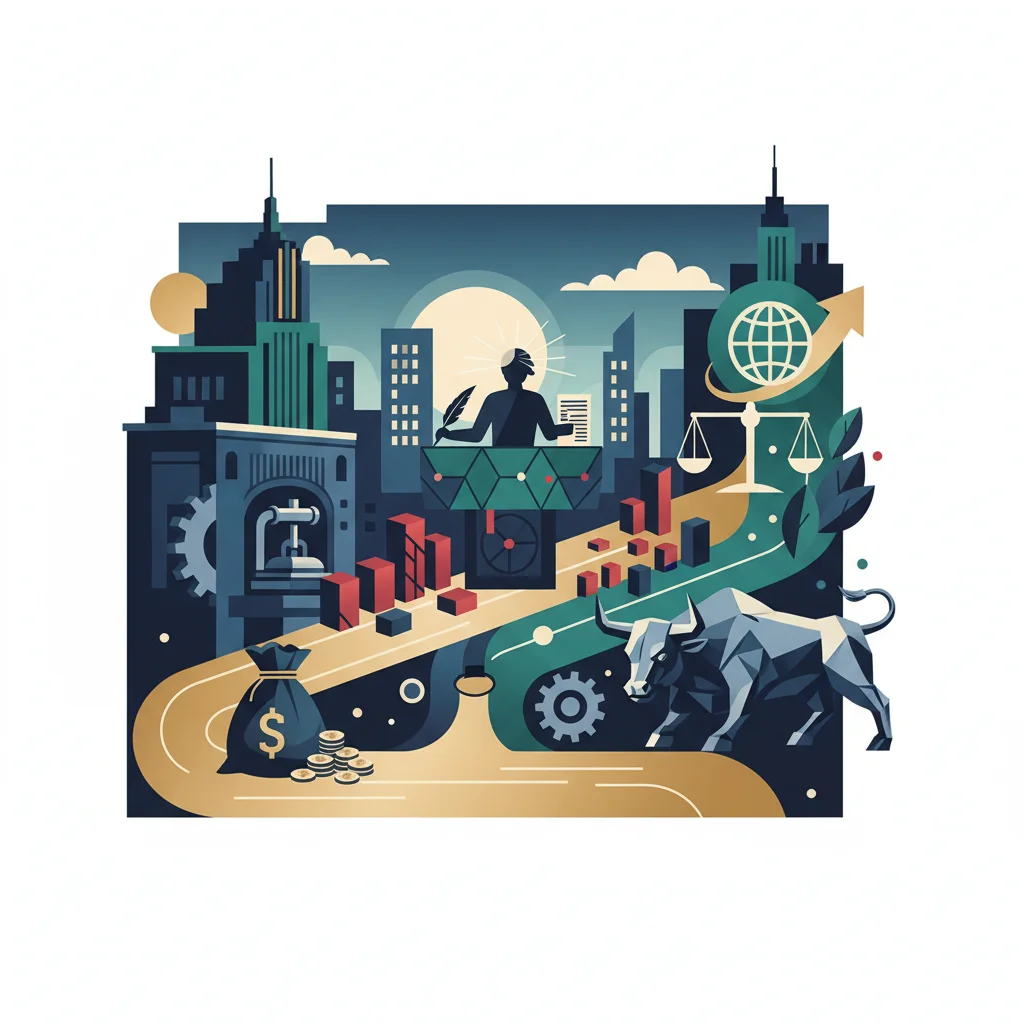
The Editor’s Dilemma: What a 1930s Newspaper Game Reveals About Modern Finance and Ethical Investing
Imagine you’re at the helm of a burgeoning enterprise in 1930s New York. The city is a powder keg of ambition, corruption, and opportunity. Your goal is to build a media empire from a single, small office into a towering beacon of information. Every day, you face critical decisions: Do you invest in top-tier talent and cutting-edge equipment? Do you chase sensationalist headlines for quick cash, or build a reputation on hard-hitting, ethical journalism? Now, add another layer: the mafia comes knocking. They offer you a deal that could solve all your financial woes, but at the cost of your integrity. What do you do?
This isn’t a boardroom hypothetical; it’s the central premise of ‘News Tower’, a media management simulation game that serves as a surprisingly potent allegory for the complex world of modern business, finance, and investing. While set in a bygone era, the game masterfully distills the timeless conflict between profitability and principle, forcing players to navigate the very same moral quandaries that define corporate leadership and investment strategy today. By examining this virtual sandbox, we can uncover profound insights into the real-world pressures that shape our economy and the financial markets.
The Newspaper as a Business: A Masterclass in Resource Allocation
At its core, ‘News Tower’ is a sophisticated business management simulation. Players must meticulously manage their finances, balancing revenue streams from newspaper sales and advertising against a host of expenses. You hire journalists, typesetters, and telegraph operators, each representing an investment in human capital. You purchase printing presses and expand your office floor by floor, a clear parallel to capital expenditure and scaling operations. This delicate balancing act is the bedrock of corporate finance.
The game forces you to think like a CFO. Do you allocate capital towards a larger printing press to increase output and market share, or do you invest in a top investigative reporter who might uncover a story that builds long-term brand equity? According to the game’s developers, Studio Nul Games, the goal is to “find the right balance between reaching your economic goals and keeping your journalistic integrity” (source). This is the classic dilemma of short-term gains versus long-term sustainable growth that every business leader and investor grapples with. A failure to manage cash flow results in bankruptcy, a stark reminder that even the noblest ventures must remain solvent.
Unlike the rudimentary banking and ledger systems of the 1930s, modern corporations leverage sophisticated financial technology (fintech) to optimize these decisions. However, the fundamental principles of economics remain unchanged: scarcity, opportunity cost, and the allocation of limited resources to achieve maximum utility. The game strips away the complexity of modern tools to reveal the raw, unchanging core of business strategy.
Beyond the Headlines: The Economic Resonance of a National Tragedy in Australia
Reputation as an Asset: The Stock Market of Public Opinion
In ‘News Tower’, your newspaper’s reputation is a quantifiable asset. Publishing well-researched, ethical stories that expose corruption or serve the public good increases your credibility. This, in turn, attracts more readers and commands higher advertising rates. Conversely, running sensationalist gossip, inaccurate stories, or propaganda for special interests can provide a short-term revenue boost but erodes public trust over time, leading to a decline in readership and influence.
This mechanic is a perfect metaphor for how the modern stock market values a company. A company’s share price is not just a reflection of its quarterly earnings; it’s a complex valuation of its brand, its leadership’s integrity, its governance practices, and its long-term viability. This is the central thesis of the ESG (Environmental, Social, and Governance) movement in investing. Investors are increasingly recognizing that companies with poor ethical track records carry significant reputational risk, which can materialize into very real financial losses.
A single scandal, like a mafia partnership in the game, can cause a company’s “stock” to plummet. In the real world, we’ve seen this play out time and again. A firm caught in an environmental disaster or a labor scandal sees its market capitalization evaporate. ‘News Tower’ brilliantly gamifies this concept, teaching players that integrity isn’t just a moral virtue; it’s a critical component of a resilient, long-term financial strategy. The most successful empires are built on a foundation of trust, not on the shifting sands of opportunism.
The Mafia Deal: Modeling High-Risk, High-Reward Scenarios
The game’s most compelling feature is the introduction of external pressures, personified by the mayor, powerful corporations, and the mafia. Each offers tempting shortcuts. The mafia might provide a huge cash injection or an “exclusive” story in exchange for publishing favorable coverage or burying an investigation into their activities. This is where the game transcends simple business management and becomes a powerful lesson in risk management and ethical governance.
Accepting such a deal is akin to engaging in speculative, high-risk trading or venturing into the gray areas of regulation. The immediate upside is massive—you can fund a major expansion or avoid bankruptcy. However, the downside is catastrophic. You become beholden to a corrupt entity, your reputation is compromised, and you risk total collapse if your dealings are exposed. The FT article notes that players must weigh these “conflicting pressures,” a challenge that defines many modern industries (source).
This dynamic mirrors the dilemmas in emerging, under-regulated markets. Consider the early days of cryptocurrency and blockchain technology. The potential for astronomical returns attracted immense capital, but the landscape was rife with scams, fraud, and ethical black holes. Investors and entrepreneurs had to decide whether to chase quick profits in this “wild west” or to build slowly and ethically, prioritizing security and regulatory compliance. The “mafia deal” in ‘News Tower’ is a stand-in for any decision that sacrifices long-term sustainability for short-term expediency.
The Price of Association: Analyzing the Economic Fallout of the Epstein Scandal
To better illustrate the parallels, let’s compare the game’s choices with their real-world corporate and financial equivalents.
| ‘News Tower’ In-Game Decision | Real-World Business/Finance Analogue | Potential Outcome (Short-Term vs. Long-Term) |
|---|---|---|
| Invest in skilled reporters and fact-checkers. | Investing in R&D, quality control, and strong corporate governance. | Short-Term: Higher costs, lower margins. Long-Term: Strong brand reputation, customer loyalty, premium pricing power, higher stock valuation. |
| Publish sensationalist, low-quality gossip. | Focusing on clickbait, aggressive sales tactics, or cutting corners on product quality. | Short-Term: Quick revenue/traffic spike. Long-Term: Brand erosion, high customer churn, diminished credibility. |
| Accept a “cash infusion” from the mafia to avoid bankruptcy. | Taking on vulture capital, engaging in predatory lending, or violating regulations for a competitive edge. | Short-Term: Business survival, rapid expansion. Long-Term: Loss of control, legal/regulatory penalties, potential for catastrophic failure. |
| Run a tough exposé on a corrupt politician. | Whistleblowing or adopting a strong ESG stance that may alienate powerful partners or investors. | Short-Term: Political backlash, loss of advertisers/revenue. Long-Term: Cemented reputation for integrity, attracting ethical investors and loyal customers. |
Lessons for the Modern Leader and Investor
‘News Tower’ is more than just a game; it’s a dynamic case study. It demonstrates that the path to sustainable success is paved with difficult choices. The allure of the “easy win” or the “quick buck” is a constant threat to long-term value creation. As the game’s setting in the Great Depression era reminds us, economic hardship amplifies these pressures, making ethical compromises seem not just tempting, but necessary for survival (source).
For today’s business leaders and finance professionals, the lessons are clear:
- Integrity is a Financial Asset: Reputation is not a “soft” metric. It directly impacts customer loyalty, employee morale, and, ultimately, your valuation in the market. It should be managed and protected as rigorously as any physical asset.
- Think in Systems, Not Silos: A decision made in one department (e.g., accepting a shady advertiser) has ripple effects across the entire organization, impacting everything from public perception to employee retention. The interconnectedness of the game’s systems highlights the need for holistic, strategic thinking.
- Risk is More Than Numbers: Financial models can quantify market risk, but they often fail to capture reputational or ethical risk. The “mafia deal” represents a form of risk that can’t be easily plugged into a spreadsheet but can be fatal to the enterprise.
Ultimately, ‘News Tower’ challenges us to define our own victory conditions. Is success measured solely by the height of our tower and the balance in our bank account? Or is it found in building an institution that is both profitable and principled, an enterprise that creates value without sacrificing its values? As we navigate the complexities of the modern global economy, from the latest fintech disruption to the ever-present demand for quarterly returns, this simulated journey through 1930s New York provides a timeless reminder that the most important capital we manage is our integrity.
The Epstein Files: Unpacking the Financial Fallout and the High Cost of Complicity