The Playwright’s Portfolio: What Alan Ayckbourn Can Teach Us About Market Trust and Investment Strategy
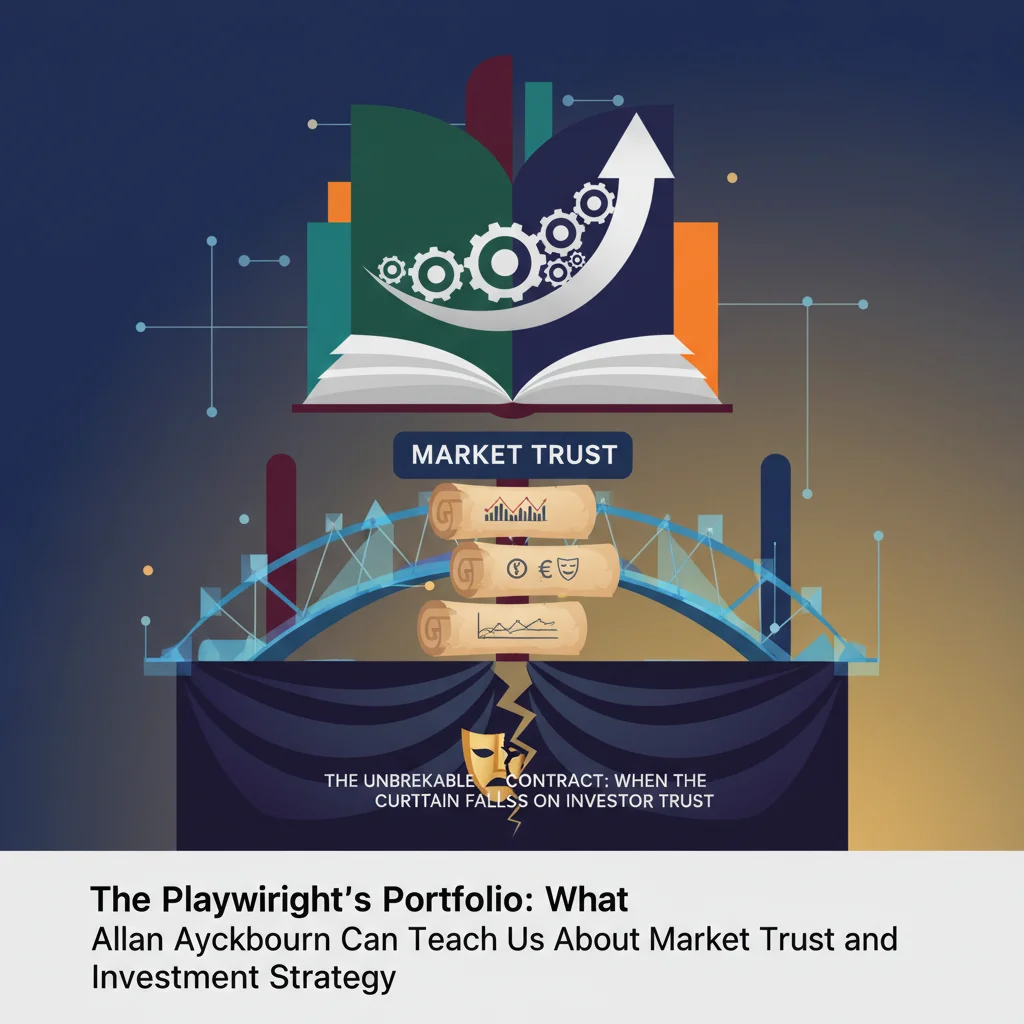
The Unbreakable Contract: When the Curtain Falls on Investor Trust
“I betrayed the audience,” confessed Alan Ayckbourn, one of the world’s most prolific and successful playwrights, in a recent interview with the Financial Times. At 86 years old, with nearly 100 plays to his name, this is a startling admission. He was referring to a single play that, in his view, failed to connect, a performance that broke an unspoken pact with the people in the seats. For leaders in finance, investing, and business, this sentiment should sound a powerful alarm. Every earnings call, every product launch, and every market strategy is a performance. The audience—be it investors, clients, or customers—buys a ticket with their capital and attention. Betraying them is not just an artistic failure; it’s a catastrophic business error.
In the unforgiving theatre of the global economy, a company’s narrative is its script. The CEO is the lead actor, and the board of directors is the production team. When the story you tell doesn’t match the reality you deliver, the audience doesn’t just stop applauding; they divest. Ayckbourn’s “betrayal” was a creative misstep. In the world of finance, a similar betrayal can wipe out billions in market capitalization, shatter a brand’s reputation, and trigger regulatory scrutiny. The core principle, however, is identical: the sanctity of the contract between the creator and the consumer, the management and the shareholder.
Crafting the Narrative: The ‘Theatre in the Round’ Approach to Markets
Ayckbourn is renowned for his mastery of “theatre in the round,” a stagecraft where the audience surrounds the actors, leaving no room for cheap tricks or false perspectives. Every angle is exposed; authenticity is paramount. This is a potent metaphor for modern business and investing. In today’s hyper-transparent market, stakeholders view your company from every possible angle—through social media, ESG reports, employee reviews, and the relentless scrutiny of financial analysts.
A successful investment thesis or business strategy, much like a well-written play, must be robust from all sides. It requires a 360-degree understanding of the landscape:
- The Characters (Market Segments): Understanding the motivations, desires, and pain points of your target audience.
- The Plot (Your Strategy): A clear, compelling narrative of where you are, where you’re going, and how you’ll get there.
- The Dialogue (Your Communication): Clear, consistent, and honest messaging across all platforms.
- The Stage (The Economic Environment): Acknowledging and adapting to the macroeconomic factors that shape your industry.
Failing to consider every angle is like staging a play for a proscenium arch when the audience is sitting on all four sides. The moment you turn your back, you lose them. This is particularly true in the fast-paced world of trading, where a single piece of overlooked information can cascade through the stock market with devastating speed.
Political Headwinds: How the 2025 Global Landscape Will Shape Your Investments
Substance vs. Spectacle: A Warning for Fintech Innovation
Ayckbourn expresses a healthy skepticism for what he calls “director’s theatre,” where a director’s flashy concept overshadows the play’s fundamental story and characters. “The danger is that the director is so clever that the play disappears up his own production,” he notes in the FT interview. This is a direct parallel to a persistent disease in the tech and finance sectors: innovation for innovation’s sake.
How many fintech solutions are merely “director’s theatre”—a dazzling interface or a complex algorithm that solves a non-existent problem? How many corporate blockchain projects are more about generating buzzwords for an annual report than creating tangible value? True, sustainable innovation, much like great theatre, must be rooted in substance. It must serve the story—the core mission of the business and the fundamental needs of the customer.
We can draw a clear distinction between these two approaches, which is critical for anyone evaluating a new technology, company, or investment opportunity.
| Principle | The Ayckbourn Model (Substance-Driven) | The “Director’s Theatre” Model (Spectacle-Driven) |
|---|---|---|
| Core Focus | Solving a fundamental human/customer problem. The story is paramount. | Showcasing technological capability. The production is paramount. |
| Financial Parallel | A fintech app that genuinely simplifies banking for the underserved. | A complex trading platform with features nobody uses. |
| Metric of Success | Deep user engagement and long-term value creation. | Media mentions, vanity metrics, and short-term hype. |
| Investor Takeaway | Look for companies with a clear, problem-solving narrative. | Be wary of buzzword-heavy pitches that lack a clear use case. |
Before investing in the latest financial technology, ask the Ayckbourn question: Does this serve the play, or is the play disappearing up the production?
The Epstein Files: Unpacking the Financial Fallout and the High Cost of Complicity
The Economics of Longevity: Building a Century of Hits
Perhaps the most astounding fact about Ayckbourn is his sheer longevity and consistency. Writing close to 100 plays is not an accident; it’s the result of a disciplined process and an unwavering focus on his audience’s evolving tastes and anxieties. His plays have mirrored the subtle shifts in the social and economic fabric for over 60 years. He didn’t just have one hit; he built a portfolio of work that has generated returns decade after decade.
This is the ultimate goal for any long-term investor or business leader. It’s not about one spectacular quarter or one viral product. It’s about building an institution that can adapt, innovate, and perform consistently through changing market cycles. This requires a deep understanding of the underlying economics of your industry and a commitment to a core mission that transcends short-term fads.
The pressure for quarterly results can often lead to “director’s theatre”—flashy, short-term tactics that look good but undermine the long-term plot. Ayckbourn’s career is a testament to the power of compound creativity, of sticking to a fundamental principle—serving the audience—and executing it relentlessly. It’s a strategy that builds an unshakeable foundation of trust, ensuring that even if one play is a miss, the audience will always come back for the next opening night.
Beyond the Headlines: The Economic Resonance of a National Tragedy in Australia
Final Act: The Currency of Trust
Alan Ayckbourn, a master of the stage, offers a profound lesson for the masters of the market. The most valuable asset in any portfolio is not a stock, a bond, or a piece of code. It is trust. It is the belief held by your audience—your investors, customers, and employees—that the story you are telling is true, that the performance is authentic, and that you will not betray their faith. In an increasingly complex and automated world, the principles of “true theatre”—a clear narrative, authentic connection, and unwavering respect for the audience—are not just artistic ideals. They are the fundamental drivers of sustainable economic value.