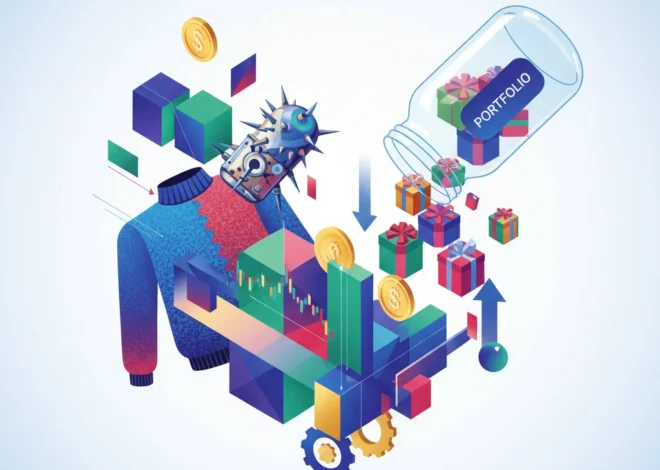
The Unwanted Gift Economy: A Financial Guide to Post-Holiday Asset Recovery
The Hidden Economic Impact of a Bad Christmas Gift
The holiday season concludes, leaving behind a trail of festive cheer, cherished memories, and for many, a pile of well-intentioned but unwanted gifts. While the initial awkwardness of receiving a gift that misses the mark is a familiar social hurdle, the economic implications are far more significant than most realize. In the world of finance and economics, an unwanted present isn’t just clutter; it’s a textbook example of an underperforming asset and a contributor to a phenomenon known as “deadweight loss.”
Each year, consumers spend billions on gifts, yet a significant portion of that expenditure fails to generate equivalent value for the recipient. Economist Joel Waldfogel, in his research, famously highlighted this inefficiency, estimating that gift-giving destroys roughly 10% to 33% of the value of the items given. According to a 2021 survey, Americans spent an estimated $15.2 billion on unwanted gifts. This value gap represents a massive misallocation of capital within the consumer economy—money that could have been invested, saved, or spent on goods and services with higher personal utility.
For investors, finance professionals, and business leaders, understanding this microeconomic dynamic offers a powerful lens through which to view consumer behavior, market efficiency, and the burgeoning circular economy. The decision of what to do with an unwanted gift is, in essence, a problem of asset management. It requires a strategic approach to recover value, mitigate loss, and redeploy capital—or the item itself—in a more efficient manner. This article explores a financial framework for managing these post-holiday assets, transforming potential liabilities into opportunities for financial gain, social good, and economic efficiency.
A Portfolio Approach to Unwanted Assets
Instead of viewing that ill-fitting sweater or redundant kitchen gadget as a problem, consider it an asset in a diversified portfolio. Your goal is to choose the best strategy to maximize its return, whether that return is financial, social, or relational. Each option carries its own risk profile, time commitment, and potential yield, much like instruments in the stock market.
Below is a breakdown of the primary strategies for dealing with unwanted items, framed as an investment portfolio decision.
| Strategy (Asset Class) | Financial Return | Risk Level | Primary Benefit | Economic Parallel |
|---|---|---|---|---|
| Return/Exchange | High (100% of purchase price) | Low | Capital Preservation | Cash / Money Market Funds |
| Sell Online | Variable (50-80% of retail) | Medium | Liquidity & Cash Flow | Stock Market Trading |
| Regift | Indirect / Social | High (Reputational) | Social Capital Investment | Relationship Banking / Networking |
| Donate | Low (Tax Deduction) | Low | ESG / Impact Investing | Socially Responsible Investing (SRI) |
1. Capital Preservation: The Return and Exchange Strategy
Returning an item for a full refund or store credit is the financial equivalent of moving an investment into cash. It is the lowest-risk option, guaranteeing the preservation of the asset’s initial capital value. This strategy is ideal when the original purchase information is available (gift receipt) and the primary goal is to recover 100% of the monetary value. From an economic standpoint, this is the most efficient outcome for the individual, as it allows them to reallocate the exact capital amount towards a purchase with maximum personal utility, completely eliminating the deadweight loss.
2. Market Trading: Selling on the Secondary Market
Selling an unwanted gift on platforms like eBay, Vinted, or Facebook Marketplace is akin to trading on the stock market. You are taking an asset and seeking to liquidate it for cash in a dynamic, open market. The “price” you receive is subject to supply and demand, the asset’s condition (mint condition, in-box items fetch a premium), and market liquidity for that specific item. This approach requires more effort—photography, listing creation, shipping—but offers a direct monetary return. The rise of sophisticated resale platforms, powered by advanced financial technology, has made this process more seamless than ever, creating a robust secondary market that significantly reduces overall economic waste. These platforms act as the exchanges, providing the infrastructure for price discovery and secure transactions.
The End of an Era: Why the Bank of Japan's Historic Rate Hike Will Ripple Across the Globe
3. Strategic Re-Deployment: The Art of Regifting
Regifting, when executed thoughtfully, is a strategic deployment of an asset to build social capital. Instead of a financial return, the yield is relational. As noted by the BBC, the key to successful regifting is ensuring the item is genuinely suited to the new recipient. This is not about offloading a problem but about re-routing an asset to a place where its utility is maximized. The “risk” here is purely reputational; getting caught can damage a relationship. Therefore, meticulous tracking and consideration are paramount. In the world of banking and finance, this is analogous to relationship management, where strategic, non-monetary gestures are used to strengthen long-term partnerships.
4. Impact Investing: The Donation Option
Donating an unwanted item to a charity is a form of impact investing. The primary return is not financial but social and environmental. By giving the item to a charitable organization, you contribute to the circular economy, reduce landfill waste, and support a cause. For high-value items, there can be a direct financial benefit in the form of a tax deduction, which requires proper documentation and appraisal. This aligns perfectly with the principles of ESG (Environmental, Social, and Governance) investing, where investors seek to generate positive societal impact alongside financial returns. The decision to donate reflects a preference for a different kind of value—one that contributes to the community and aligns with personal values.
The Fintech Revolution in the Secondary Market
The efficiency of the modern secondary market is a testament to the power of financial technology. These platforms are not merely digital flea markets; they are complex financial ecosystems that have solved critical problems of trust, payment, and logistics that previously hindered peer-to-peer commerce.
Consider the layers of fintech involved:
- Payment Processing: Secure, integrated payment gateways (like PayPal, Stripe) protect both buyer and seller from fraud.
- Escrow Services: Many platforms hold the buyer’s payment in escrow, releasing it to the seller only after the item is received and verified, drastically reducing transaction risk.
- Authentication & Verification: For luxury goods, platforms like TheRealReal and StockX employ experts and technology to authenticate items, creating a trusted marketplace that commands higher prices. This service is a direct parallel to the due diligence and research functions in investment banking.
- Data Analytics: These platforms use vast amounts of data to provide sellers with pricing guidance, predict market trends, and optimize listings, much like how trading algorithms operate in the stock market.
The potential for blockchain integration could push this even further. A non-fungible token (NFT) could be minted for a physical high-value item, creating an immutable record of its ownership and service history. This would eliminate counterfeits, streamline authentication, and make these physical assets as easily tradable as any digital asset on a modern trading platform.
The Great Christmas Migration: What Holiday Travel Reveals About the Economy, Investing, and Fintech
Comparing Resale Platforms: A Quick Guide
Choosing the right platform to sell your “asset” is crucial for maximizing your return. Here is a comparison of some leading options in the secondary market ecosystem.
| Platform | Best For | Fee Structure | Key Feature |
|---|---|---|---|
| eBay | Electronics, collectibles, general merchandise | ~13% of final sale price | Global reach, auction and ‘Buy It Now’ formats |
| Vinted | Clothing, shoes, accessories | No selling fees (buyer pays a protection fee) | Community-focused, simple listing process |
| Facebook Marketplace | Furniture, local goods, items you don’t want to ship | No fees for local pickup | Leverages existing social network, ideal for local transactions |
| TheRealReal / StockX | Luxury goods, designer fashion, sneakers | Tiered commission (can be up to 40%+) | Rigorous authentication process builds trust and allows for premium pricing |
The growth of these platforms is a direct market response to the economic inefficiency of unwanted items. A report by ThredUp projects the global secondhand market will nearly double by 2027, reaching $350 billion. This isn’t just about clearing clutter; it’s a fundamental restructuring of the retail economy towards greater efficiency and sustainability.
AI & The Economy: A Warning from the Bank of England, or an Unprecedented Opportunity?
Conclusion: From Deadweight Loss to Economic Opportunity
An unwanted Christmas present is more than a social inconvenience; it is a tangible economic signal. It represents a misallocation of resources that, when aggregated across millions of households, has a measurable impact on the economy. However, by applying principles from finance, investing, and economics, we can transform this deadweight loss into a dynamic opportunity.
By viewing each unwanted item as an asset in a portfolio, individuals can make strategic decisions to recover value, whether through the capital preservation of a return, the liquidity of a sale, the social capital of a regift, or the societal impact of a donation. The rise of sophisticated fintech platforms has created efficient, trustworthy secondary markets that empower consumers to participate in the circular economy, reducing waste and unlocking billions in latent value.
For the finance professional, this entire ecosystem is a powerful case study in market creation, risk management, and the unstoppable trend towards a more sustainable and technologically integrated economy. The next time you receive a gift that doesn’t quite fit, don’t just see it as a problem to be solved. See it as an asset waiting for a sound financial strategy.

Related Posts
The Circular Economy’s Hidden Engine: How Second-Hand Fashion is Reshaping Global Finance

The Sleepless Leader: Why ‘Hustle Culture’ is a High-Risk Investment in Today’s Economy