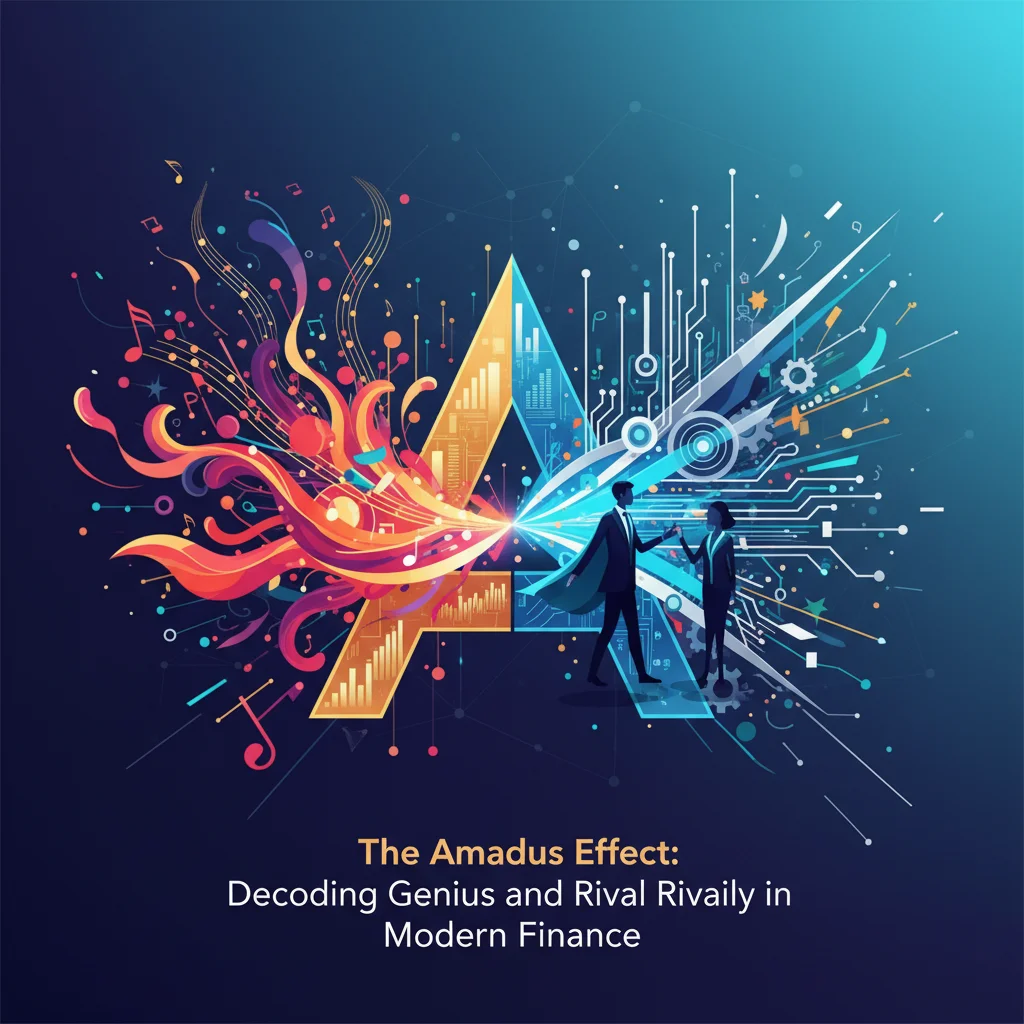
The Amadeus Effect: Decoding Genius and Rivalry in Modern Finance
In the world of classical music, few stories are as compelling as the rivalry depicted in Miloš Forman’s 1984 film, Amadeus. The narrative pits the divinely gifted, albeit vulgar, Wolfgang Amadeus Mozart against the diligent, respected, and politically savvy court composer, Antonio Salieri. While the film’s historical accuracy is a matter of debate, its central theme resonates far beyond the gilded halls of 18th-century Vienna, as noted in a recent travel piece about the film’s production (source). This dynamic of disruptive genius versus established mastery is a powerful metaphor for the conflicts and transformations happening today in finance, investing, and the global economy.
Every day, on the trading floors and in the boardrooms that define our financial world, a similar drama unfolds. We see the “Mozarts”—the brilliant, rule-breaking innovators of fintech and blockchain—challenging the “Salieris,” the established titans of traditional banking and finance. For investors, business leaders, and finance professionals, understanding this dynamic is not merely an academic exercise; it is crucial for navigating the complexities of the modern stock market and identifying true, sustainable value.
The “Mozarts” of Financial Technology: Genius in Disruption
The modern Mozart is not a composer but a coder, an entrepreneur, a visionary who sees the financial world not as it is, but as it could be. These are the founders of fintech startups, the architects of decentralized finance (DeFi) platforms, and the pioneers of blockchain technology. Like Mozart, their creations can seem erratic, unconventional, and even offensive to the established order. They often prioritize speed and innovation over the cautious, regulation-heavy processes of legacy institutions.
Consider the rise of financial technology. A decade ago, international money transfers were the slow and expensive domain of established banks. Then came companies like Wise (formerly TransferWise), which used a peer-to-peer model to slash fees and increase transparency. This was a Mozart-like move—a simple, elegant solution that fundamentally challenged a core profit center for the Salieris of the banking world. Similarly, the advent of blockchain technology and cryptocurrencies represents a radical reimagining of the very concepts of currency, ownership, and trust, threatening to make traditional intermediaries obsolete.
The appeal of these innovators is immense. They promise exponential growth, market disruption, and the kind of returns that can define a portfolio. The global fintech market is a testament to this, projected to reach a value of over $600 billion by 2028, growing at a compound annual growth rate (CAGR) of over 17% (source). Investing in these “Mozarts” is a bet on genius and the future.
Dawn of a New Era: Japan's Historic Interest Rate Hike and What It Means for the Global Economy
The Enduring Power of the “Salieris”: Mastery in Stability
While Mozart’s genius is undeniable, it’s crucial to remember that in his own time, Salieri was immensely successful. He was the court composer, a respected teacher, and a wealthy, influential figure. He understood the rules of the game and played them masterfully. The same is true for the established giants of the financial industry.
The world’s largest banks, investment houses, and insurance companies are the Salieris of our time. They possess immense advantages:
- Regulatory Moats: They have navigated and, in some cases, shaped the complex web of financial regulations, creating significant barriers to entry for newcomers.
- Brand Trust: Decades or even centuries of operation have built a reservoir of public trust that startups struggle to replicate.
- Scale and Resources: Their vast capital reserves, global infrastructure, and extensive customer bases allow them to withstand economic downturns and invest heavily in new technology when they choose to.
These institutions represent stability in the often-volatile stock market. They offer reliable dividends, predictable (if slower) growth, and a bulwark against economic uncertainty. While a fintech startup might promise a 10x return, a blue-chip banking stock provides a dependable component of a diversified investment strategy. To dismiss them as dinosaurs is to misunderstand the deep-seated power of incumbency and the slow, deliberate pace of change in the global economy.
The Investor’s Dilemma: Composing a Balanced Portfolio
The central conflict for any investor is how to balance the portfolio between the disruptive potential of the Mozarts and the reliable strength of the Salieris. This is not just a matter of risk tolerance; it’s a strategic decision about how to participate in the evolving story of the economy. The theory of disruptive innovation, famously articulated by Clayton M. Christensen, explains how smaller companies with fewer resources can successfully challenge established incumbent businesses (source). This framework provides a valuable lens for assessing these opportunities.
To illustrate this choice, let’s compare the typical investment profiles of a high-growth fintech “Mozart” and an established banking “Salieri.”
| Characteristic | “Mozart” (e.g., Emerging Fintech) | “Salieri” (e.g., Global Bank) |
|---|---|---|
| Growth Potential | High to exponential; potential for 10x+ returns | Low to moderate; typically single-digit growth |
| Risk Profile | Very high; high volatility and risk of failure | Low; low volatility, considered a safer asset |
| Valuation Basis | Future potential, user growth, market disruption | Current earnings, book value, dividend yield |
| Dividends | Rarely pays dividends; profits are reinvested | Often pays a consistent, reliable dividend |
| Role in Portfolio | Aggressive growth, speculative allocation | Core holding, income generation, stability |
The End of an Era: Why the Bank of Japan's Historic Rate Hike Will Ripple Across the Globe
A well-composed portfolio, much like a great symphony, requires both soaring melodies and a strong, foundational rhythm. A strategy that exclusively chases high-risk “Mozarts” can be prone to spectacular crashes, while one that only holds “Salieris” may miss out on the most significant wealth-creation opportunities of a generation.
Beyond the Rivalry: The Symphony of a Modern Economy
The ultimate lesson from the Amadeus metaphor may be that the rivalry is not a zero-sum game. In the modern economy, the lines between innovator and incumbent are blurring. The most successful “Salieris” are not fighting the “Mozarts”—they are collaborating with them, acquiring them, and learning from them.
We see this in the world of banking and financial technology every day. Major banks are launching their own venture capital arms to invest in fintech startups. They are integrating blockchain for more efficient back-office operations and partnering with nimble payment processors to improve customer experience. This is not the tragic rivalry of the film, but a pragmatic synergy. The established players provide the scale, customer base, and regulatory legitimacy, while the innovators provide the cutting-edge technology and a fresh perspective on what’s possible.
This evolving synthesis is creating a more complex and dynamic financial ecosystem. The future of finance will not be a victory for either Mozart or Salieri, but a grander, more intricate composition that incorporates elements from both. For those involved in finance, trading, and economics, the key is to look beyond the simplistic narrative of rivalry and understand the deeper currents of integration and co-evolution.
The £800m Pension Puzzle: Why Are UK MPs Avoiding the Stock Market?
Ultimately, the story of Amadeus serves as a timeless reminder for the modern investor. True, lasting value is often misunderstood in its own time. The greatest challenge—and the greatest opportunity—lies in developing the vision to distinguish the fleeting noise of the market from the enduring music of genuine innovation. It requires looking past the quarterly earnings reports and the daily stock market fluctuations to identify the companies, technologies, and ideas that, like Mozart’s compositions, will fundamentally reshape the world for generations to come.

Related Posts

Beyond the Bargains: Decoding the Economic Signals of a Record-Breaking Boxing Day

The Shelter Deficit: Poland’s Military Buildup and the Hidden Economic Gamble