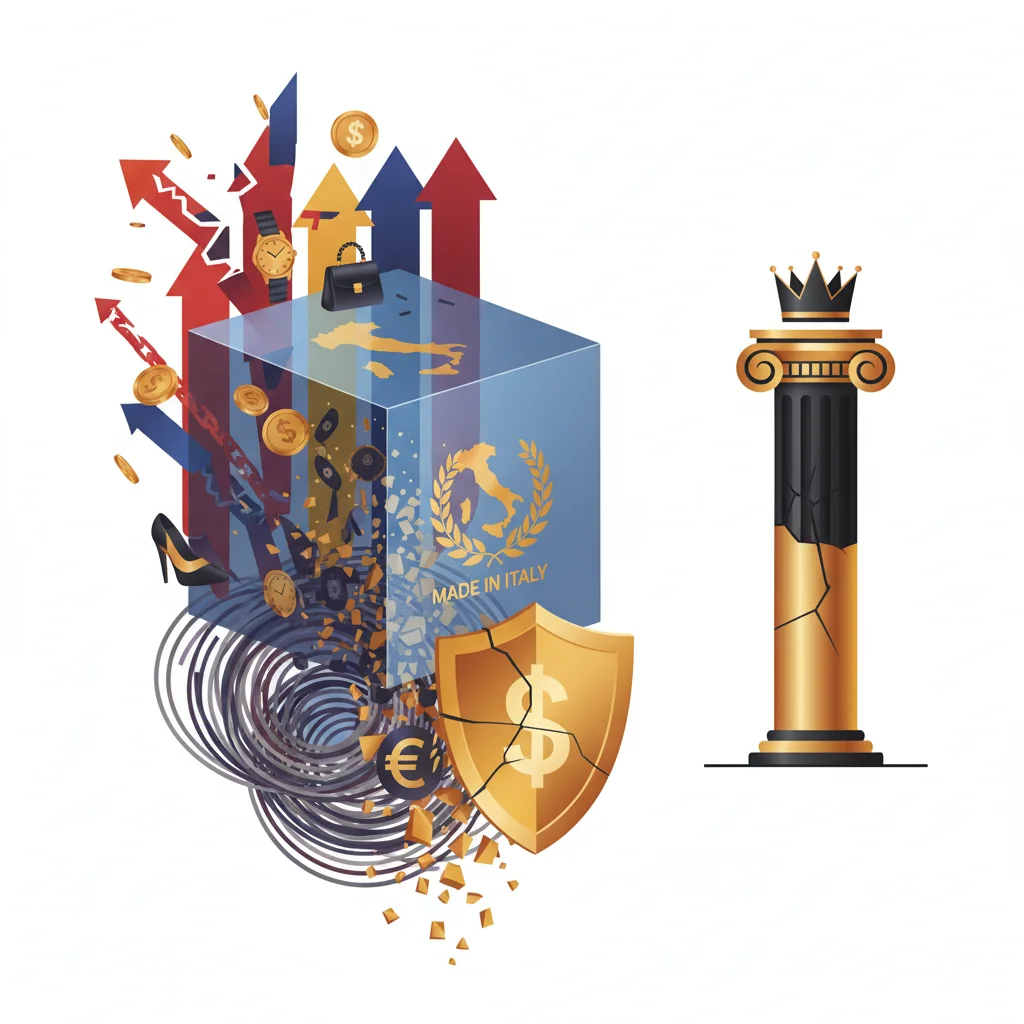
The Price of Prestige: Unpacking the Financial Risk in Luxury’s ‘Made in Italy’ Scandal
The words “Made in Italy” evoke an immediate sense of quality, heritage, and unparalleled craftsmanship. For decades, this simple label has been a powerful driver of economic value, allowing luxury conglomerates to command premium prices and rewarding investors with impressive returns. It’s a cornerstone of the global luxury stock market, a symbol of European economic prowess. But recent events from the heart of Milan are threatening to unravel this carefully stitched narrative, exposing a dark underbelly that poses significant questions for investors, consumers, and the entire financial ecosystem supporting the €80 billion industry.
Italian authorities have launched a sweeping crackdown, pulling back the curtain on a system of alleged labor exploitation hidden deep within the supply chains of some of the world’s most revered fashion houses. What they’ve found is a stark contrast to the glamour of the runway: a shadowy network of subcontractors and illegal gangmasters allegedly exploiting vulnerable workers to produce handbags and accessories for as little as a few euros per hour. This isn’t just a moral crisis; it’s a material risk that could have profound implications for corporate valuations, the Italian economy, and the future of ESG investing.
The Cracks in the Facade: From Runway to Raids
The investigation, spearheaded by Milan’s public prosecutor’s office, has sent shockwaves through the industry. In April, a company manufacturing handbags for Giorgio Armani was placed under special administration after investigators discovered it was using Chinese-owned subcontractors that severely exploited workers. These laborers were reportedly working up to 14 hours a day, sometimes on holidays, in conditions described as “degrading” and for wages as low as €2 to €3 per hour. This followed a similar move against a Dior supplier earlier in the year.
The core of the issue lies in a multi-layered and opaque system of subcontracting. Luxury brands often outsource production to primary Italian suppliers. These suppliers, squeezed by pressure to lower costs, then further subcontract the work to smaller, often unauthorized workshops. At the bottom of this chain, investigators have uncovered what is known locally as caporalato—an illegal system of labor brokerage run by gangmasters who prey on undocumented migrants, creating conditions tantamount to modern slavery.
To illustrate the staggering disparity in this value chain, consider the economics of a single luxury handbag:
| Production Stage | Cost / Price | Recipient |
|---|---|---|
| Payment to exploited worker (per hour) | €2 – €3 | Sub-subcontracted workshop laborer |
| Price paid to primary supplier by brand (per bag) | €93 | Main Italian Manufacturer |
| Price paid to subcontractor by supplier (per bag) | Approximately €30-€50 (estimated) | Unauthorized Workshop |
| Final retail price of the handbag | €1,800 | Luxury Brand / End Consumer |
Data points for supplier and retail price are based on figures cited in the Armani case by Milan prosecutors.
This model allows brands to legally distance themselves from the abuses while benefiting from the drastically reduced production costs. However, as prosecutors are now arguing, this willful ignorance is no longer a viable defense, legally or financially.
The £800m Pension Puzzle: Why Are UK MPs Avoiding the Stock Market?
From Reputational Risk to Balance Sheet Bomb
For finance professionals and investors, this scandal transcends headlines about fashion. It is a textbook case of Environmental, Social, and Governance (ESG) risk manifesting as a direct threat to shareholder value. The “S” in ESG—the social component encompassing labor practices and supply chain ethics—has often been the most difficult to quantify. This investigation is making it painfully tangible.
The primary threat is reputational damage, a powerful and unpredictable force on the stock market. Luxury brands are not just selling products; they are selling a dream, an identity built on exclusivity and uncompromising quality. When that image is tarnished by associations with exploitation, the brand’s equity erodes. This can lead to consumer boycotts, loss of market share, and a direct hit to the stock price. The very premium that “Made in Italy” commands is at risk, jeopardizing the high-margin business model that has made companies like LVMH and Kering darlings of the investment world.
Beyond reputation, there are severe operational and financial consequences. The appointment of special administrators can disrupt supply chains, leading to production delays and increased costs. Potential fines and legal penalties can run into the millions. Furthermore, the cost of rectifying the problem—through rigorous auditing, bringing production in-house, or paying fair wages—will inevitably squeeze profit margins. For analysts and those involved in trading these stocks, these are new, critical variables that must be factored into every valuation model.
The Macroeconomic Tremors and a Technological Solution
The implications extend beyond individual companies to the entire Italian economy. The luxury goods sector is a source of national pride and a vital economic engine, representing a significant portion of Italy’s GDP and exports. A systemic tainting of the “Made in Italy” label could have devastating macroeconomic consequences, impacting everything from employment to the nation’s balance of trade. The country’s banking sector, which finances many of these manufacturing businesses, is also exposed to the fallout.
So, where do we go from here? The knee-jerk reaction might be to demand more regulation, but the real solution may lie in innovation, particularly in financial technology. The core problem is a lack of transparency. This is where technologies like blockchain offer a compelling path forward.
Imagine a luxury handbag with a unique digital identity on a blockchain. At every stage of production—from the tannery that processed the leather to the workshop that stitched the seams—a transaction is recorded on an immutable ledger. This would create an unforgeable record of the product’s journey, accessible to brands, auditors, and even consumers via a QR code. This level of transparency would make it nearly impossible to hide the involvement of unauthorized, exploitative workshops. This isn’t science fiction; it’s a practical application of fintech that could revolutionize supply chain management and restore trust. Leading financial institutions are already exploring blockchain for trade finance; applying it to physical supply chains is the logical next step. Dawn of a New Era: Japan's Historic Interest Rate Hike and What It Means for the Global Economy
A New Chapter for Luxury Investing
The raids in Italy are a watershed moment. They signal the end of an era where luxury brands could plausibly claim ignorance about the lowest rungs of their supply ladders. The intersection of prosecutorial rigor, consumer activism, and ESG-focused investing has created a powerful force for change.
For business leaders, the mandate is clear: invest in deep, forensic-level supply chain mapping and control. For those in finance and economics, the methods for valuing these global giants must evolve. An honest assessment of supply chain risk is no longer optional; it is fundamental to sound financial analysis.
The “Made in Italy” label is not just unstitched; it is being fundamentally re-examined. The companies that embrace this new reality, investing in transparency and ethical production, will not only mitigate risk but will also build a more resilient and valuable brand for the future. Those that don’t may find that the high price of their products is ultimately paid by their shareholders. Unlocking India's Trillion-Dollar Insurance Market: A Deep Dive into the New 100% Foreign Ownership Rules