Unraveling a Legacy: The Financial Knot Strangling Iran’s Persian Carpet Trade
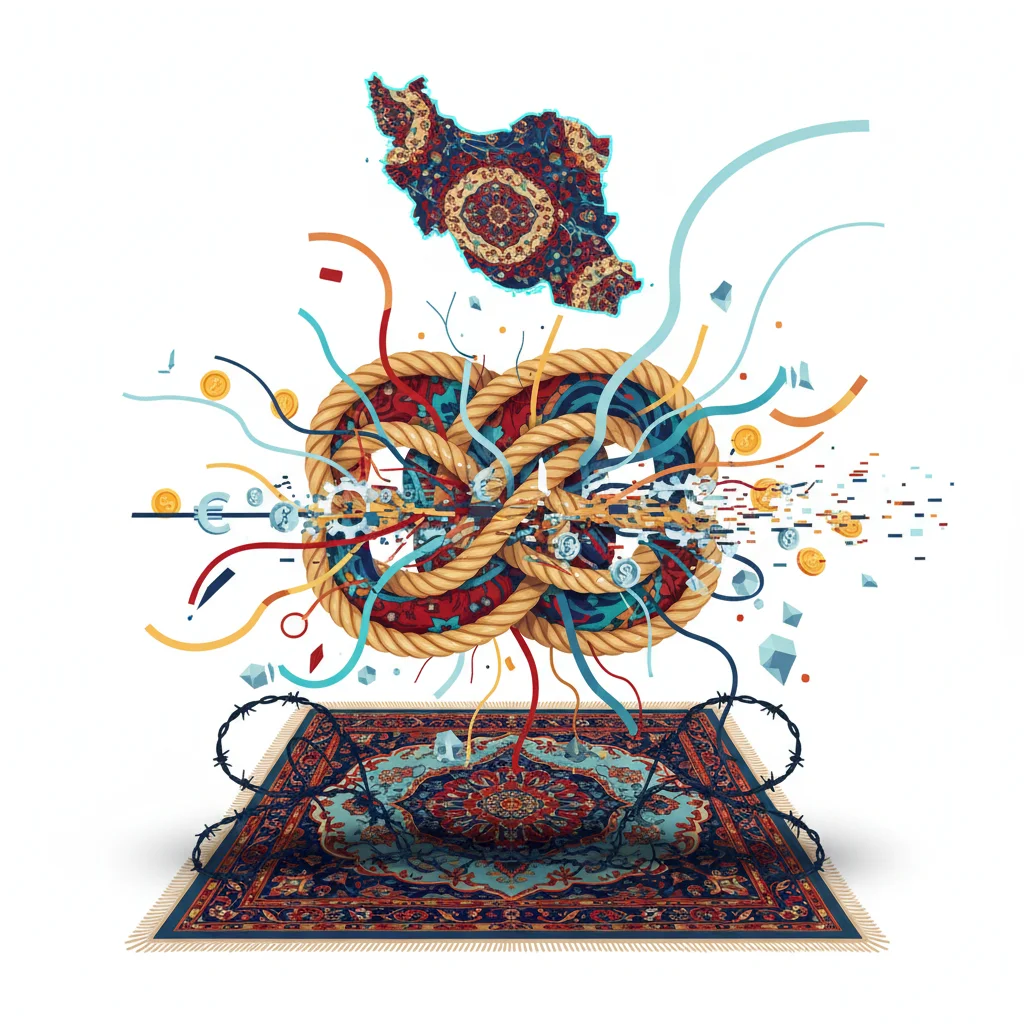
For centuries, the Persian carpet has been more than just a floor covering. It is a canvas of history, a testament to artistry passed down through generations, and a symbol of cultural wealth. Each knot tells a story, each pattern a piece of a nation’s soul. Yet today, this ancient craft is being systematically unraveled, not by changing tastes or a lack of demand, but by the invisible, yet immensely powerful, threads of global finance and geopolitics.
The intricate world of handmade Iranian rugs, a cornerstone of the nation’s non-oil economy, is facing an existential threat. Western sanctions, primarily driven by the United States, have woven a complex web of financial restrictions that are slowly starving the industry. What was once a vibrant artery of global trade, with exports valued in the hundreds of millions of dollars, has dwindled to a historic low. This decline is not merely a line item on a trade balance sheet; it represents the potential extinction of a priceless cultural heritage and a cautionary tale for investors and business leaders navigating the turbulent waters of the modern global economy.
A Legacy Under Threat: The Stark Numbers
The story of the Persian carpet is one of unparalleled artistic achievement. For millennia, these rugs have been coveted by emperors, collectors, and homeowners alike, representing the pinnacle of craftsmanship. This cultural capital translated into significant economic value. However, the recent data paints a grim picture of an industry in freefall. The intricate dance of looms, once a primary source of income for millions of Iranians, is slowing to a devastating halt.
The decline in export revenue is staggering, illustrating the potent impact of financial and trade restrictions. Let’s look at the data to understand the scale of this crisis.
| Time Period | Annual Export Value (USD) |
|---|---|
| Late 1990s | ~$2 Billion (Peak) |
| A Decade Ago | ~$700 Million (source) |
| Recent Fiscal Year | $49 Million (source) |
This collapse from a multi-billion dollar industry to less than $50 million in exports is a direct consequence of a financial blockade. “The US sanctions have been the main cause of the sharp decline in our exports,” lamented one carpet exporter in an interview, highlighting that the restrictions have effectively closed off their primary markets in the US, Europe, and Japan (source). The numbers reveal a story of an industry severed from its global customer base.
The £800m Pension Puzzle: Why Are UK MPs Avoiding the Stock Market?
The Sanctions Web: More Than Just a Trade Barrier
To understand the crisis, one must look beyond simple trade embargoes and into the plumbing of the global financial system. The issue isn’t that it’s illegal to ship a carpet; the issue is that it’s nearly impossible to get paid for it through legitimate channels. US secondary sanctions have created a “chilling effect” across the international banking sector.
Here’s how it works:
- Exclusion from Global Banking: Iranian banks are largely disconnected from the SWIFT messaging system, the main network for international financial transactions. This makes direct bank-to-bank transfers for trade incredibly difficult.
- Fear of Penalties: Non-US banks and financial institutions that engage in transactions with Iranian entities—even for non-sanctioned goods—risk massive fines and losing access to the US dollar system. For any major bank, this risk is too great to bear for a relatively small transaction involving a rug.
- Insurance and Shipping Hurdles: The sanctions also affect ancillary services. Securing insurance for shipments and finding logistics companies willing to handle goods originating from Iran has become a significant operational nightmare.
This financial isolation demonstrates the profound power that control over the infrastructure of global trading and finance wields. It effectively transforms a cultural artifact into a high-risk, toxic asset for any business operating within the conventional global financial framework.
An Investor’s Conundrum: A Tangled Asset Class
From an investing perspective, the situation is deeply complex. Persian carpets, particularly antique and high-quality pieces, have long been considered a tangible alternative asset, much like fine art, wine, or classic cars. They are stores of value that can appreciate over time and act as a hedge against inflation. Sanctions, in a strange way, introduce a new dynamic to this market.
On one hand, the severe restriction on new supply from Iran could theoretically increase the value of existing, high-quality carpets already in circulation outside the country. Scarcity often drives up prices. An investor holding a portfolio of fine Persian rugs might see their value increase due to the inability of new inventory to enter the market.
However, the long-term outlook is far more bearish. The sanctions are destroying the very ecosystem that gives these assets their value:
- Erosion of Skill: As weavers leave the trade, the generational knowledge required to produce master-level carpets is lost. This jeopardizes the future quality and supply of investment-grade pieces.
- Brand Damage: The constant association with sanctions and geopolitical turmoil can tarnish the “brand” of the Persian carpet, making it less attractive to a new generation of collectors and investors who may prefer less complicated assets.
- Market Fragmentation: The global market is now split. Carpets within Iran have seen their prices plummet in dollar terms, while those outside are subject to the scarcity premium. This creates a dysfunctional and unpredictable market, a red flag for any serious investor.
This situation serves as a stark reminder for those who track the stock market and other financial instruments: geopolitical risk is not an abstract concept. It has tangible, real-world impacts that can decimate entire industries and asset classes that seem far removed from the headlines.
Dawn of a New Era: Japan's Historic Interest Rate Hike and What It Means for the Global Economy
The Domestic Economic Fallout
The collapse of the carpet export market is a significant blow to Iran’s broader economic ambitions. For decades, the nation has sought to diversify its economy away from a heavy reliance on oil and gas exports. The handmade carpet industry was a pillar of this strategy—a major source of non-oil export revenue and, crucially, a massive employer, particularly in rural areas.
With the international market largely inaccessible, the industry has been forced to turn inward. While there is a domestic market for carpets, it cannot absorb the sheer volume of production, nor can it offer the prices commanded internationally. This has led to a vicious cycle of falling wages, unemployment, and a new generation of Iranians shunning the loom for more stable work. The intricate skills of weaving, dyeing, and designing, honed over 2,500 years, are at risk of vanishing within a single generation.
Competitors in countries like India, Pakistan, and China, who often replicate Persian designs, are eagerly filling the void left in the global market. From a pure economics standpoint, this is a classic case of market dynamics at play, but it comes at the cost of authenticity and cultural integrity.
The End of an Era: Why the Bank of Japan's Historic Rate Hike Will Ripple Across the Globe
Conclusion: The High Price of Financial Warfare
The story of the Persian carpet is more than just an economic report; it is a cultural tragedy unfolding in real-time, accelerated by the levers of international finance. It demonstrates with painful clarity that in our interconnected world, financial sanctions can have consequences that reverberate far beyond their intended targets, silencing looms and erasing legacies.
For finance professionals, investors, and business leaders, this is a crucial lesson in the pervasive nature of geopolitical risk. It shows how the architecture of the global banking and trading system can be weaponized, creating unforeseen challenges and destroying value in unexpected places. As the threads of this ancient craft continue to fray, it begs a critical question: What is the true cost of economic sanctions, and is the potential loss of a world cultural treasure a price we are willing to pay?