Mind the Gap: What London Underground Etiquette Reveals About Today’s Economy
In a recent letter to the Financial Times, a reader posed a seemingly simple question that resonates far beyond the platforms of the London Underground: “What happened to London Underground etiquette?” This observation from a London resident about the fraying of unwritten social rules on the Tube serves as a powerful and unexpectedly accurate metaphor for the current state of our global economy and financial markets. The silent agreements that once governed our daily commute—stand on the right, let passengers off before you board, don’t block the doors—were the grease in the wheels of a complex system, ensuring efficiency and mutual respect.
Similarly, the world of finance, investing, and economics has long been governed by its own set of unwritten rules: a belief in long-term value, a degree of fiduciary responsibility, and a shared understanding that systemic stability benefits everyone. Yet, in an era of high-frequency trading, decentralized finance, and meme-stock mania, it feels as though this traditional etiquette is being trampled. The rush for short-term gains often overshadows the principles of sustainable growth, leaving many investors and business leaders wondering if the fundamental rules of the game have been permanently altered. This isn’t just about politeness; it’s about the very architecture of trust that underpins our economic system.
The Escalator Rule: Systemic Stability vs. High-Frequency Gains
The first and most sacred rule of the Tube is “stand on the right, walk on the left.” This simple principle creates an efficient, dual-speed system for everyone. Those who are patient and steady (standing) and those in a hurry (walking) can coexist. This is a perfect analogy for a healthy stock market, where long-term, patient investors should be able to coexist with more active, short-term traders.
However, the modern market often feels like an escalator where algorithms and high-frequency traders (HFT) are sprinting down both sides, creating turbulence for everyone else. HFT accounts for a significant portion of all equity trading volume, with some estimates placing it over 50% in U.S. markets (source). While proponents argue HFT adds liquidity, critics contend it introduces systemic risk and prioritizes speed over substance. This algorithmic “sprinting” can lead to flash crashes and disconnects market prices from underlying corporate value, leaving the “stand on the right” long-term investor feeling jostled and insecure. The etiquette of patient capital accumulation is being eroded by a culture that values millisecond advantages over decade-long growth strategies.
This breakdown mirrors a broader shift in corporate and banking culture. The pressure for quarterly earnings reports often forces business leaders into short-term thinking, sacrificing long-term R&D, employee development, and sustainable practices for a temporary stock price bump. The “walk on the left” mentality has become the only mentality, creating a frantic, unstable environment for the entire economy.
The Hidden Titans: Why Smart Money is Pouring into China's AI Infrastructure
Crowding the Doors: The Perils of Herd Mentality and Illiquidity
Every regular commuter has experienced it: the train arrives, and a crowd immediately swarms the doors, preventing anyone from getting off. It’s an inefficient, frustrating dance that delays everyone. This behavior is a direct parallel to the herd mentality that can seize financial markets, particularly in the age of social media-driven investing.
Events like the GameStop saga, fueled by retail investors on platforms like Reddit, showed how a crowd can rush into a single asset, blocking the “doors” for rational price discovery. While celebrated by some as a democratization of finance, it also highlighted immense volatility and the risk of massive, sudden outflows. When everyone tries to exit through the same small door at once, the result is a liquidity crisis. This isn’t just a retail phenomenon; institutional investors are equally prone to herd behavior, whether it’s piling into popular tech stocks or rushing for the exits during a market downturn. This “crowding” prevents the orderly flow of capital, creating bottlenecks that can destabilize the entire system.
To better understand this shift, consider the foundational principles that are being challenged:
| Traditional Market “Etiquette” | Modern Market “Reality” |
|---|---|
| Value Investing: Focus on a company’s fundamental health and long-term prospects. | Momentum Trading: Focus on price trends and social media sentiment, often divorced from fundamentals. |
| Fiduciary Duty: Financial advisors act in the best interest of their clients. | Gamification of Trading: Fintech apps use behavioral triggers to encourage frequent, often speculative, trades. |
| Orderly Price Discovery: Prices reflect a collective, rational assessment of value and risk. | Algorithmic & Meme-Driven Volatility: Prices swing wildly based on HFT activity or viral social media campaigns. |
| Patient Capital: Capital is deployed with a multi-year or decade-long time horizon. | Instant Gratification: Pursuit of rapid, high-risk gains, with success and failure measured in days or hours. |
“Mind the Gap”: Wealth Inequality and the Economic Disconnect
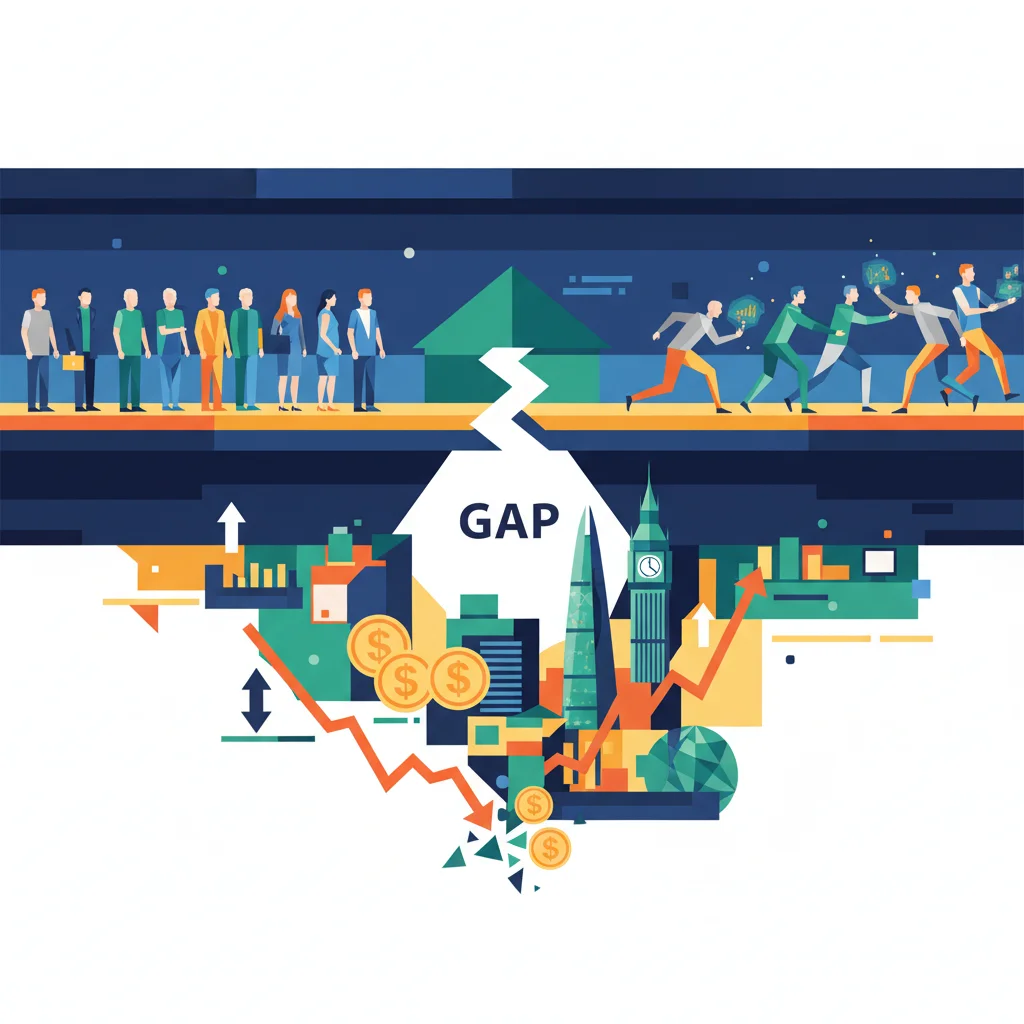
Perhaps the most famous phrase from the London Underground is the cautionary “Mind the Gap.” On the platform, it’s a physical warning. In our economic metaphor, it’s a stark reminder of the widening chasm between the wealthy and the working class. A breakdown in economic etiquette—where corporations prioritize shareholder returns above all else, executive pay skyrockets, and tax systems favor capital over labor—directly contributes to this gap.
According to a 2024 Oxfam report, the world’s five richest men have more than doubled their fortunes since 2020, while nearly five billion people have been made poorer (source). This isn’t a natural outcome of a healthy economy; it’s the result of a system where the rules and etiquette favor a select few. The concept of stakeholder capitalism, which suggests a company has a responsibility to its employees, customers, and community, has often been sidelined in favor of a ruthless focus on the bottom line.
Financial technology presents a dual-edged sword in this context. On one hand, fintech platforms can bridge the gap by offering low-cost investment accounts and banking services to underserved populations. On the other, the most sophisticated financial instruments and AI-driven trading strategies remain accessible only to the very wealthy, potentially accelerating the concentration of wealth. Technologies like blockchain promise a more transparent and equitable system, but their real-world application has so far been dominated by speculation rather than widespread utility.
Fentanyl as a WMD: The Economic Fallout of a Geopolitical Gambit
The Journey’s End: Re-establishing a Shared Destination
Ultimately, every journey on the Underground has a destination. The system works because everyone agrees on this basic premise. The problem in our current economic discourse is that we seem to have lost a shared sense of destination. Is the goal of our economy simply to generate maximum GDP and stock market returns, regardless of the social or environmental cost? Or is it to create broad, sustainable prosperity?
The erosion of etiquette, whether on the Tube or in the boardroom, signals a shift from collective good to radical individualism. If every passenger prioritizes their own minor convenience over the smooth functioning of the system, the entire network grinds to a halt. Similarly, if every company, investor, and financial institution pursues maximum short-term self-interest, the long-term health and stability of the global economy are put at risk. A recent study on corporate purpose found that companies with a strong, long-term focus outperformed their peers, suggesting that good “etiquette” is also good business (source).
The letter writer’s lament for London Underground etiquette is not just a trivial complaint. It is a microcosm of a larger anxiety about the fraying of the social and economic compact. Rebuilding this etiquette in the financial world requires more than just new regulations. It demands a cultural shift among business leaders, investors, and policymakers—a renewed focus on long-term value, a commitment to systemic stability, and a recognition that the most efficient systems are those built not on pure self-interest, but on a foundation of shared rules and mutual respect. It’s time for all of us to stand on the right, let others off first, and, most importantly, mind the gap.
The Paranormal Activity of the Market: What Horror Theater Reveals About Unseen Financial Risks

Related Posts

The Fusion-Powered Meme Stock: Decoding the Wild Merger of Trump Media and a Nuclear Energy Moonshot

The Age of Turbo Blurbo: Navigating Noise and Jargon in Modern Finance