Beyond the Tap: How AI Just Obliterated the £100 Contactless Payment Limit
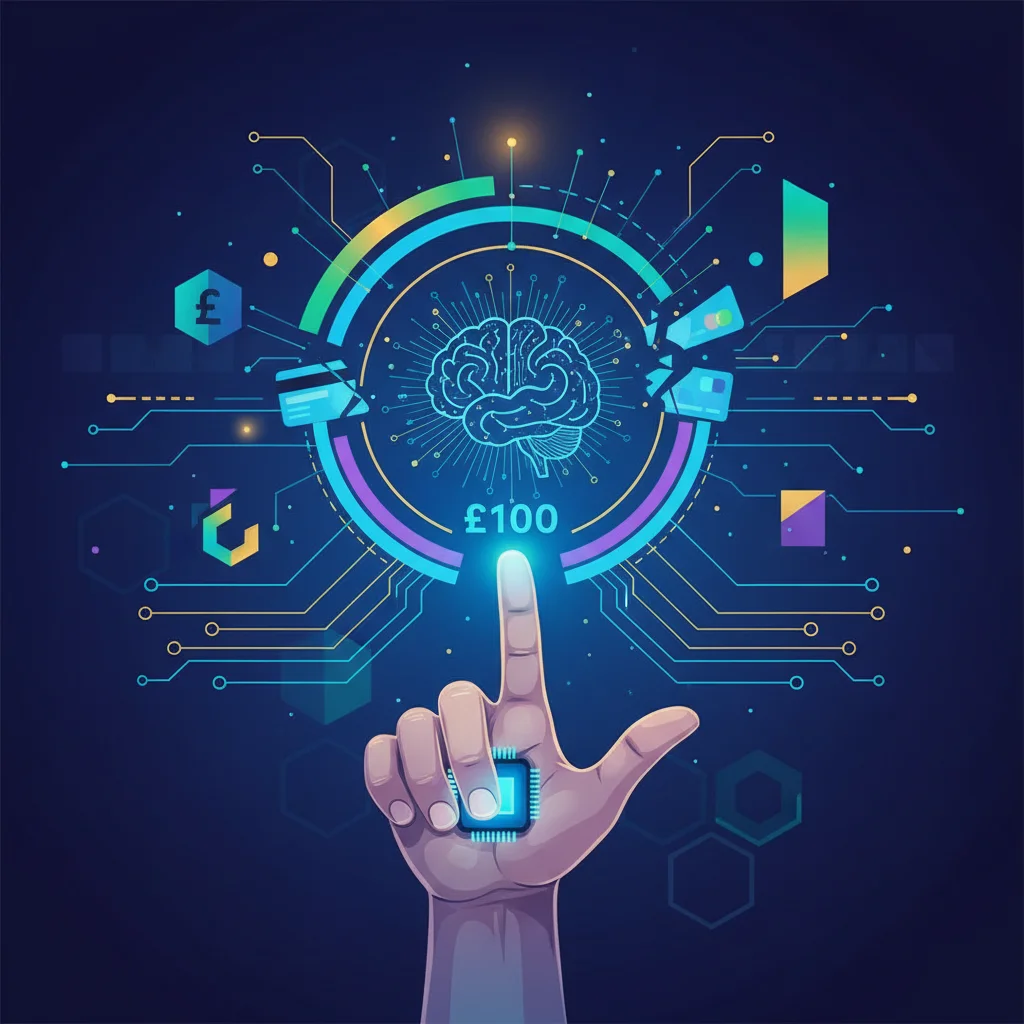
Remember that fleeting moment of anxiety at the checkout? You’ve tapped your card for a slightly larger-than-usual grocery run, and for a split second, you hold your breath, hoping you haven’t breached the dreaded contactless limit. For years, that ceiling has dictated our tap-and-go habits, but a monumental shift is underway. The £100 cap on contactless card payments is being removed, empowering card providers to offer unlimited tapping. But this isn’t just a simple policy tweak from the finance world. It’s a powerful testament to the silent, invisible revolution happening behind the scenes—a revolution powered by artificial intelligence, sophisticated software, and predictive machine learning.
This move signals a new era of trust in our digital payment infrastructure. It’s a declaration that our ability to detect fraud in real-time has become so advanced that the old, rigid safeguards are becoming obsolete. So, how did we get here? And what does this mean for consumers, developers, and the future of commerce? Let’s dive into the technology that’s making frictionless, high-value payments a reality.
The Slow Rise to a Sudden Leap: A History of Tapping
Contactless payments, powered by Near Field Communication (NFC) technology, feel like they’ve been around forever. Yet, the journey to unlimited tapping has been a cautious and incremental one. The limits were initially put in place as a sensible security measure. If a card was lost or stolen, the potential damage was capped at a relatively small amount. This created a balance between convenience and risk, encouraging public adoption while mitigating fraud.
To understand the significance of the current change, it’s helpful to see the progression over the years. The limits have steadily increased as both technology and consumer confidence have grown.
| Year Introduced | Contactless Limit | Key Context |
|---|---|---|
| 2007 | £10 | Initial launch of contactless cards in the UK. |
| 2012 | £20 | Increased adoption and infrastructure build-out. |
| 2015 | £30 | Contactless becomes mainstream for daily purchases. |
| 2020 | £45 | Limit raised to support social distancing during the pandemic. |
| 2021 | £100 | A significant jump reflecting growing trust and transaction values. |
| 2024 | Limit Removed | Card providers can now set their own (or no) limits, enabled by AI. (source) |
Each increase was a calculated risk, carefully weighed against the fraud prevention capabilities of the time. The leap from a £100 fixed limit to a potentially unlimited one isn’t just another step—it’s a quantum leap, made possible entirely by the maturation of AI and machine learning in financial services.
Oracle's AI Paradox: Why a Revenue Miss Sparked a Debate About the Future of Cloud
The Unseen Guardian: AI-Powered Fraud Detection
So, what’s changed? Why are banks now comfortable with a transaction for £500 or more happening with a simple tap? The answer lies in the powerful predictive analytics running on massive cloud infrastructures every time you make a purchase. The old system was a blunt instrument: a single rule (£100 limit) applied to everyone. The new system is a scalpel, surgically precise and personalized for each and every transaction.
This is where artificial intelligence takes center stage. Modern payment processing systems don’t just approve or deny a transaction; they analyze it against a complex web of data points in milliseconds. This is a level of automation that was unthinkable a decade ago.
Here’s a glimpse of what the AI is looking at:
- Spending Velocity: Have you just made five other purchases in the last hour? A sudden flurry of activity can be a red flag.
- Geographic Location: Is the purchase happening in your usual neighborhood, or is it suddenly in a different city or country from your last known location?
- Transaction Value: Is this purchase wildly out of character? If your average tap is for a £4 coffee, a sudden £400 tap at an electronics store will trigger higher scrutiny.
- Merchant Category: Is this a store you frequent, or is it a high-risk category merchant known for fraudulent activities?
- Time of Day: A purchase at 3 AM might be normal for some, but for a user who is consistently inactive overnight, it could be an anomaly.
–
These AI models, built by teams of data scientists and developers skilled in statistical programming, create a unique “fingerprint” of your spending habits. Every legitimate tap you make refines this model, making it smarter and more accurate. When a transaction deviates too far from your established pattern, the system can instantly flag it, decline the payment, or trigger a request for secondary authentication (like a PIN or a notification on your banking app). According to UK Finance’s 2023 report, the banking and finance industry prevented £1.2 billion of unauthorized fraud in 2022, showcasing the effectiveness of these advanced systems.
The Cybersecurity Tightrope: Balancing Risk and Reward
Naturally, the first question on everyone’s mind is: “Is this safe?” Removing a hard limit seems, on the surface, like a step backward for security. However, the reality is more nuanced. The cybersecurity posture of the financial industry has evolved dramatically. The reliance is shifting from static limits to dynamic, risk-based authentication.
Regulations like Strong Customer Authentication (SCA) are still very much in play. SCA mandates that for certain transactions, more robust identity checks are required. You’ve already experienced this: after a certain number of taps or exceeding a cumulative spending amount, your terminal asks for your PIN. This system isn’t going away. In fact, the AI will get smarter about when to invoke it. Instead of a rigid “every five transactions,” it might trigger a PIN request based on a risk score calculated for that specific purchase. This is a far more effective cybersecurity strategy.
Furthermore, the liability for unauthorized contactless fraud almost always lies with the card issuer, not the consumer. This provides a powerful financial incentive for banks to invest heavily in the best fraud detection software and talent. They are betting billions on the fact that their AI is better at catching criminals than criminals are at evading it. So far, the data suggests they are winning that bet. Contactless fraud remains remarkably low as a proportion of total spending. UK Finance data shows that in 2021, contactless fraud on cards equated to just 1.1p in every £100 spent, a tiny fraction of overall transactions.
The New Titans: Why TIME Magazine's Nod to AI's Architects is a Defining Moment for Our Future
The Ripple Effect: A New Playground for Startups and Developers
This development is more than just a consumer convenience; it’s a green flag for innovation across the tech landscape. For startups and entrepreneurs, it signals a massive opportunity.
- Fintech and SaaS Solutions: The demand for more sophisticated, AI-driven fraud detection and risk analysis tools will explode. This opens the door for nimble SaaS (Software as a Service) startups to develop and sell next-generation security solutions to banks, credit unions, and payment processors who may lack the in-house expertise.
- Enhanced Retail Experiences: For entrepreneurs in retail, faster transaction times for larger purchases mean better customer flow and reduced checkout friction. This can lead to higher sales and improved customer satisfaction, especially in high-volume environments.
- Demand for Tech Talent: The backbone of this entire system is code. This shift will further accelerate the demand for developers and data scientists with skills in AI, machine learning, Python, secure programming practices, and cloud architecture. Building, maintaining, and refining these complex financial systems is a monumental task requiring top-tier talent.
The message is clear: the financial world is becoming a technology-first industry. The lines between banking and Big Tech are blurring, and the engine driving this convergence is intelligent software.
Disney's New Magic: How a Billion OpenAI Deal is Rewriting the Story of Entertainment
The Future is Tapped
The removal of the £100 contactless limit is a landmark moment. It’s the point where our trust in intelligent automation officially surpassed our reliance on arbitrary, static rules. It’s a quiet victory for the thousands of developers, data scientists, and cybersecurity experts who have built the incredibly complex, resilient systems that now protect our financial lives.
While consumers will simply enjoy the newfound convenience of tapping for their weekly shop or a new pair of shoes, those in the tech industry should recognize this for what it is: a powerful demonstration of artificial intelligence being applied at a massive scale to solve a real-world problem. The humble tap is no longer just a transaction; it’s a data point, a security check, and a glimpse into a future where commerce is seamless, secure, and incredibly smart.

Related Posts
The New Cold War is Digital: Unpacking the UK Government Hack and What it Means for Tech
AI & The Economy: A Warning from the Bank of England, or an Unprecedented Opportunity?